


How Smart Exits Eliminate Capital Gains and Preserve Momentum


In this episode, we sit down with Brett Swarts, founder of Capital Gains Tax Solutions, to unpack how founders, investors, and advisors can exit assets without watching 20–50% disappear to capital gains taxes.
Brett breaks down the Deferred Sales Trust and explains how it differs from traditional strategies like 1031 exchanges, why timing and flexibility matter more than ever, and how smart exits preserve momentum for the next chapter.
This conversation covers:
- Why capital gains tax is the biggest hidden cost in exits
- Deferred Sales Trust vs. 1031 exchanges
- How founders, Bitcoin holders, and real estate investors exit strategically
- Why most “passive income” strategies still trap owners
- How exit planning impacts legacy, estate taxes, and family wealth
- Why solving tax problems helps M&A advisors win more deals
This episode is essential for founders, dealmakers, M&A advisors, real estate investors, and anyone preparing for a major liquidity event.
Brett Swartz Full Interview
Josh W: Brett, why don't we start with this man? Who are you and what the heck do you do?
Brett S: Yeah, so, uh, my name is Brett Schwarz, uh, founder of Capital Gains Tax Solutions. Uh, married to my wife Melanie. Uh, and so 16 years, which is amazing, incredible health. Fast time flies, especially when you have five kids. Time seems to fly even more.
So we have five kids. I grew up originally from Tax, California. California playing basketball, football, you know, like you're having fun with that. And then I had a chance to graduate and go to college, um, and play basketball in college. And then fast forward did, did some brokerage at a place called Marcus in Mil, chap selling multifamily proper.
And now we build capital gains tax exit plans for those that are struggling with massive capital gains tax and Bitcoin businesses or real estate and or an advisor that wants to be able to help their clients exit. Well steward the capital in a great way and have flexibility to reinvest. On, you know, great [00:01:00]terms, what I call great terms are very flexible terms that give timing, diversification, liquidity, and the ability to be an entrepreneur or to be passive.
We call that truly passive income opportunity. So that's a few, few things about me.
Josh W: Brett, what is the difference between maybe A DST and a 10 31?
Brett S: Yeah, the difference between A DST and a 10 31 sharing. First of all, it's important. Lemme just say it again. The difference between a deferred sales trust and a 10 31 exchange are as followed.
A 10 31 exchange is very restrictive, meaning it only works for investment real estate, whereas the deferred sales trust works for any asset of any kind, Bitcoin business, investment, real estate, and also primary homes. Stock, public or private stock, really any asset of any kind, artwork, collectibles, crypto.
Whereas the 10 31 exchange only works for investment real estate. The second thing is there's no timing restrictions for the deferred sales trust. Meaning you can invest into any asset at any time and also invest into, uh, multiple assets at any time versus the investment real estate, it's only [00:02:00] investment real estate for investment real estate at a 45 day window identification, 180 days to close.
So those are the, those are the two, two main differences there. The other thing I would say is for those looking for truly passive income, I think the myth that we found in the Robert Kiyosaki Rich Dad poor dad, is that fourth quadrant is rarely ever actually achieved. 'cause most people get stuck on the tour.
They should trash the termites or the ownership of the business. And the challenge is they never actually really get passive, even if they have a. Property manager or even they have someone helping to run the company. And so what we wanna do is we wanna free up all of that time. So the deferred sales trust really, truly unlocks truly passive income.
Those are, those are, so, those are a few of the reasons why I would choose the deferred sales trust over the 10 31 exchange. 10 31 exchange on, on one side though does have the stepped up basis ability. You can maintain the stepped up basis, whereas with a deferred sales trust, the kids can step into the shoes.
So that also kind of depends on what you're trying to achieve. The 10 31 exchange is less expensive, meaning you can get into it and out of it for 1500 bucks, right? Whereas the deferred sales trust, there's ongoing fees, [00:03:00] there's a third party trustee, that's our company, capital Gains Tax Solutions. So you have to work with a third party group with this, so you have to give up some controls.
Um, those are just, uh, probably some of the few main differences between the two.
Josh W: You know, we do a lot in mid-market m and A. How can your strategies, you know, work for someone who. It's looking to maybe sell their business one day. Like what kind of strategies can you bring to the table to an m and a group?
Brett S: Great question. The biggest thing for an m and a advisor who's looking to sell and help their clients exit well has to do with solving problems. I have a saying when I was at Marcus in military, I said, we don't get paid for selling real estate. And as an MA advisor, you don't get paid. For selling a business.
Uh, we all get paid for one thing, solving problems. And the bigger problems you can solve, the more value you bring. And the more value you bring, the more you can get paid and ultimately the bigger, bigger impact you can make for people. And so what I always say for the MA advisors that we work with is, hey, focus on their biggest actual expense, which is typically capital gains tax.
And so for example, if they're in tax California, you're looking at at [00:04:00] least 20% federal, 13.3, uh, state of California, and potentially even another 3.8 Obamacare. So let's call it 37%, depending if it's a C-Corp or an S-corp, it could also be higher than that amount in depreciation. Recapture New York, of course, New Jersey, Chicago.
These are the higher tax states. Everywhere else it's a little bit lower, but somewhere in between. So really focus on adding value by providing a solution. And so here at Capital Gains Tax Solutions, we become that strategic alliance with you. To provide that solution. And it should help you win more listings, actually do more deals.
'cause at the end of the day, the seller wants to know what they're gonna net, not what, uh, not what you're gonna sell it for. And so if there's an extra 20, 30, 40, sometimes 50% more proceeds, just think about this, right? The beauty of it, ma advisors, now you can maybe make more deals because what would've been, let's say a $10 million sale that would've netted them, you know, six or 7 million can now be a $9 million sale, which is probably where the market might be, let's just say, as an example.
But they're gonna be able to keep 9 million working for them. [00:05:00] And so that's the piece here. We call it tax flow, uh, mindset, not just, you know, how high can I sell it for in a short period of time. It's how do I help my clients solve big problems, problems and compound their wealth in a strategic way? So that's the best way that we work with MA advisors.
Josh W: When it comes to, let's just say for the startup world out there where they're building a company and, and one day they want to have an exit IPO or spac, or maybe a m and a deal, like what could they do early on to make your life easier as the capital gains? You know, tax strategist.
Brett S: Absolutely. So when you're setting up or thinking about how you're gonna build your, your company, like, was it Stephen Covey says, start with the end in mind.
And so part of that is starting with how you're gonna exit. Um, and, and so we have found the, the most. Flexible way to do that is through joint venture LLCs, if you're having partners or just a single member LLC, not filing as an S corp, not filing as a C corp and keeping it just an LLC and or [00:06:00] your, your, your ownership interest is in an LLC that go is going into a, a bigger, a bigger company or something.
Right. And so, so work, work with an idea that whatever you're gonna. Receiving when you're gonna receive it would go to some kind of LLC that you own by yourself or some joint venture partnership with, with another, uh, another partner issuing K ones partnership tax returns. We found those to be the most flexible strategies when exiting.
Now, for our strategy, we can still work with SCORP and C Corps, right? Um, and we can still work with, um, individuals that who own assets. But the most flexible one is, is an LLC, uh, without any elections.
Josh W: There's a lot of information out there, or at least I've seen it from 2000 interviews under the belt in, in terms of 10 31 exchanges.
Right. I'm starting to see, and it started my conversation with you about four, you know, three or four years ago about DSTs and what they do, and you mentioned in one of our previous conversations, Bitcoin's business and real estate. Kind of walk us through those different [00:07:00] categories and how. How you can leverage A DST for that purpose?
Brett S: Yeah, well, sort of Bitcoin, right? I think the deferred sales trust was really made for the Bitcoin billionaire or you know, DECA millionaire, millionaire, who is typically used to what's called the never sell strategy or just hold no matter what and just buy when it dips. And, you know, part of that is, is uh, it makes sense that you want to just maintain long-term ownership.
But I, it's, it's missing the biggest piece, which is timing, right? We make wealth through investing at the right time, and also knowing that there's trends within markets. And so an example Bitcoin. We helped in client exit A at 54,000 a coin. 5 million of a hundred, uh, of about a $50 million portfolio that she had.
She bought Bitcoin for 50,000, went to 50 million, so 54,000 a coin. We exited five. Now that valuation went from, uh, 54,000 a coin to up to 68, and then it dropped to 15 and, and that was a big, big [00:08:00] drop. And now fortunately, she didn't do any margin, which a lot of never sell Bitcoins do. And they make that big mistake and they get caught on margin polls.
And fortunately, she was able to exit five at 54,000 a coin. Now, she also was a never seller in a sense, except until she met us. Um, for the strategic reason because she was able to use that capital to start a business, right? She had a very, very clear picture with that. So the other mistake people make is they don't have a clear picture when they're gonna exit, what they're gonna use it for.
In our strategy, we're able to defer the tax invest into the business and that she held all the way through 15,000 a coin to now I think we're over around 115, 120,000 a coin. Um, and, and so the point of this is you don't have to suffer the consequences of a Bitcoin owner of just never selling and having to suffer like massive, massive market swings.
You can actually take ships, defer 'em off the table, if you will, through our strategy. And guess what? Buy back into Bitcoin. Buy back into Bitcoin ETFs, or buy back into Bitcoin. All tax deferred, right? We like to say the power of, and here, don't think the only way [00:09:00] I I have to sell Bitcoin is moving to Puerto Rico.
Right. Or, or, or not selling and doing a margin and having to, having a margin call. No, you can still sell deferred tax and buy back when it makes sense. And so that's the Bitcoin one for the deferred sales trust. It's is phenomenal. Okay. Let's talk about the real estate one. So real estate one is pretty clear.
A lot of people get tired of the toilets, trash, and the termites, you know, and they really want to trade that for truly passive income. They want to access that fourth quadrant of the Robert Kiyosaki Rich Dad Port ad strategy. And the way that we found, the best way to do that is you have this, you know, massive amount of gain or value in this real estate.
Okay? We'll use a 13 million deal we did in San Diego for our client, and they knew the market was hot. This is before interest rates really jumped up. They did not want a 10 31 because they didn't wanna overpay for a property in a short period of time. They wanted diversification, liquidity, and by the way, to invest into Bitcoin, invest into private equity and private debt different and stocks.
Right. And that's what we did. We diversified, they. Sold when real estate was red hot. [00:10:00] And then we bought back strategically into other investments and dollar cost averaged, right? But really what they unlocked was what's called truly passive income. They don't have to do any work in the sense of, you know, uh, taking on the risk, signing on the debt, managing the property.
So they got out of the toilet, the trash, the termites, and they traded it for a passive durable income stream. But they can also go back into real estate when the market makes sense. And this is kind of bringing it full circle, they have been waiting the last couple years for the market to inch down and it has been, and now they're gonna use the trust to partner with them to buy more assets.
And so this is also the power of, and you can be an entrepreneur and then you can be passive, and then you can be an entrepreneur again, all tax deferred, all within a unlimited time space. And that's the power of the deferred sales trust for the real estate owner. The last one I'll hit you with is the business owner.
As business owners, we poured our blood, sweat, and tears, 5, 10, 15, 20, 30 years into this business, and the stewardship of that capital is on the line. And the line is [00:11:00] this massive capital gains tax. 20 to 50% of your gain is gonna be crushed, right? Depending on where you live, depending on what state you're in, all these different things.
And so with the deferred sales trust, we're going to. Maintain the momentum of the capital, right? Maintain the stewardship of the capital. And I say momentum in a, in a really clear way because we believe momentum is more powerful than all of our strategy, leadership, and resources combined, and the ability to maintain and maximize that momentum in the next part of your life, or for your legacy or for your family.
It starts on the exit. Otherwise again, 20, 30, 40, 50% is crushed and you're having to to have a smaller amount there. And so the power of the deferred sales trust for the business owner is building massive momentum, compounding interest returns, also building a dream team. Like look, you've been an expert as a business owner for many years, right?
And you might have a financial advisor, it might have some private equity real estate deals, but do you have a full family office for your five, 1,000 million billion dollar exit? And if you don't, that's a big challenge and our strategy. We [00:12:00] obviously keep, uh, more money working for you, but then we also build a dream team to come alongside to help in the family office approach of the capital.
And so all of these things are converging on this one exit, and that's why you've gotta be prepared. Gotta work with teams that can help you with this. That's what we do here at Capital Gains Tax Solutions.
Josh W: We spent our whole life building this business and it's a good sized business. After I die, it gets handed down to my kids.
What are some options there? You know, we looked at some type of stepped up basis. We looked at, you know, maybe some type of, you know, trust. What are, what are some of your thoughts and what have you seen?
Brett S: Yeah, Josh, it's really important to understand the difference between a state tax. Which is known as, also known as a death tax versus capital gains tax in a stepped up basis.
So let's define both, both challenges and let's talk about how we can solve it. Okay. Number one, stepped up basis is great. You own a property for, or business for 30 million, let's just say, and you die. You, you get a, your kids get a full stepped up basis. They can sell the business or property for 30 [00:13:00]million walk away capital gains tax free.
And estate tax free. If you're married, married, you know, if you're married, uh, that's how that works. It's a $30 million total exemption amount, which is great. They just increased that with the big beautiful bill recently. But now let's do another scenario, right? You're worth 130 million. That first 30 million still applies what I just said, but that other a hundred million is subject to what's called a death tax.
Meaning 40 million of that a hundred million must be paid within six months, typically. Okay? In fact, if you've seen the show Yellowstone, you have Kevin Costner and his daughter Beth. Beth is the attorney and everyone wants to get the land. And Kevin's like, we're never selling the land and bet's like, but Dad, they're gonna, they, they, they're gonna kill you.
And if they kill you, they're gonna take the land anyways because the debt tax is gonna kick in and we can't afford the land. And which Kevin looks back here and says, we're never selling the land, and then everyone's just trying to kill him every episode. Right. That's basically the entire show. Right.
It's a great show, by the way. Yeah. Um, and so [00:14:00] understand that piece here, right? The stepped up basis is not solved for the death tax. Right. And most people miss this. And so what do they do? They do a couple things. They try to buy a bunch of life insurance, which is uber expensive. They, uh, either give it all the way to charity, which is great if you want to give it all the way to charity.
But most people don't wanna give it all the away to charity. Uh, number three, uh, they, they try to gift it away to their kids, right? But they don't have enough kids and they run outta time. So enter our solution in one sale in one day, needs to do it before you die, right? And you have a third party buyer.
We can eliminate all of the debt tax on your $130 million sale. So this is what we do. We set up a trust. You sell it to the trust prior to sell it to the ultimate buyer for 130 million. That 130 million is forever outside your taxable estate. And here's the cool part, Josh. Let's just say you're 40 or 50 years old and you're living to a hundred years old.
So is all of the growth is outside of your taxable estate? No charity, no life insurance, no gifting required. Doesn't take up any of your lifetime exemption. So this is a powerful way to structure [00:15:00] your exit, to maintain momentum with your family, your wealth, your legacy. Now, keep in mind you will get payments during your lifetime, and you'll pay tax on that as you receive it, okay?
Um, and that's, that's part of it. But your children can inherit, um, the, the remainder after you and your spouses, your married lifetime estate tax free, and then also typically capital gains tax free.
CEO
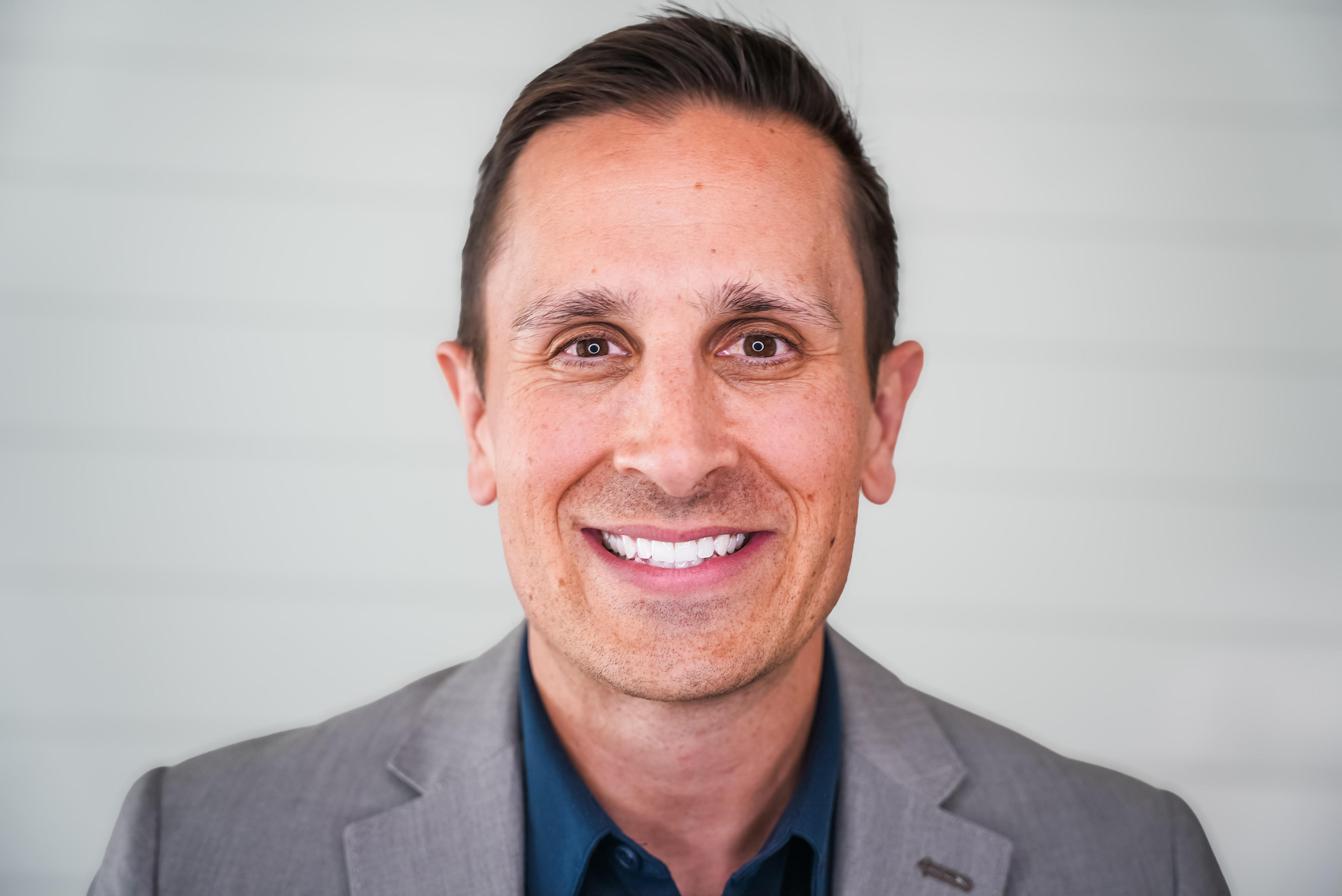
Brett Swarts, is an entrepreneur, Founder of Capital Gains Tax Solutions where he serves as a Deferred Sales Trust Trustee. He is an Author of Amazon #1 best seller and SUCCESS® Certified Coach. He brings a unique approach to exit planning using the DST, real estate investment and wealth management.
As the founder of Capital Gains Tax Solutions, he leads a dedicated team in helping a wide range of clients create and preserve wealth through strategic real estate, securities and business investments. His specialty is in Deferred Sales Trusts, a potent capital gains tax deferral strategy. Throughout his career, he has closed over $500 million in real estate brokerage and Deferred Sales Trust transactions.
In addition to his direct work with clients, he hosts the Capital Gains Tax Solutions and Expert CRE Secrets podcasts, where he interviews industry leaders on wealth management, real estate, business growth, and tax strategies.
As a licensed California Real Estate Broker and active CRE investor, his skill set spans various sectors of real estate. He is the best-selling author of "Building a Capital Gains Tax Exit Plan" and a sought-after speaker at professional events.
His mission is to unlock capital gains to unleash freedom and impact for high net-worth individuals and their trusted advisors. He and his team does this by guiding clients and advisors how how to create and execute Deferred Sales Trusts. His ultimate goal is to help his clients make an impact with their wealth for their families and communities.