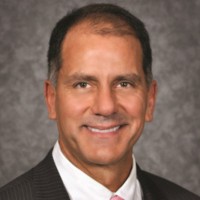
From Louisiana to Leading Global Capital Markets


In this episode, we sit down with Rip Reeves, CEO of Institutional Investor, to unpack the evolution of global investing, asset allocation, and the allocator–manager ecosystem.
Rip shares his journey from a first-generation college student in South Louisiana to Wall Street, portfolio management, and ultimately leading one of the most influential platforms serving CIOs, asset managers, and allocators worldwide.
This conversation covers:
- How a single college class changed Rip’s career trajectory
- What Wall Street looked like before email, LinkedIn, and automation
- Why grit and networking still outperform credentials alone
- How institutional investing has become truly global
- The convergence of public markets, private markets, and private wealth
- Why relationships and communities matter more than products
- What young allocators and future CIOs need to focus on now
This episode is for allocators, asset managers, investors, and professionals who want a deeper understanding of how capital really moves and how long-term careers are built in global finance.
Josh W: Welcome to, uh, another one of our media escapades. I, I love connecting with you and, and talking from investor relations, asset allocations, asset management. Why don't you kind of walk through who you are.
Rip R: Thanks, Josh. So, my name's Rick Reeves and I'm CEO of institutional investor. Uh, I have been in this role for, this is my third year, uh, although it's only been three years.
My relationship with the company goes back to 1983, uh, when I was a senior in college at LSU and I found I had an aha moment at school. Uh, where I took my first investments class and I went, oh, this is it. This is what I want to do. Uh, and when my teacher said, well, you ought to start reading, and I said, like, what?
And they said, institutional Investor magazine. So I started back then, and then as a portfolio manager in New York and Boston, uh, and a Chief Investment officer in those same cities as well as London. Uh, I. Branched out with my relationship with institutional investors and started going to their events around the globe.
Um, they've got a phenomenal, uh. Platform of communities, uh, across the globe. Uh, we have four platforms. One in Asia Pacific, uh, out of Hong Kong. Uh, one in the Middle East, one in Europe, both outta London office, and then the Americas here out of the, uh, New York office,
Josh W: 1983. Senior at college. Yes. You, you read a book and you're like, or you took a course and you're like, this is it.
Yes. I'm gonna be. And that's, I want to do
Rip R: investment. I said, that's what I want to do.
Josh W: How many, like how many times did that happen to, you know, seniors in high school and or college actually? And do you know where I was in 1983? You weren't even a thought. I, I was two years old. I was two years old trying to figure out what I wanted to be when I grew up.
So is this your way of nicely telling me I'm old? No, you're experienced, very experienced in this, in this world. It's a euphemism, but thank you. Yeah, you're welcome. Uh, so as, when you, if you had that, that moment again, this aha moment. Did. Is this what you envisioned back in?
Rip R: No, no, no. I didn't know what, I didn't know what I mean.
One of the things that's kind of interesting, uh, and uh, I'm an adjunct finance professor at LSU as well right now, which is absolutely cool. Uh, and all the conversations I have with my students, which are mostly seniors. On their career choices, you know? You know, back in 1983, we didn't have any technology like we do now.
And so one of the advantages I almost think that the kids have now, but I almost kind of think of it as a disadvantage in a weird way, which I'll explain in a minute, is they have so much information at their fingertips. So the watching a YouTube video or following somebody who is in the business. And seeing where they work, you can visualize, you can actually see it, you can almost live it with them.
If, if someone is, is, uh, being that open about what they're doing. Where in my day you didn't have any of that. I mean, if I didn't read about it in a magazine or if I didn't go physically see it, uh, I didn't know what it was. And so as someone who is first generation to go to college, uh, lived my entire life in South Louisiana.
I didn't know what Wall Street was. I didn't know that there was a real bull on Wall Street. Right. Um, I didn't know any of this stuff. I, I couldn't have visual, I couldn't visualize it. Uh, 'cause our, our family business was tugboats and shrimp boats and that's, that's all I knew. Um, all I, what I did know was that there were a lot of people walking around in suits looking really important.
Uh, and what I loved about that aha moment was math was always something that I liked that came fairly easy to me. And this was the coolest. This was just the neatest, uh, use of that math in a subject area that I just thought was it, it, it, it hit me. It just, it, it spoke to me and I, but I could not have envisioned.
That I'd be sitting here with you having a discussion about that.
Josh W: Uh, man, I'm so glad you are though. Yeah.
Rip R: But anyway, but that it, it was, it was a really cool moment and I, I almost feel a little sorry for the kids now because they have so much information. Many of them. What if themselves to death? Mm. Uh, it's almost like they have too much.
It's with information overload. Not to get too investment, but it's almost like putting too many asset classes in the official frontier analysis. Right. The, the, the computer doesn't know what to pick. Yeah. Um, and uh, so it, it's, uh, you know, there's pluses and minuses to everything.
Josh W: Yeah. Yeah. That's, that's really good.
And now you have a heart, uh, for the future. Allocators, the future CIOs, and you do a lot of work there. Why is that important to you? What? What do you see going on in the industry for asset allocators, fund managers, CIOs?
Rip R: Well, there are several, uh, large trends that are going on. Uh, probably the, the, the first one is the real globalization of a UM.
Uh, probably 20 years ago as a global inve, CIO, um, you absolutely had what I would refer to as one of the big boys. In your stable of managers, you had to have a Goldman Sachs, a BlackRock, a JP Morgan, because these were the big. Asset managers that had offices all over the place. So if you needed to get some information on the Swiss market, you could, if you needed some information for your Japanese yen portfolio, you could, if you needed some information for your Aussie dollar portfolio, you could.
They had places there. Uh, what we're finding in the ecosystem, in the investment ecosystem that we serve is that you're finding some of your smaller and medium sized managers, some as small as 15 and 20 billion, have global a UM. So. Their need to be able to use our global platform is is quite, quite, it's almost a necessity.
Um, so the, again, the globalization of the asset com, uh, of, of the asset, a u of the insurance, a UM or the investment a UM, is becoming a big, uh, a big challenge, uh, for the industry. A second one is the kind of the combination or the, the, the collection of what we've always thought is the alternative of the private market and the public market.
Um. You know, again, 10, 10 years ago, if you wanted to go and listen to some people talk about private credit or private mortgages or private equity, you went to a specific conference for that. Um, and if you wanted to talk about publicly traded bonds and exchange traded equities, you went to a core type, uh, uh, conference.
Now everybody's looking at, at it all as kind of one, one asset class. And, and last but not least. You're seeing that the private, the private wealth side and the institutional side are kind of doing this as well. And so what that means for the allocator and especially a young allocator is that everything across the globe.
Is your pool, is your, is your your pool set, so to speak. Whereas before you were much, you tended to be more, the markets tended to be a little more siloed or just, or segregated. Uh, now it's just one big asset class. Um, and so it, it, it means that you need to be a master of more markets in order to be, to be a glo, to define yourself as a global allocator.
And so, as much as I can help the young folks. Why not? I can give back at this point in my career.
Josh W: Yeah.
Rip R: So because as you mentioned in the beginning, I'm old,
Josh W: experienced, very, very, very experienced there. Rip um, you got your start as, uh, you know, graduating LSU, so you're a huge fan of LSU. You got the, you got the bands.
You, you, you can touch 'em, you can touch 'em. Oh, that's very cool. Yeah. That's very interesting. Um, graduating from there. Did you, you know. Did you one day end up in New York? I know we're here in New York now. Mm-hmm. But you, you know, talk to us about some of your journey and then some of the portfolio management that you did and how did you one day become CEO of Institutional Investor, which is one of the largest publications and resource for these kind of groups,
Rip R: so.
Uh, unfortunately as a senior, my, my fall, it was the fall of my senior year when I took this investment class, and that's when I figured, okay, this is what I wanna do. Uh, at that point in my, in my educational career, I was so far behind, uh, where I should be in order to make this a reality. Uh, so I was actually working for, uh, the chairman of the marketing department as well at LSU, as well as the Dean of the College of Business at LSU.
Went to them and started whining one day about my situation. Yeah. And like, like a good mentors, they put their arm around me and said, okay, here's what we're gonna do. You're gonna come, you're gonna continue to work for us. We're gonna pay you to go to graduate school. You'll get your MBA and it'll give us two years to figure out exactly how we're gonna go about doing this.
And it also, because I had a, I got my MBA. It made me much more competitive on paper in order to possibly get some of these jobs. Mm-hmm. Uh, because the, as you can imagine, you know, every, every Harvard and Kellogg and MIT and Stanford, MBA graduate wants to go to Wall Street. Right. Because it's a very lucrative place and an interest and incredibly interesting place, uh, to work.
So I was, I was jumping in the deep end of the pool, uh, with a lot of sharks. So I ended up, uh, networking my butt off. Uh, this is also before texting emails before LinkedIn. Emails LinkedIn, yeah. Uh, and this is also before answering machines on telephones. So when you would make a phone call, if somebody wasn't there, the phone just rang and rang, and rang, rang.
You couldn't leave messages. They call me back. That didn't even exist then. No kidding. So I ended up going to the Baton Rouge Public Library. I ordered a New York City phone book. And for two years through graduate school, every name I read in the Wall Street Journal and institutional investor, uh. Uh, I would, I would look it up in the New York City phone book.
And if I figured if they, if they weren't, if they didn't have a New York City address, they probably wasn't one of the companies I wanted to work for. Yeah. Because all, it was very centralized at that point. Much more so our industry than it was then. So I did, I did two years of networking. Never got an internship out of all that, but as you can imagine, I got very good at when to call, when not to call.
So I wanted to call before eight o'clock, after five o'clock. Yep. Because then the assistants weren't there answering the phone. Right. And then the person I really wanted to get to had to answer the phone. And of course when you, they would answer the phone, you could hear it and the voice going, I can't believe I answered the damn phone.
Yeah. But I got 'em and I would talk to 'em and, you know, out of a hundred phone calls, you'll get 10 that'll actually spend some time with you. Uh, and then I took off, we used to get a week off for Mardi Gras vacation in the spring. So the spring of my, uh, last semester of graduate school. I came up here, I, I didn't have any money.
Uh, the, the Breeze Airways of that time was People's Express and I think a round, my round trip ticket was I think $69. Yeah, nice. To and from Newark. Uh, and then they had a $5 bus that you'd ride from New York, uh, from Newark to. Um, the World Trade Center and then I got on the subway for the first time in my life by myself with my bags and my one suit, my two ties, my two dress shirts, and I rented a room on the YMCA on the Upper West Side.
No kidding. Which is the only place I could afford. And I interviewed for a solid week. And what I quickly found was that the first question that people would ask me on, on various interviews was, how'd you get here? Who do you know? I go, I don't know anybody. Yeah. Well, how'd you get here? I made phone calls.
Where you stay in the YMCA and they, they just couldn't believe right, that I had done all, I figured out this all on my own and that I was doing it. And they go, you're the kind of, you, you have the kind of grit that we want. Right? Certainly on the trading floor, a lot of the banks, I was a little, I was outside of their box.
The banks like to live in a box and I was outside of the box. Uh, but every broker dealer said. Come on. And I left with an offer from Solomon Brothers, Goldman Sachs, and first Boston. I was, I had no clue what I had just done. Yeah. And I picked Solomon Brothers and I was in the training program, uh, that Michael Lewis wrote the book, liars Poker on.
Oh, wow. Uh, and the rest is history.
Josh W: Wow. All right. So. You show up for first day of work. Yeah. You've already had some, some reps in on the old crank phone. Right. Calls operator. Right.
Rip R: Very good. That's very good.
Josh W: You're welcome. Uh, but you had, you had some practice on the phone and now you're on trading.
Trading floor. Yep. Solomon Brothers. Yep. Go. Right. They, they, they,
Rip R: they literally go,
Josh W: yeah. Talk us through the first day.
Rip R: Oh
Josh W: God. Or maybe the first day of trading. 'cause I, you might have had some type of like, watch this VHS thing, but that didn't exist. Okay. Watch this. Whatever projector. It was
Rip R: an eight track tape in the, in the, in the hump of the car.
Josh W: Yeah, yeah, yeah.
Rip R: The, um, well, you didn't get a, you didn't, you didn't get a, you didn't get anything to trade or sell right off the bat. Uh, but I do remember, uh, I would call my parents. Uh, on Sunday night. Yeah. Every Sunday night while I was ironing my five work shirts. Yeah. For the next week. Uh, because at and t long distance rates were half price after 6:00 PM on Sundays.
Josh W: Oh, very good.
Rip R: And I would tell my mom and dad on the phone, I'd go, first of all, uh, I remember calling 'em one time and I said, oh my God, have you ever had these things called a bagel? These things are so good. I mean, I fell in love with bagels right off of that. Yeah. With the cream cheese in it and then the bagles.
Yeah, the bagles. And then the other thing I would tell 'em, I'd go, I swear they're speaking English on the trading floor, but I have no clue what they're saying because everybody's tea, everybody's speaking almost a, a, a, an abbreviated language. Um, and so that was the first thing that was difficult, uh, is just to, just to understand the jargon and the terminology.
Yeah. Um, and that's one of the bigger humps for the kids in the, in, in my class is just for them to get used to the, the verbiage and the language.
Josh W: Yeah.
Rip R: Uh, that we use, like we were going over on Monday night, we were going, you know, we were going over basis points. Mm-hmm. And we going, you don't call it basis points, it's BIPS 10, BIPS a hundred bips 50 bips.
Yeah. You know, the fed's gonna decrease rates 25 bips, which they did today. Yeah. So, uh, it's just getting to know that, that kind of jargon. Um, but one of the, one of the bigger things, uh, with respect to the trading floor is they did, at Solomon Brothers, it was like six months of a training program. Yeah.
And so, uh, while you had a, you got hired into the training program, uh, they would, they would basically bring every single department of the firm and all the people that worked in those departments in front of you. So for someone like me who had never had an internship, who didn't really know the business at all.
Um, other than just from a textbook, it was a wonderful exposure on everything that that firm did, which was a lot in sales and trading. And then it was sort of at the end of the semester or at the end of the, of the year. This was from, uh, August to December. In December, it was like an NFL draft. You would say, I wanna work for this department, this department, this department.
Oh, that's great. And then hopefully they would say the same thing about you. Yeah. And there were a handful of people that didn't get chosen. Um, but I got my first choice on mortgage backs. Um. I thought it was a, just an, a fascinating area.
Josh W: What, around what year was this?
Rip R: This 1985. Okay. Fall of 1985.
Josh W: Oh.
Right before the savings and loans
Rip R: hit. Okay. Right before Perfect timing. About a year and a half. About a year and a half. Okay. Got it. I had, I had a, I had a couple good years of, of trading and selling derivative mortgage backs before the sale. The savings and loans, uh, got outta the picture. Yeah. Um, but then, but you were, you were basically hired.
Into a division of the, of the office. You were, you were hired by. So I was hired by the New York office, so 99% I was gonna work in the New York office, Michael Lewis, for example. Mm-hmm. Uh, who did Rise Poker? Was hired by the London office. Went back to London, although we were in the same training program.
Um, but it was, uh, you know, one of the things you learned very quickly on the trading floor for sure, is what you're good at and what you're not so good at. Uh, one of you find
Josh W: that real fast when you have to do very fast, a hundred things advance at sink or swim.
Rip R: Definitely sink or swim. Yeah. And one of the things that I learned about myself was, uh, you know, a typical 62nd trade period.
You would have one, one conversation on one phone. Live, you'd have another conversation on your left hand with the other phone that you're holding onto your hip so that they can't hear you. Yeah. There was probably a third phone that you were holding between your legs and then you were standing up so that you could scream at the Treasury Trader was gonna, this, this really happened all the same and, and you're.
I've got a long position that I'm selling and the treasury, my treasury trader across the way has the short that I want to, that I wanna reverse. And then you're probably on with a sales person on the, the intercom system in Chicago. So you, you, you have three or four conversations. Going on at the same time.
And not to suggest that I always made the right decision.
Josh W: Yeah.
Rip R: But you have to get very good at making, processing all of this information that's coming at you from several different angles very quickly. Mm-hmm. And being calm in the midst of that was something that I found I was pretty good at.
Josh W: Mm-hmm.
Rip R: Sort of like being, uh, calm in the eye of the hurricane, you know, when it's coming. Every, you know, some people are running around getting off. Freaked out. It just, it was, it didn't bother me. Again, not to suggest I always made the right decision. Right. But I wasn't frantic about it. Yeah. And that was just one of the things that you, that you kind of figure out.
Another thing I figured out was that I really wasn't that good at math. I worked with some people who were geniuses at math who can think on levels. I cannot for sure, but I was smart enough to hang with them. And then what I could do is once I got it, I could explain it well. Whereas the really, really, really, really smart, the nuclear scientists.
Yeah. Can't, they're not very user friendly. Uh, 'cause they're just too smart. Yeah. So you, you know, you figure out, you figure out a, a, the, the longer you're in it and the more you observe if you're at a place that's large enough where you have a front row seat to a lot of different roles, right. It gives you the opportunity, uh, to make wiser decisions on what is a good direction for what you are.
Mm-hmm. And what you're not and what you like. And so if you can find an intersection of that, say those again. Those are good. What you are, what you're not, and what you're, what you like. Yeah. So if you can, if you can get, find that intersection of definitely of, of what I like and what I'm good at. You know, I don't know how many things that are, that, that can be, it's gonna be different from every person, but.
You know that that'll give you a pretty good, a pretty good shot at having a pretty long career and an, and an enjoyable enough career where you'll get enough of the things that you want out of life. Yeah. And that's kind of, and I've, I've tried to pick, uh, the people that I wanna work with Sure. That will commit to me, that I can commit to them.
Uh, not necessarily go to the hot product because what's hot today is not gonna be hot in three years or four years possibly. Um, but the people will stay true. Yeah. So I've always, I've always tended to choose the team over the product because products come and go.
Josh W: Products come and go.
Rip R: Good people, good people will be there forever with you.
Josh W: Yeah. And speaking of good people, um, you know, coming up here, flying to New York City and, and seeing the team, I've already seen, you know, a few of them and, you know, Kat came by and said, Hey, and welcomed and get to see you, which is always special. Um, for, for the groups that you guys work with, you know, that we're gonna see tomorrow night.
Mm-hmm. Give us an idea of what kind of. Uh, people might be receiving awards or that we might be sitting at the table with, you know, you don't have to give names specific, but kind of give us an idea of who institutional investor, uh, serves.
Rip R: Absolutely. So the communities, the, the, the main for the, from, with respect to the events mm-hmm.
And the conferences. Uh, the whole mission is to provide communities for. Sharing. Mm-hmm. Whether it's sharing, uh, thought leadership and educational issues, whether it's sharing, uh, ideas with people who do the same thing that you do, rubbing elbows with your peers, finding out how you're dealing with certain situations that we're both dealing with.
Um, and, and specifically it's the asset managers of the world, uh, as well as the allocators of the world. And there's some other players like, uh. Vendors. Uh, there are consultants that all work, uh, within those same ecosystems, but the two primary groups of people are the asset managers and then the allocators who hire the asset managers.
Mm-hmm. And so what we're gonna have tomorrow night is generally speaking, it's a ratio of maybe. One and a half to two allocators for every asset manager in the room is preferential. Uh, certainly what our goals are. Um, and so you'll, you're gonna be sitting at a table with me, uh, and a bunch of folks who are chief investment officers, treasurers, chief financial officers, anyone who is responsible for the pension, uh, the endowment, the foundation, the insurance, the private wealth assets.
Uh, of an institution or, or, or a family office, multi-family, single family office, multi-family office. Um, and then you also be surrounded by, uh, a lot of the, the marketing and distribution folks. At 95 of the top a hundred asset manager, largest asset managers in the globe.
Josh W: I was holding my breath, man. I had to cough so bad.
But you're such on a beautiful role. I didn't wanna, I didn't wanna. Burn that sound clip. Oh my gosh. That's so cool. All right, gimme a second to, if that's okay. Composure. Man, that was so good. I was like, gosh, I, all right. So when it comes to asset managers mm-hmm. And allocators. Um, you have this ratio that you shared, you know, with, with respect to how many of each, kind of give a an example of roles, responsibilities for the managers mm-hmm.
Versus allocators.
Rip R: Sure. So the role of the asset manager, especially the ones that generally will come and be a participant, uh, or, or partner. Uh, they're actually, they're actually our members. Oh, cool. Um, so they will buy a membership to the, uh, north America membership, to the European membership Middle East membership, Asian membership.
And that membership will include, uh, a list of events that they can pick and choose from. Some, you know, you can have a basic membership, a premium membership, a you know, a platinum membership, you know, and various things come with that. You know, more speaking roles, additional people that can come to the event.
Um, and so for example, if. And JP Morgan invest Asset Management decides that insurance is their big focus for 2026. They will likely come to us and we'll chat with them about it and we'll tell 'em, well, here's the events that we put on throughout the globe that are very heavily attended by insurance Chief investment officers and treasurers, people who will be hiring, uh, asset managers for their insurance general asset accounts.
Um, and so that that is. Kind of how the asset managers generally work with us. And then the allocators, again, depending upon what, uh, geographic region or what, uh, business silo they tend to work in. Uh, we will, we form relationships with the head decision makers of. You know all your major endowments, foundations, public pension plans, corporate pension plans, insurance companies, single family office, multifamily office RIAs, all of the people that will be allocator.
That are considered allocators, um, OCIOs. Mm-hmm. Uh, all of those types of folks that are hiring the asset managers. Um, we have a whole team called the investor relations or the IR team, uh, that is responsible across the globe to form and nurture those allocated relationships so that we can then get them to come not only to participate in various, uh.
Segments of the agenda where we can use their expertise and share their expertise. But I will say, as a former allocator for almost 20 years, going to an institutional investor event and rubbing elbows with my peers, I just cannot put a price tag on it. A couple of specific examples, um, I'll give you three real quick.
That, that were very, very real for me. My first institutional investor event I went to as, as a CIO. Uh, my, my chairman of the investment committee had, and I was, I was the first CIO that the company had ever, ever hired. So I was a lone ranger. Yeah. And, uh, it was a team of one and, uh, they had never had a CIO before.
They had just broached about probably $4 billion in assets to the general account. Wow. Uh, they had a, a syndicate with Lloyd's, so we were manage, I was managing a global portfolio in several, in several, uh, probably about four or five different currencies, uh, to support the underwriting activities. But the chairman of the investment committee said, I want you to go do, uh, a research project on hedge funds and should we invest in hedge funds?
Cool. Well, at that time I'm gonna, I could be off by a thousand easy. Let's say there were 10, 12,000 hedge funds out there, and it's not like there's a directory that you can go see, you know, who the hedge funds I should talk to and how should you, you know, again, it was just, it was a very. It's a very broad set of investors and I was literally whining to one of my CIO buddies who was, who had been in this adventure a little longer than me.
And he goes, why don't you come to the next, I'm going to this in institutional investor event in a couple months there'll be 50 of 'em running around. Oh, perfect. And so I went to that first event just to speed date a bunch of hedge fund managers, and it was a day and a half outta my, outta my week. It was the most efficient use of time.
I walked away with easily 30 40. Business cards from hedge funds that it would've taken me, if it was 40 business cards, it would've taken me 41 hour meetings easily. Yeah. To have done that, that would've been a whole week's worth of work. And I did it a day and a half. Boom. Uh, incredible efficiency. And the number of managers that I had met and got to know who the players were in fee, in, in asset classes that I had never managed money in prior to that as a, as a portfolio manager, uh, again, cannot put a price tag on it.
Uh, another example is we, um, when I was at my, uh, also at the, at that first insurance company, here I am managing the general account. Well, the head of HR came to me and said, Hey, would you take over the, uh, would you pick the, uh, would you take over the pension plan for the, for the company? I was like, sure, I can pick assets.
That's what I do all day long. Well, picking the, picking the asset map for the pension plan participants was easy. Then all of a sudden she's asking me questions like, um, should we allow loans? And if so, how many and to what percentage of the underlying balance, right? Um, should we be an auto enroller and if so, should it go into a target date fund or should it go into a regular fund?
She started asking me administrative questions that were completely outta my wheelhouse and I'm. Yes, thinking I have to go to school to try to figure out the answers to these questions for the pension plan participants. So again, I called up my relationship manager, my IR relationship at institutional investors said, can you get me, tell me what is the best corporate pension plan event you put on?
So I can go to it and ask every dumb question to every corporate pension, CIO, who's been doing what I've now been tasked to do, you know, for years. And so again, day and a half, two days at an event, I, I brought my notebook like you have right now, and I asked every stupid question imaginable. And again, cannot put a price tag on how, how, what that meant to my career.
Oh, how much smarter it made me at what I was being tasked to do. Yeah. Uh, and how efficient, uh, it was, uh, to do it in a day and a half instead of going, finding some class that some other person was gonna teach me. Last but not least, wait, wait. Before I go, I'm go to the
Josh W: third. This book, I was at the store the other day picking up some SD cards, and I, I knew that I was meeting with you and in one of our first interviews, probably a year ago.
Uh, you mentioned that you bring a, I do, uh, a book. Yep. When you meet people and you write down in, in hard paper, and this has been a project and a passion of yours for so long, so I got this because of you. Oh, sucks. Yeah. You can't have it.
Rip R: I have my own, but
Josh W: this is, this is, and you know,
Rip R: I tell the kids, uh, uh, pretty much every class I try to tell the kids.
I have to, I make 'em promise me something. Yeah. And so the first class, uh, since they're all seniors and they're gonna be having a job, I go, look, when you get, when you get to your job, you're gonna go and sign up for benefits would be the first thing you'll do. Mm-hmm. And I said, when you sign up for benefits, I said, most of the things that they're gonna offer you.
I wouldn't bother with at this stage of the game at 21, I said, there are two things you need to promise me you're gonna do. I said, first you're gonna sign up for healthcare. Get off your parent, your mom and dad's healthcare, even though you can stay until you're 26. Get off now. You were really impressed them when you go home and say that you got off and you find it for yourself.
Secondly. Enroll and Max do the maximum amount you can in the 401k or whatever your, whatever your retirement plan is. Yeah. And I said, when you're 30 years old and you see the balance that you have because you've been doing it since you're 21, you're gonna think, oh, that old guy at LSU was right. You are gonna thank me time.
And it is interesting because, uh, I had 62 kids that graduated in my class in May, and I'll bet half of 'em over the course of the summer. Have sent me a screenshot, uh, a text, an email saying, professor Reeves, I did what you told me to. I signed up and I was like, going, good, good. The other one I tell him is, bring a pen and a pad.
Every time your boss calls you in the office. Yeah. 'cause he's gonna, you're gonna have to write something down and you're gonna look silly if you don't have it. Yeah. And I said, and then you'll be the one that's handing it to some other goober in your team. Yeah. That they didn't do it. So Yes. It's a good idea.
Yeah. And I had really nice people to tell me to do it, so I'm passing it on. Um, but last but not least I'll tell you is, uh, when I, when I first got at ages insurance, the portfolio was 100% in public bonds and public equities. Which is typical.
Josh W: Yeah.
Rip R: When I left we were about a third in privates and alternatives.
Josh W: Really.
Rip R: We did. The team that was there at the time is a wonderful team. Still close to all of them today. Uh, they're just really super people and very, very smart. Uh, we did all the research you can possibly imagine on the asset classes themselves, but before we put a dime. Uh, the company's general account money in any of those investments, uh, because they're a liquid.
Uh, I called up institutional profess, said I need to go to an endowment and a foundation event. So good, because these are folks that have been investing in the pri in the alternative markets. Some of them up to 60, 70% of the portfolio for years. I want to go ask them again, every dumb question possible, and I did.
And again, wonderful, wonderful, efficient use of a day and a half, two days, surrounded by people smarter than me that I can access and take advantage of. And to this day. You know, uh, I'm going to dinner with tonight with a, with, with an endowment, CCIO that I never probably would've met otherwise. So my network, the knowledge transfer, uh, again, I can't put a price tag on it.
And so the, when they, when they offered this opportunity to come and join the family, I was like, yes. You know, where do I sign? Yeah. Uh, so what an incredible opportunity. And not only, not only that I can continue to work with people that I love working with, uh, have thoroughly enjoyed over the past, you know, 20, 30 years, but certainly at this stage of my career, you know, to be able to give back to a company that's meant so much to me to be able to give back to my college.
Pinch me. Yeah. Yeah.
Josh W: Actually is. All right. So, uh, I know you're gonna. I tell everybody how awesome LSU is, but they are Okay. Number three in
Rip R: the country. Did I tell you that? Yeah. They beat Florida. Oh,
Josh W: don't, don't talk about that. So, uh, rip for, for people who want to connect with you, uh, what's a good place to do that?
Rip R: Uh, LinkedIn is the first easy place, uh, to go. Um. And then, uh, it's rip re rip.Reeves@institutionalinvestor.com.
Josh W: Yeah, institutional investor.com. What a great resource. Uh, lots of information, audience members, fellow, uh, deal makers, fellow investors, and, and people who are striving to, um, make this world a better place.
Through the work that you do, uh, always connect with our guests. Their contact information will be in the show notes below, and, uh, would love to talk to you all on the next episode. Cheers, guys. Thanks.