Episodes

Feb. 25, 2026
The Art of Venture Capital: How VCs Value an Idea
Theo Williams of Creations VC on how venture capital values an idea — dual-use space tech, early-stage valuation as art, and what Salesforce Ventures taught him about spotting breakouts.
Guest: Theo Williams

Feb. 24, 2026
Platform vs. Tuck-In: The Private Equity Playbook Explained
Jude David of Kin Capital Partners on how private equity evaluates a business — platform vs. tuck-in acquisitions, EBITDA thresholds, and the questions every seller should ask.
Guest: Jude David

Feb. 23, 2026
How He Timed His $230M Exit — Then Did It Again
Thomas Chance on selling CNC Technologies for $230M to Oceaneering before the 2015 oil crash — the board meeting that decided the sale, the carve-out at close, and his second exit to L3 Harris.
Guest: Thomas Chance

Feb. 20, 2026
He Represented Grammy Artists. Now Doing Reverse Mergers On Wall Street
Yoel Damas on going from Grammy-credited entertainment attorney to public company CEO via reverse merger — plus the OTC shell company process and the path to a NASDAQ uplisting.
Guest: Yoel Damas

Feb. 18, 2026
Why Athletes Go Broke (And How This Pro Snowboarder Avoided It)
Dan Brisse of Granite Towers on passive income through multifamily real estate — the depreciation strategy that took his tax bill from $52K to $17K, and why pro athletes go broke.
Guest: Dan Brisse

Feb. 16, 2026
Why the Smartest Lawyers Kill the Fewest Deals
Joe Giglio on 49 years of business divorce and partnership disputes — the Texas Shootout, the Aesop's Fable every dealmaker needs to hear, and reading the person across the table.
Guest: Joe Giglio

Feb. 12, 2026
He Sold His Family Business for Millions, Then Bought It Back 10 Years Later With His Son
Walter Hidalgo Jr. on selling his chemical company at the peak in 2014, the identity crisis after exit, and reuniting with his son to buy back the original brand and restart it together.
Guests: Jude David , Walter Hidalgo Jr

Feb. 9, 2026
Why Bankers Are The Least Greedy Partner In A Deal
Brady Como on producer debt vs. consumer debt — why bankers are often the least greedy partner in a deal, and what business liquidations teach about underwriting discipline.
Guest: Brady Como

Feb. 7, 2026
From the Teller Line to the CFO Seat: How Trust Drives Better Deals
Tim Prevost on how banks evaluate commercial deals — going from teller line to community bank CFO, comparable-sale valuation, and why trust still beats spreadsheets in lending.
Guest: Tim Prevost

Feb. 6, 2026
Putting Private Equity On Chain: The Future of Capital, Liquidity, and Ownership
Joris Delanoue of Fairmint on tokenizing private company equity — cap tables as smart contracts, removing intermediaries, and unlocking secondary liquidity for private equity.
Guest: Joris Delanoue
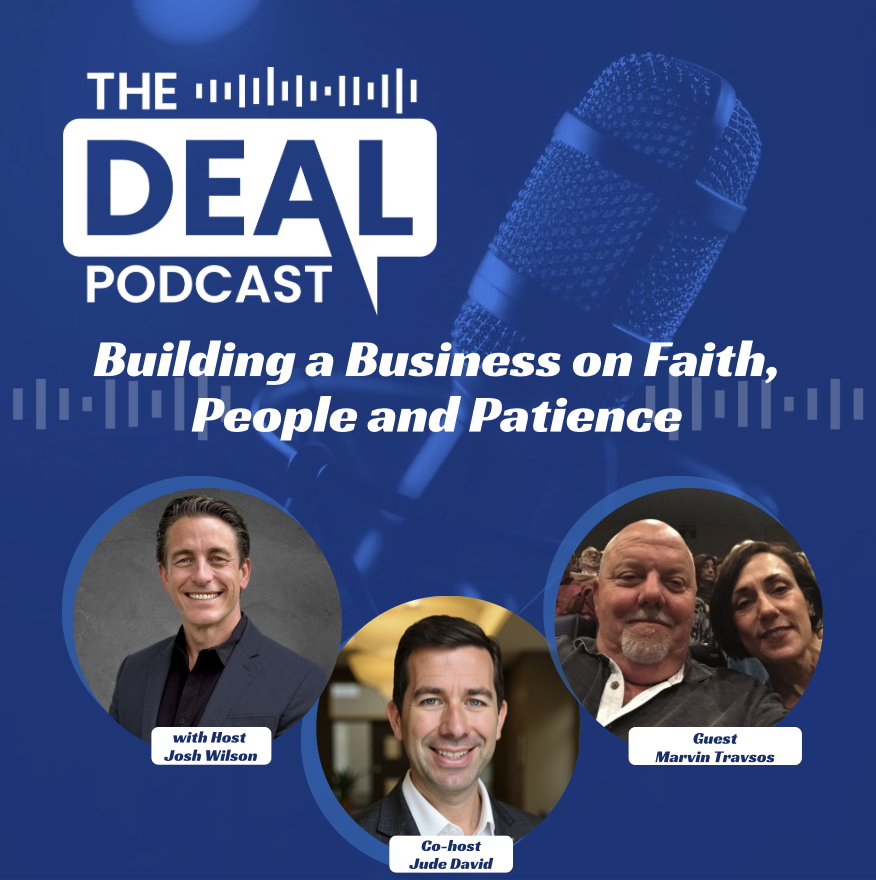
Feb. 4, 2026
Building a Business on Faith, People, and Patience
Marvin Travasos of Coastal Pumping Equipment on scaling an industrial business from welder to owner of a 4-location operation — built on people, accountability, and patience.
Guest: Marvin Travasos

Feb. 2, 2026
Building a Family Business That Lasts: Marriage, Risk, and Nine Locations Strong
Jared and Rachel Doise of Legends Born Grill on being husband and wife in business together — building a 9-location restaurant company over 20 years without losing the marriage.
Guest: Jared and Rachel Doise

Jan. 30, 2026
Why Culture, Not Strategy, Determines Whether Deals Actually Work
Kristine Goebel of Accompany Suite on why culture risk kills M&A deals — emotional intelligence in leadership, transparency before an exit, and what PE misses post-close.
Guest: Kristine Goebel

Jan. 28, 2026
Selling the Family Business Without Selling Your Soul
Mike Flash on selling Dixie Electric — a 40-year family business — without selling his soul, protecting employees, and what comes after the deal closes.
Guest: Mike Flash

Jan. 26, 2026
Patents Don’t Create Value. Businesses Do.
Ted Anthony on IP diligence in middle market M&A — what buyers actually look for in patents and trademarks, laddered portfolios, and why IP protects value but doesn't create it.
Guest: Ted M, Anthony

Jan. 23, 2026
How Smart Dealmakers Turn Taxes Into a Strategic Advantage
David Podell on tax mitigation strategies for business owners — how defined benefit and cash balance plans legally reduce six- and seven-figure tax bills and build net worth outside the business.
Guest: David Podell

Jan. 21, 2026
How Smart Exits Eliminate Capital Gains and Preserve Momentum
Brett Swarts of Capital Gains Tax Solutions on how founders defer capital gains tax on a business sale using the Deferred Sales Trust — and why it beats 1031 alternatives for liquidity events.
Guest: Brett Swarts

Jan. 19, 2026
From Louisiana to Leading Global Capital Markets
Rip Reeves, CEO of Institutional Investor, on how global asset allocators work — the allocator-manager ecosystem, the convergence of public, private, and wealth markets.
Guest: Rip Reeves

Jan. 16, 2026
How Banks Really Evaluate Middle Market Deals
Larry Attenhofer of Hancock Whitney on how banks evaluate middle market deals — what credit analysts look for, red flags that kill deals early, and how to prepare years before an exit.
Guest: Larry Attenhofer

Jan. 14, 2026
Why Deals Fail After the Numbers Look Perfect
Andre Broussard on why business sales fall apart at closing — the psychology behind every deal, the common mistakes founders make, and how CPAs serve as fractional CFOs through the process.
Guest: Andre Broussard

Jan. 12, 2026
Courtroom or Boardroom? Why Transactional Lawyers Shape the Biggest Deals.
CJ Miller on the role of a transactional attorney in M&A — how the right legal counsel structures deals, manages risk, and prepares business owners for a successful sale.
Guest: CJ Miller

Jan. 5, 2026
Relationship Banking, Deal Discipline, and Knowing When to Say No
Edward Bienvenu on how commercial bankers evaluate a business — relationship banking, global cash flow analysis, and why the best deals are sometimes the ones you walk away from.
Guest: Edward Bienvenu

Dec. 29, 2025
What Happens When the Deal Is Done and Purpose Is Still Missing?
Paul George on life after selling a business — the identity crisis founders face post-exit, why profit and purpose aren't opposites, and planning what comes next years in advance.
Guest: Paul George

Dec. 22, 2025
Love, Truth, and the Business of Building What Lasts
Lance Strother on faith-driven leadership in business — why love is a strategy with teeth, what inventing and partnerships teach you, and why integrity outlasts ROI.
Guest: Lance Strother