Amazon Music
 Apple Podcasts
 iHeartRadio
 Spotify
 YouTube
 RSS Feed
 Podcast Addict
 Podchaser
 Deezer
 Goodpods
 PlayerFM
 Castro
 Castbox
 Running City Hall Like a Business with Mayor-President Monique Boulet
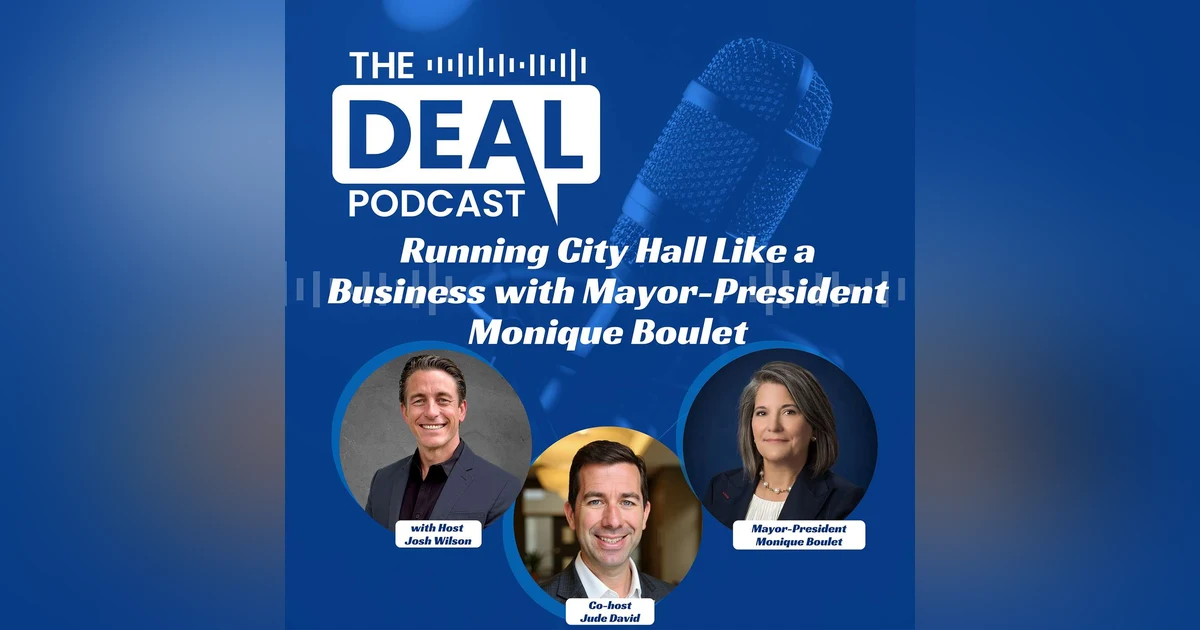

Mayor-President Monique Boulet on running government like a business — the $200M Johnson Street project, sewer policy that saved a developer $600K, and reorganizing 2,000 employees.
Key Takeaways
- An operator's mindset brings fewer barriers and faster decisions to an $850 million government operation.
- Mayor-President Monique Boulet reorganized a 2,000-employee workforce as part of a turnaround.
- The $200M+ Johnson Street revitalization is funded over 7–10 years, with the Bertrand project as proof of concept.
- A sewer-repair program saved one developer $600,000 off their capital stack.
- Removing drama and barriers invites businesses and families to invest in the city.
What happens when you hand the keys to an $850 million government operation to someone who thinks like an operator? You get fewer barriers, faster decisions, and a city that starts acting like it has a balance sheet to protect.
In this episode of The Deal Podcast, host Joshua Wilson and co-host Jude David, JD, DCL, MBA and Managing Partner at FA Mergers, sit down with Mayor-President Monique Boulet of Lafayette, Louisiana. Monique walks through how she's running Lafayette Consolidated Government like a turnaround — stabilizing day-one operations, reorganizing a 2,000-employee workforce, and stripping out the drama that was keeping businesses and families from investing in the city. From the $200 million Johnson Street revitalization to a sewer-repair program that saved one developer $600,000 off their capital stack, Monique shares how she's removing barriers, inviting private investment, and pulling government out of the way — all while keeping faith, family, and public trust at the center of the work.
🎯 What We Cover:
- Why Lafayette's population stalled inside the city limits — and the playbook to reverse it
- The Johnson Street revitalization: a $200M+ project and how it gets funded over 7–10 years
- How the Bertrand proof-of-concept project is de-risking a much bigger urban redesign
- Rewriting sewer policy to save one developer $600K on a single project
- Why the inventory tax repeal (Amendment 4) matters for Lafayette Parish
- Reorganizing a 2,000-employee, $850M government without raising taxes
- The wage adjustment that filled 300+ vacancies and restored basic services
- What private investors and developers should know about the current climate
- Lessons from Kathleen Blanco on leading with faith through uncertainty
- How Monique makes big decisions when the outcome isn't predefined
Topics: running government like a business, public sector turnaround, attracting private investment to a city, removing regulatory barriers for developers, large-scale workforce reorganization, inventory tax repeal, selling your business podcast
🤝 Connect with Mayor-President Monique Boulet:
🌐 https://www.lafayettela.gov/
🤝 Connect with Co-Host Jude David:
💼 https://www.linkedin.com/in/jude-david-jd-dcl-mba-172a6a76/
💼 Thinking About a Transaction? FA Mergers helps founders, investors, and business owners navigate the full M&A process — from valuation to close. If you're exploring a sale, acquisition, or capital raise, let's talk. 🔗 https://www.famergers.com/
🎙️ Follow The Deal Podcast:
🌐 https://www.thedealpodcast.com/
💼 https://www.linkedin.com/in/joshuabrucewilson/
▶️ https://www.youtube.com/@dealpodcast
DISCLAIMER The Deal Podcast is for informational and educational purposes only. Nothing discussed constitutes investment advice, a solicitation, or a recommendation to buy or sell any security. Always consult a licensed professional before making financial or investment decisions.
Disclaimer: Joshua Wilson is a licensed Florida real estate broker and holds FINRA Series 79 and Series 63 licensure. The Deal Podcast is presented by FA Mergers and is produced for informational and educational purposes only. Nothing discussed constitutes investment advice, legal or tax advice, a solicitation, or a recommendation to buy or sell any security or to pursue or avoid any transaction. All views and opinions expressed by the hosts, co-hosts, and guests are their own and do not necessarily reflect the positions of FA Mergers, One Iron Network LLC, any regulatory agency, or any employer. Listeners should consult their own legal, financial, and tax professionals before making any business, financial, or transaction decision. This podcast does not constitute a solicitation or recommendation for any financial products or services.
Frequently Asked Questions
What does it look like to run a city like a business?
Mayor-President Monique Boulet is running Lafayette Consolidated Government like a turnaround: stabilizing day-one operations, reorganizing a 2,000-employee workforce, removing barriers to investment, and inviting private capital.
What is the Johnson Street revitalization in Lafayette?
The Johnson Street revitalization is a $200M+ project funded over 7–10 years, with the Bertrand proof-of-concept project de-risking the larger urban redesign.
How can local government help private developers?
Boulet cites a sewer-repair program that saved one developer $600,000 off their capital stack as an example of government getting out of the way of private investment.
Who is Monique Boulet?
Monique Boulet is Mayor-President of Lafayette, Louisiana, leading an $850 million government operation.
00:00 - Welcome and Why We Do This Show
00:59 - Meet Mayor-President Monique Boulet
01:32 - What Mayors Actually Do — A Global Perspective
04:02 - The Johnson Street Revitalization Project
06:32 - Fixing the Sewer System and Saving Developers $600K
11:01 - Pulling Problems Out of Government to Find a Yes
15:47 - Growing Up Around Politics and Watching Kathleen Blanco Lead
20:14 - Running to Stabilize Lafayette Government
23:14 - Learning From Mistakes and Preparing for the Unexpected
26:38 - Government's Role in Private Investment
30:51 - The Inventory Tax, Amendment 4, and Positioning for Growth
33:51 - How Lafayette's Budget Actually Works
42:18 - Faith, Family, and Leading Through Uncertainty
Joshua Wilson:
Good day everybody. Welcome to the Deal Podcast. On today's show, we're gonna have a, a conversation with, with the leader here in Lafayette, Louisiana. And, um, I'm not gonna tell you who it is yet 'cause you have to listen to a quick message. The, the purpose and mission of us doing this podcast is to inspire future entrepreneurs to get into the game, to learn about business and learn from the, the wisdom and failures. And the experiences of others. So we have people come in, share their story, and sometimes share their confessionals. And, uh, we, we love doing that because we want to help you. We always encourage you to head over to thedealpodcast.com if you have questions, if you want to connect with a guest or if you have questions from our team, thedealpodcast.com. But now let's dive in. Um, this is, this is great. This is so, um. I am honored. Why don't you kind of kick us off with, tell us a little bit about who you are and what do you do.
Mayor-President Monique Boulet:
Sure. First, thank you for having me. Yeah. Uh, appreciate it. This is fun. So I am Monique Boulet. I am the mayor, president for Lafayette, uh, which is the mayor of. The city of Lafayette, president for the Parish of Lafayette. It's an odd job if you ask me. I think we get used to hearing it. Uh, Baton Rouge is the only other parish that has this dynamic and, and it's, it's odd there too, I think. But it's good. The community here is phenomenal and it's an honor to do what I do. Uhhuh. So, so that's, that's who I am. What was your other question? You wanted me to, uh,
Joshua Wilson:
yeah, yeah. Who are you and what do you do? So what, what does a. What does a mayor do? What does
Mayor-President Monique Boulet:
a mayor do? A mayor,
Joshua Wilson:
president do?
Mayor-President Monique Boulet:
What does that? So, I was in Boston last week with 46 mayors from around the world, and it, the, the most, I've been in a group with them for a year. It's just kind of a capstone of a year long cohort. And the most interesting thing to me that mayors from Europe, from England, from Australia, from Africa, it didn't matter. Excuse me. Large or small or, or even we had one from Bulgaria, which is a little bit of a, uh, there's a lot of tension there. Civil unrest, we all have the same job, and it is creating that foundation of a community to live in. Right. Uh, even in one of the calls, the mayor of Kyiv Ukraine popped up and caught me completely off guard because. Well, he's living in a much different world, and this was last year when he was on the call. He's trying to put together an electronic notification system for his, uh, people. And I was like, whoa. Um, but he's dealing with the same. We all have to keep basic services going. That's sewer, water, drainage. You know, we all have to really deal with the basic infrastructure and then how do you create that environment for businesses and families to grow and thrive and live? And, and that's kind of the fundamental, what do we do? And that comes at you every single day in a hundred different ways every day. Uh, so no day is ever the same. Uh, it is very interesting. And it's, um. It's also great opportunities, right? You deal with a lot of problems. You deal with, uh, a, a lot of issues, but at the end of the day, when you can really do something good and impact lives, and, and again, I really, I go to the philosophy that if you can pull the drama out of government and calm it down and get it functioning, that really does allow our families and our businesses to, to do what they need to do. And, and, and you need all of that for a community to grow and, and to be healthy.
Joshua Wilson:
Yeah. Um, for people listening in, this is a great honor. We've got a room full of, uh, wonderful people who, who make these things run, right? Yeah. We have chief of staff and we have team members here in the room, and we're, we're grateful for all y'all coming and, and being a part of this too, but you're not gonna hear from them. But you also will hear from Jude who's, uh, co-host of this show and, and the vision behind this show. Jude, why don't you, uh, give a little hello. And, uh, kick us off with, uh, first question.
Jude David:
Absolutely. Um, hello to our listeners. Uh, like we said in the past, you know. One of our main goals here is to inspire the next generation of entrepreneurs. Mm-hmm. And you know, although a lot of times that's young people coming outta school very frequently, that's people working in professional jobs here in our community in their twenties, thirties, and forties. But they're thinking about. You know, what they can do next, how they transition mm-hmm. How they pivot. And a lot of times that's serial entrepreneurs, folks that have done this before, but they're thinking about the next thing. And, uh, and mayor, we've had some really cool things happen since you've taken over the, the mayor's office. You know, I, I love the new Johnston Street project you're putting together for anybody looking to redevelop Lafayette. Mm. A prettier, more well-functioning Johnston Street is a. A great opportunity to, to have a new development or, um, you know, just a little bit of an easy relationship with government, you know, whereas maybe it's been a little more strained in the past. Can you tell us about those projects, what you've been doing? Uh, since you've become mayor, what you have on the horizon, uh, to help business owners in our community?
Mayor-President Monique Boulet:
Yeah, so when you talk about revitalizing Johnston Street, there's a bigger effort there. Uh, we, we have growth in Lafayette Parish. We are one of the fastest growing parishes, but the city of lafa. Uh, the population has been stagnant, and it is a dynamic city. It's not a city that is hard to sell at all, right? But why do we not have those businesses and, and, and, uh, housing stock being built in the city? So what we are trying to do is really what are the barriers? One of them is that reval, the idea of re reinvesting in Johnston Street where Bertrand is the. The first proof of concept project, and I will tell you, some of the business owners there are waiting with new projects, uh, for the construction. They're very excited. The investment there to create a different environment to create that pedestrian, um, it connects Moncus Park to Cajun Field, right? It's that half mile. Proof of concept. And in business, you know, when you're gonna do something big, if you can do it small first and work through a lot of those kinks, it makes it much easier. Johnston has always been a monster idea to me, so taking Bertran and, uh, we, we broke ground on it. The first phase is gonna put the communications underground and, uh, remove some of those utility poles and restructure the grid there. Um, to, to work through all of that, to get this project off the ground and then get us in a space where we can then. Uh, put the right investment into Johnston Street to address all of the issues, not just pedestrian or bicycle, but also traffic congestion, safety. Um, looking at the, the grid, the grid is old and, and it is time to modernize that grid and we own. The electrical grid. I mean, what an opportunity. It's not a, a private company or a big company that we have to negotiate with. This is, this is our, um, and I do think it's our utility, but I do think it has a negative impact on commercial property values and so. How do we inspire investment? How do we inspire development? Let's, let's take those barriers down. Sometimes those barriers are within government, so we're not only looking at the revitalization projects like Bertrand and Johnston Street and the Grid and all of those things, but also looking at the sewer system. Uh, for, for a long time it's been very expensive to build inside of Lafayette because of sewer capacity. You have to build a, a lift station or you, you know, you have to make certain investments. Well, one of the, uh, iterations we. We worked through with, uh, it was in the Bloomberg grant for the sewer system was um, I guess I was sitting with Jeff Stewart. Jeff Stewart is our director for LUS. He's phenomenal. And everybody knows the big sewer project in town right now. The big giant pipes that we've been driving around and St. Mary, and, you know, I, I know everybody's getting to the end of their patients, but it's, you know. Soon it'll be finished. Um, but that's a 17 and a half million dollars project to add 2000 units of capacity. And what Jeff explained to me when I came into office is that we go to capacity in our sewer system in these heavy rains because a lot of the pipes are cracked, the tree roots crack the pipes, the rain water gets in the pipes, and we are processing in those rains more. Rainwater, then wastewater. And so we're having to send pumper trucks out. You don't see it, but those lift stations are not doing the job. And to keep the sewer out of the roadways, we've gotta like go pump out. You know, the little manholes all over the place. Yeah. Yeah. I mean, we don't realize what's happening behind the scenes, but it's, it's stopping development, you know, because we don't have the capacity. So we're, this lift station was supposed to be $12 million and then, um, the next day it was 17 and a half million. And I was like, dang, you know, what are we. What do we do so we don't have to do this? I, I was like, Jeff, what's next? What's after we go through these 2000 units of capacity, what's next? And, and he said, look, if we fix the existing system, we never have to build one of these things again. He said, but we can't, 'cause we can't spend government money on private property. Ah, you know me. I'm like, well, let's figure out how to do that. And the legal team, um, who I have a lot of respect for, I said, no. Uh, and they said no, and then they said no. And so, um, we went through a lot of iterations. Uh, spent a year working with Bloomberg and found a way to define it, uh, to to to define the greater good for the bigger community and. So I, I, in the state of the parish speech a few weeks ago, gave the example of, of, uh, development where they were asked to build a $700,000 lift station for that sewer capacity. Well now, instead they were offered, uh, they were one of the first to be offered help us fix $200,000 worth of repairs. Instead of that we'll pay, and I think LUS is paying for half of those repairs. So from $700,000 on the front end of their project, it went down to. To $100,000, saving them $600,000 off the top of their capital stack, taking down barriers, opening the door for the, for that infill and that development that we need. Really, you know, looking at the housing stock, looking at how do we get some density, how do we get that young professional housing stock? Yeah. So it is like just a dirty little subject matter as far as the sewer goes, but it has a real impact on our quality of life. Uh. So, yeah. Long story.
Jude David:
A long, long way round. And a efficiency government is really difficult for entrepreneurs and you know, sometimes we have these rules to protect the public,
Mayor-President Monique Boulet:
right.
Jude David:
And then the public ends up spending twice as much money to comply with the rule. And it's like, did we lose the plot somewhere? Like the Yeah.
Mayor-President Monique Boulet:
The
Jude David:
point was to, you know, be good stewards in the money.
Mayor-President Monique Boulet:
Yeah.
Jude David:
Sounds like you're finding ways to protect the plot and, and stay on
Mayor-President Monique Boulet:
track. Well, you know, I was on a, um. A call with the Bloomberg board, uh, Bloomberg Philanthropies board, which is like the CEO of Disney and the CEO of oh, one of the big investment firms. I forget which one, but he said, let me not call him out 'cause I'm quoting him. He said, why do you need this money? Uh, 'cause they, we won a million dollars to go towards this program. He said, this is y'all's problem. This is a local problem. And I explained to him, it's not the money that's gonna change it. It was pulling the problem out of government and rethinking it in a way that we could find a yes instead of a no. Because of the rigidity of government, because of the protections, putting government. So you're not, you know, I'm not going to fix all of my friends' sewer lines at their houses. You don't want that. You don't want the mayor just willy-nilly spending money. You know, that's not, there's no checks and balances on, you want the checks and balances in government, I promise you. Um, but at the same time, you wanna be able to solve those problems. And so we were able to pull that problem out and really. You know, rethink it and retool it and go through a lot of iterations and put it back in, in a way that got us to a yes instead of a no. Uh, it takes, takes more effort in government, but, um, I, I will tell you, you know. I ran because I really didn't like the way things were, were being run. And one of the things that needed to be put back was the process, uh, to put, to, to be able to spend taxpayer money with the checks and balances that everybody expects and, and so, you know, have, there's a health of respect at the while. At the same time we gotta break through to solve problems. So there's that balance you have to have.
Jude David:
Yeah, I mean, nobody likes power lines. Nobody likes the ugly billboards and whatever else. So yeah, the idea of revitalizing Johnston is amazing. You know, I love the, you know, Doucet Johnston area. You know, in, in terms of area of town, but you go turn from Doucet to Johnston's now and you go wait, laundromat, sex shop, pot shop, tattoo parlor.
Mayor-President Monique Boulet:
That is exact. So I came in the office. That is so funny you bring that up. I came into office and I got a call and somebody said, there's a, a farmer's market at the Acadiana Mall, which I've never heard of. And I was like, lemme go drive. Well I never found it. I don't know where it was, but I'm coming back down. Johnston and I grew up on Johnston. Right. And, um. I looking at it very differently'cause I'm just elected mayor, president, I'm looking and I get to the pink shop and I'm like, crud. That used to be on the outskirts of town. How is it sitting in the heart of town? I mean, we grew up, it was there, but you didn't see it every day. And that it was that one little moment that I was like, this. This is, it was hard for me to say out loud, I'm taking on Johnston Street 'cause it's something that's been tried for decades and it is a monster project. It will be over $200 million when we're, by the time we're finished. But if we plan it over, you know, uh, um, uh, probably a seven to 10 year period, if we plan the funding appropriately, if we do everything that we need to do, it's doable. It's doable. We, we have, um. Not to jot back to Johnston, but we have 45 million secured already, uh, in federal, state, and local funding. And so we've gotta jump on that. You know, we've gotta jump, I'm gonna say 200, 2 50. I know the way prices increase, uh, with construction and, and that's, that's our guest today. Right? But. I'm planning for that. I'm talking to our legislative partners. I'm talking to our congressional partners. How do we do this over time with, you know, the local budget, with the state, with everybody and, and different grants? We've already gotten several million in different grants. Um. It's doable. We can, we can. I was talking to the engineer for the downtown segment, Jimmy Ricks, and we're starting the survey and now you have surveyors out there trying to figure out what's underground now. That's old. It's old. What's underground? And they, everybody's laughing. They're saying, you're gonna find live wires that no company will claim, you know, and how do you turn it off and what happens? And, and so I was kind of stressing a little bit and I called Jimmy. I said, Jimmy, what are we gonna find underground? He said, Monique. Other communities rebuild. We can do this. I was like, you're right. Nevermind. You're right. Um, other communities do it and it's time for Lafayette to do it. It's time for us to invest in ourselves.
Jude David:
Yeah. Sometimes in private business, we just break things and then we see who screams about it afterwards. Yeah. You can't do that so much in government, so
Mayor-President Monique Boulet:
it's a louder scream. We get.
Joshua Wilson:
What, what I love is, um, when you were saying, you know, you were trying to figure out how to. How do, how do invest this money to fix a problem so it's not passed on to the next generation or the next office or the future, or the kids, grandkids in the future. So you're like, how do we fix this? And they're like, legal team. They're like, no, no, no. There's always like jobs, you know, we, we just interviewed, um, Mark Weber and he was saying, you know, there's people's, some people's skill sets are to be the, we blanket to, to kind of go, no. Mm-hmm. Not yet. But you know, part of what you said is, you know me and then you said, I heard No, I heard. No. Is this how you always were, kind of give us an idea of like, what, what were you like growing up and then like what got you into
Mayor-President Monique Boulet:
politics?
Joshua Wilson:
Oh, that's interesting.
Mayor-President Monique Boulet:
So I was quiet. I can't come from a very large family. Uh, we had six kids, a very loud, rambunctious. Uh, if you knew my father, he was a football coach to start in life and always a lot of activity. And then my mother was in politics, but I was the quiet one, which is relative. Right? But if you know my siblings too, I am probably still the quiet one. Um, I watched a lot. One of the stories that I've told before is they used to have. Big political dinners and it was usually people from both sides of the political spectrum. And back then it was very common. And you know, we were the set the table and clean the table staff. You know, we were the kids. But I would always, once the dinner would get started and it would always turn into big giant conversations. Very loud and rambunctious, but fun and laughter and everything else. Um. I would sit in the corner and just watch. And I think that's probably, I watched a lot very quietly just observing and taking in the negotiation of differing opinions, taking in the negotiating the negotiation of relationships of, you know, they, when someone would get elected, when Buddy Roemer got elected, many people from Lafayette did not know him, and we didn't have the internet at that time, so they would bring him in. And they would bring different community leaders and have dinners with, to get to know ams. I mean, we all needed to know whoever the governor is, Lafayette needs to be at that table, right? It's our state. So you know, whether it was him or somebody else, they would bring them in and then make sure the key people in the media, the key people in the community, the business leaders, got an opportunity to come sit down and it was always. Fun and full of life. And, uh, so I watched that and I think a lot of, I also watched my mother, um, my mother was Kathleen Blanco and she had so much grace and dignity in the work she did. Uh, she, she, you know, we, we haven't touched on faith, but if there is one thing that she did was move with faith, and I think one of the biggest lessons that I've taken is watch. You don't have to have the answers in life or in a problem or in a bad situation to walk through it, to get to the other side, to find the answers and being able, it's almost, I call it walking blind, is. Such a gift. Uh, when I, when I thought through, you know, I was doing it and, and I think back on it, she did it. She, there was a challenge. She had no problem stepping into it without the outcomes predefined and the, you know, all of those things that happen so often in, in politics. Um, she did not have to have those answers. She had a lot of faith that, you know, walked me through this and, and so, uh. A lot of my upbringing was watching that. I did not have a big ambition for this job. I'm gonna tell you, um, politically it wouldn't have made sense, uh, if, if you understand Lafayette politics, but I really didn't like what was going on and I knew I had enough political wherewithal. To get in the race and to, we, we did an, uh, an ana, a poll. People think polls are bad, but it wasn't a poll we published to understand the landscape. So I knew what I was walking into in great detail. I called it an old Raymond Blanco poll. You go in a great detail and you understand. What people think and why they think it, and the, and the commitment they have to that thought process. So I had a very clear path stepping into that race in January. It was a very difficult race though. Uh, it was a tough. Tough experience and, uh, I, I'll give a little analogy. My son Sam, is at West Point and he was on the boxing team. And I was talking to the colonel from the Corps of Engineers who is a West Point grad who was on the boxing team. And I was bemoaning as a mom.'cause I don't really want my son on the boxing team. Uh,
Joshua Wilson:
don't hit the face.
Mayor-President Monique Boulet:
No. Do we really have to keep hitting the head? Yeah. Uh, and he said, Monique, you don't know. You never really know who you are till you get hit in the face. And I was like, oh. I guess I have been hit in the face a few times and
Joshua Wilson:
yeah,
Mayor-President Monique Boulet:
you're right. Um, it gave me a whole different perspective on what I went through to get here. Um, but I'm glad I'm, so, it came, I, I ran to stabilize the government just to take the drama out. I, I was frustrated 'cause I was like, it doesn't have to be like this. We don't have to have, we had all these news stories and a, a lot of things happening that really shouldn't happen in government. And so that was my goal, stabilize. And we did, I brought in Pat Ottinger, I brought in Karen Fontenot, the CFO and the, and the. Legal attorney who both had tremendous institutional knowledge, knew where everything, all the skeletons were, knew how to calm it down fast, and we did. And so then what's next, Johnston? Uh, immediately I started thinking about that and kind of going a long way around. Right. I. But to say it out loud, I would gasp for the first few months because is, is it a joke? Am I actually gonna do this? But I am. We've got engineers under contract, they're surveying right now. The drainage is being engineered, the, you know, it's all in the works. We'll go through a public process over the next probably six to nine months to really get that urban design feedback of what the finished product is. But it's moving. It's moving. So I'm excited.
Jude David:
Well, PE people have just been so happy to have adults back in city hall with, sorry, sorry, anybody I insulted there. Um, but it's your show, Jude. You can say what you want. We're so
Mayor-President Monique Boulet:
thankful better you say it than me, but
Jude David:
we're so thankful to, you know, see government working, you know, that's really exciting and obviously yeah, nothing goes exactly according to plan, but it probably runs in the family for you. I'm sure your mom. Whenever she was governor, didn't expect, uh, hurricane Katrina. Nobody could have expected that.
Mayor-President Monique Boulet:
No. No.
Jude David:
And you know, obviously, you know, Monday morning quarterbacking, everybody would like to see different things happen in the wake of Katrina, but nobody expected it. But you try to always learn from any mistakes that happen and, and make sure it's better the next time. And you watch what happened with the federal government. Like what your mom advocated for,
Mayor-President Monique Boulet:
right?
Jude David:
From the federal government during that process and then after that process. And you look at the FEMA response to natural disasters today. Versus before Katrina. Mm-hmm. And it's unbelievable. Yes. The transition. What kind of experiences have you had like that? Or are you experiencing like that? Where we're learning from mistakes and we're setting it up better for the future?
Mayor-President Monique Boulet:
So, you know, um, I think that's a good example. Uh, I have with me today, Christina Dayries, my chief of staff. Before I took office, I called GOHSEP. And I, you know, um. I said, sit down with me and, and tell me if we have a disaster on day one. Give me a direction. And she happened to be in the meeting. I didn't know her. Uh, and I didn't know she was looking for a job, uh, locally. She's from here and, um, you know. I, I guess you threw me to Katrina. I don't know if that was the actual question, but I really do try to think through everything on the front end and, and I'm thinking about your question about, it's more about mistakes, huh? Yeah.
Jude David:
Yeah. Yeah. How do
Mayor-President Monique Boulet:
we learn from those mistakes? How do we learn from those mistakes? How
Jude David:
do we not repeat 'em?
Mayor-President Monique Boulet:
So. Shall I put up my little quote?
Jude David:
Yeah.
Mayor-President Monique Boulet:
I was in mass Sunday night and, um,
at Wisdom at 9:
00 PM by myself. You know, it's that last mass, last chance. And uh, I get
Jude David:
it in.
Mayor-President Monique Boulet:
It was pretty packed too. Uh, it usually is. Anyway. I had one of those moments where you just kind of feel the crucifix looking at you. You know, it's a big crucifix there in the moment, and I, and I thought, oh. You know, God has something to tell me that, that I don't. And I text Rachel my CAO and I, I said, uh, God's gonna reveal something. I don't know. I don't know what it's gonna be. And then the next morning, uh, it, I woke up to this quote and I was I flipping through Facebook and it popped up from Mother Teresa and it says, stay silent. Even when triggered. Here's my weakness. Uh, it's a superpower. You'll win 99% of your battles through silence and observation. Um, I get very passionate and I, uh, I jump out a lot, uh, in, in situations which is not bad. I think some people like authenticity. I get a lot of positive feedback on that, but at the same time, um, maybe I should sit back a little bit sometimes and. And watch and let things happen. Um, if I, if I have to look, uh, from that perspective, but I think there's a lot of lessons. I don't know always. Uh, it's a constant, there's a constant self analysis that goes on whether I like it or not.'cause it's actually on. Social media happening simultaneously, whether I'm doing it or not. Somebody's analyzing, uh, what, what's going on and, and really trying to reflect, um, holding back some of that, uh, holding not the authenticity, but, but maybe, um, I guess I've, I've learned in this position learning, I'm learning in this position. To hold my, whether it be anger or frustration or, or, you know, to, to hold it tighter and let things play out. I think, um, if I have to find a real weakness, um,
Jude David:
yeah, well you can judge a person by what their algorithms are pushing to them. So if, if your Facebook algorithm algorithm is pushing, there you go. Mother Teresa, you're probably doing alright.
Mayor-President Monique Boulet:
It was either the crucifix the night before or the, or the, uh, algorithm. Yeah. Right. That's funny. I didn't think about that.
Jude David:
Yeah, you're doing great. Um, look, I, I, maybe I'll make a little pivot. Um, people have different ideas about government's role in the business community.
Joshua Wilson:
Mm-hmm.
Jude David:
Um, and you know, some people think the government should be incentivizing private investment. Others think the government should be your partner in private investment. You know, whether an actual partner or whether just, you know, removing roadblocks right from private investment. Other people want government to be the wet blanket on, you know, private companies and private investment always being the regulator and the check and mm-hmm. The one stopping you from doing things that might impact other people. Where do you sit in that spectrum? You know, what, what have you? Been thinking about and trying to do with respect to private investment, uh, in the Acadiana community.
Mayor-President Monique Boulet:
Yeah. So coming in. Really primarily was to stabilize. Then we went through a, uh, a reorganization within LCG. We have over 2000 employees. It's an $850 million budget. It's a big, big operation. You know, at this point in time, we really are looking at the development, um, as well as the business climate. And I, I actually had a conversation with one of our, um, uh, biggest businessmen in town at one point. He, it
Jude David:
wasn't me.
Mayor-President Monique Boulet:
Uh, it, it was Lenny Lemoine. Let me, let me call Lenny out. Um, and I said, Lenny, I feel sometimes that I'm disconnected from the business community.'cause we were really deep in a lot of day to day. And he said, Monique, I was at dinner with, uh, with, uh, eight or 10 of our biggest business people. And they love the fact. They don't have to call you for everything. They love the fact they get to do business and you're not in the middle of it. Um, and, and we're not. So, I mean, my goal is not to ever be the barrier. Now I wanna see healthy business. Let me say that. I want to see, uh, a community where we have businesses that support our families. If a businessman comes to me and wants big incentives, I wanna know what he's doing for his employees. Uh, and like, like make sure you know, your people are getting. It's not for me to dictate healthcare, right? But if you want incentives from me, and I've actually never. I've been in a situation where I'm dealing with a business who doesn't, uh, cover their people, but I want their people covered. So we have healthy families on the ground. If you're taking care of your families, then yeah, let's negotiate a little bit. Um, we don't have big incentives to, to, to pull in and take. We have some, um. A lot of it's done at the state level now. Uh, so it's that that negotiation's not happening all the time. But at the same time, we do make decisions that impact businesses. And so I wanna make sure the decisions we make are pulling us out of the way. Again, those barriers, we have barriers up for no good reason and, and no ill intent either. They're just up because they. Lafayette consolidated, grew, uh, consolidated. Government grew, like the city grew kind of in chunks. And, and so we have this big organization and that's what we've been trying to figure out. Is it the organization we need today? Um, from a business perspective, I probably am more of, uh, let us get out of the way. I do want though, at the same time to make sure we have a healthy community. And I think the best way for that is to support our families and to support our, uh, our. Our, our businesses, right. Um, I'll say this from my employee's perspective. When I came into office, we had over 300 vacancies at a lot. And when I would say, why are we not hiring this, this position or that position? And they'd say, we can't afford it. And we were still paying some people eight and $9 an hour. And so we went through in that first year, uh, a wage adjustment. And you can't just adjust in the civil service system. It's a monster. You have to adjust the whole system, but it's a proportional adjustment. So at the top it was maybe a 2% increase, and at the bottom much, but we brought it to 12, $12 an hour for the bottom. But it, the pressure that relieved within the government was tremendous and, and 12, I don't think is market rate, but from a government perspective, it was a big adjustment. It took a whole layer of stress of off of everything we were doing. It was a big investment. Um, but then we were able to fill positions. We, we had water leaks. I don't know if you guys remember the, the weight on a water leak was over a year. We had the water leaks all over town. We had gone through a drought. And we had gone through a freeze and the, and everything was cracked and there was no catching up. And so we couldn't hire enough people. So we took a million dollars, uh, to outsource support. And then we did everything we could to fill those positions, but we needed to increase the pay to fill the positions. And so within a few months we had that under control. You know, it, within six months, I think we were caught up, uh, which is, those are the basic services people want. So, um, yeah,
Jude David:
well, you know, very frequently government incentive for business backfires. Um, so I'm glad to hear that's not the way we lean. Um, you know. We,
Mayor-President Monique Boulet:
we don't have a lot to incent. We do, we are working on getting rid of the inventory tax. I will say that.
Jude David:
Great. That'd be great.
Mayor-President Monique Boulet:
Now, I, I wanna say that, and I want you to understand that's a, about a 10% hit on all of our millages. It's a significant pullback, but we are positioned as a parish with growth and with some big things coming. So the way we're doing it is trying to meet growth in the middle. Uh, it's, uh. But it's one of those calculated. Decisions that you would make in business, right? You've gotta kind of invest a little bit to get a little bit. I think we risk losing some businesses if we don't do it, and I think we risk not getting some businesses that would come anyway. I think you know the state it's on, it's on the ballot on May 16th. Let me, let me say this. Please go vote Amendment four. Um, give us the option to opt out of inventory tax. I think, I think it's a critical play for Lafayette Parish right now. If I were a bigger parish on the Mississippi River, it would be much harder because that's a, a much greater percentage of their revenue. Uh, 10% is a tough. But we have growth coming, so we will meet it in the middle over. We have to agree with the sheriff's office and the school board. As far as the timeframe, is it a two year phase out? A one year phase out a, you know, whatever that phase out might be. Um, once it passes, but. I think, is that an incentive? I think that's a big incentive.
Jude David:
Yeah, for sure.
Mayor-President Monique Boulet:
Uh, you know, again, it's pulling government out of the way.
Jude David:
Well, it, it's easy to get people in Lafayette, Louisiana to vote to remove taxes.
Mayor-President Monique Boulet:
Yeah.
Jude David:
It's hard to get them to vote to approve new taxes.
Mayor-President Monique Boulet:
Yes, it is.
Jude David:
Do you have any projects that. Have needed new taxes or things that need funding, that need new taxes that you've struggled to.
Mayor-President Monique Boulet:
So we haven't proposed any new revenue. I'm not, I don't feel that pressure at this time. Let me say that. Um, I felt like there was an a lot of reorganization that needed to to happen as far as how we spend our money, what problems are we trying to solve, reorganizing that whole decision chain has been huge and, and, and significant. Um, we did have two renewals fail. On the ballot last year with the state, when the state had all those constitutional amendments, there was a big effort to vote no down the ballot on the state initiatives, but it boom, boom, boom, boom, boom. It triggered our two renewals and they were pretty baseline road, uh, and drainage renewals. We came back and got them approved. Uh. But we haven't, we haven't proposed new revenue, and I don't foresee it, uh, at least not in the immediate future. I don't, I don't foresee the need. I, I still feel like we're in a, how do we spend what we have better mode. If we, if we crystallize that, maybe we come knocking, but we're not anywhere close to crystallizing. How do we spend what we have better, what we're, it's a process and we're getting there.
Jude David:
Yeah. Well, it's refreshing to hear, I think at every level of government, you know, people want to hear their politicians saying, we have enough money in the budget, we just need to do better with it.
Mayor-President Monique Boulet:
Yeah.
Jude David:
Um, you know, how do we deliver on that promise? What are some, what are some good things that people should be paying attention to about the city budget or the parish budget and.
Mayor-President Monique Boulet:
Yeah,
Jude David:
how we're improving.
Mayor-President Monique Boulet:
So, um, we're starting the budget process right now. It's a very intensive pro process that will go from now until September. So it goes on throughout the summer. And, uh, the council, you'll, you'll get to see the council go through it line by line. It's a, it's, um, interesting process. Uh, and what, what we do right now is work with each of the departments. Now that inventory tax would not go into effect this year. If we got rid of it, it would be a next budget cycle issue. Uh, legally, the. The law passed doesn't allow it to go in effect now, but we are asking our departments, let's start at 10% back. Let's just start the mental shift. Not that we lay in there. I think we'll end up budgeting all the money we have, but how can we look at what we have? At a in, in a more efficient manner. There's always efficiencies to be had. And then those reoccurring revenues that you just put in the same category every year, justify that a little bit. Think through what are you actually gonna spend this year. I think it's a similar process. Businesses go through you when you wanna tighten your belts, and so mentally we're going through that. Again, I'm not telling you, we're cutting the budget 10% this year. The, the law has not passed. It's gotta be approved on May 16th. And then we have to go through a long process. But we are starting a mental shift on how we think about the money we have. And I think traditionally it's been, oh, we have this much, just layer it on top of everything else. And, and so my question is, no, let's stop. What are we gonna do new if it's new money, you know, and, and. What problem are we gonna solve? That question is simple, but it is such a significant question. What problem are we solving with this project? And is it a real problem? Um, I have pulled some projects back because the answer is, it's a good project, but what are we solving with the project? If we're gonna spend money, there should be some better. And it was a good project. It was a nice pro, it was a drainage project, but. It, was it affecting structures? Were we, you know, I mean, if from a drainage perspective you have a problem, if structures are flooding, businesses are homes if yards are flooding, huh? I'm not. So, I mean, it'll go away. Uh, I, I, I don't know. It kind of baseline drainage issues like that, it's a problem if it's coming in your, in your home or your business, you know,
Jude David:
it's gotta be hard to figure out where to spend the dollars. I mean, I, I think a lot of people have a. You know, a general idea in mind that if, you know, one part of the city is generating most of the tax dollars mm-hmm. That one's probably gonna get the most mm-hmm. Amount of spend versus another part getting less. And so unfortunately some parts generate very few tax dollars. So,
Mayor-President Monique Boulet:
so let me say this, that's not how it's done, but that's not even how it's done. Eh, either way on on that, uh, the, the much of the revenue is restricted. Uh, there's mills that are allocated for drainage and, uh, city dollars and parish dollars and money for the jail and money for the courthouse complex and money. So that big budget, about half of it is LUS, goes straight to utilities. Uh, and so it. It's not spent in other areas. Uh, the public safety is a huge part of our budget. The police and fire departments as well as the emergency preparedness, um, maybe I think 75% of the general fund. So the general fund is only a piece of it.'cause all those millages that are allocated, uh, and I don't know the numbers off the top of my head are allocated. So you have to spend the money in those areas. There's, there's drainage, there's roads, there's, um. I don't know. Justin Centanni has the whole list of all the different mills. So the budget is much more complex than just one big pot of money. How do we spend it? Uh, and, and, and, and what we try to, I guess from a capital perspective is what people really see. They don't see the operations side. The operations side is very tight. Uh, the sales taxes generated only allow us to spend, I, I hope I'm getting this right, 35% on. Operating funds or 35%. Yeah, every, everything else has to go into other categories. I might not have that exactly right, but nonetheless, it is very restricted. So it's not so simple as, oh, come fix this road to that road. And then the unincorporated areas don't pay city taxes, and they have the high growth and they want the big roads. And they want the fire protection and they don't have millages to cover that. Well
Jude David:
join a city.
Mayor-President Monique Boulet:
Yeah, that's a real trick. But they're our family members, so we can't leave them uncovered for fire. Right. I mean, you don't want, there's this balance. And so working with those volunteer fire departments, uh, really to try to make sure they have some, there is a, there is a balance. I would think that the. The, the, the bigger trick for us is the unincorporated versus the city versus, you know, the, the other cities. It's balancing all of that and the city money really has to be spent in the city. I know there was a little bit of mixing of dollars, uh, in the last administration, but that really is not. Um, legal or the auditors really, um, ding us hard on that. So we, it's spending, you will see more activity in the city because there's more funds in the city to be spent. There's more raised, uh, in the city and people pay city taxes for that. So that Johnston Street, Bertrand, all of that, some people said, well, you need to come, you know, build this. Out in the unincorporated area. It's not the same pot of money. Uh, yeah. So there's a, a real juggle and balance in that budget process that goes on for about six months. Um, but really trying to identify what are the problems we need to solve and then how are we gonna solve those problems? Really trying to bring in data. Solutions, data-driven solutions. We, we, we weren't pulling a whole lot of data before. Um, working with, actually Bloomberg set us up with Johns Hopkins with some data people to help us identify what are those data points that can help make better pol um, better investment decisions. That's, that's something new that's going on behind the scenes. Uh, so it's a little bit like running a business, but. But then not really. We have more rules. A lot more.
Joshua Wilson:
Well, I'm, I'm so honored that you're here. I know that you guys are on a tight schedule, and I, I want to honor that really well. One of our great pleasures here on the podcast and one of our traditions is to connect guests, and one of the ways we do that is you get to leave a question behind for the next guest. We only do this for the in studio, so this was from Mark Weber. And, uh, Jude's gonna read it for you, and then you'll get to pass on a question.
Mayor-President Monique Boulet:
Okay.
Jude David:
How do you incorporate your faith into your business decisions?
Mayor-President Monique Boulet:
Oh, so, uh, that's an everyday, uh. Not, not challenged. That's an everyday thing. I think, uh, when I can start a day, if I have the luxury of a 30 minute walk with meditation, you know, actually I, I listen a lot to Father Mike Schmitz, uh, homilies. Um. I can't do this without my faith. I don't know how not to incorporate it. Let me say that you, you get in big battles. You get in situations that don't make sense. You, you get in, you know, big decisions. Uh, we, we are announcing the fire chief today. That's a big decision. It has big impacts. You have to stop and, and, and ask for guidance, and you have to. I don't, I don't know how to do it without my faith. Um, let me say that. How do I do it with my faith? I don't know, all day and, and never enough. Um. Never enough, but it's in there and it has to be. Or else, or else. I'm just gonna crash. I mean, you know, it is, it's a, I'm in a tough space and I, I don't, I I, my answer is I don't know how to do it without faith. Yeah. I don't.
Joshua Wilson:
Well, well, I really appreciate the time you shared with us today and for your team bringing the whole team out here. Super grateful for that. Um. For the people listening in who are cheering you on, um, they, they, they'll be able to, you know, listen in and follow up. But if you had one more maybe special quote for them or one word of inspiration or one more encouragement, what's one more piece and then we'll close out.
Mayor-President Monique Boulet:
Yeah. So, you know, I did a little research on the podcast before I came on, and I really think it's, um. I sent it to my kids. My kids are 21, 23, 25, and 28, and they're that, that young, you know, they're getting that early professional experience like we talked about, but they're all thinking creatively about how do they step out, how do they have, have that space? And, and I mean, for my own kids, uh, as well as everybody else who's, who's really kind of on the front end of your career, or even mid or even towards the end. Is you find that space that you really enjoy, uh, that you can smile and that you can laugh. Now, my space is hard, but we laugh and we smile, and we have a lot of very spiritual people. Let me say that. Um, you, you keep that faith, you open the door. I said to Zachary the other day, ask God to. Make the right opportunities available to you at the right time. If you can be patient with God and be ready and open for when those opportunities appear. It really magic can happen and you know, you, you keep your, your family first. You, you protect your family at all costs and. And your faith at the core of everything, and then you open yourself up to opportunity with God. God is generous like that. You know, I, I didn't, uh, I, I didn't. I, we struggled building a family. I, I have four kids, but I have five miscarriages over a long period of time. And at some point I was like, look, God, if you want me to have another baby, I love my babies. I will take one. But if you don't, please take me off of this roller coaster.'cause it's hard. It's hard to go through that and boom, boom, boom. I was suddenly working in government and in a position to really learn a lot before running. It's like set me up for, it's having that faith. Just tell me, God, where you want me, tell me how to do this and, and open the opportunity for me. But you have to step in. God doesn't make it happen for you. He wants you to make it happen. I think he, he opens the door. You have to walk through and you have to walk through with intention and, and magic can happen. And, and so I don't, I don't know how else I, I landed here. Um, I was a stay-at-home mom for 15 years. Most people don't realize that. Um, I really did love raising my babies. Uh, they're good little people. Uh, thank you, Jesus. They turned out, let me say that. Uh, but anyway, so. Yeah, be open. Be open and be willing to, to step up.
Jude David:
Such a good answer. I, I try to tell my kids, you know, Jesus is not a wish machine. So when we say our prayers, being able to, you know, list off, you know, can you give me this and can you give me that probably as the most effective way. Um, you, he respects our free will so much and, um, you know, I'm so thankful that he led you here and yeah. Uh, led you to
Mayor-President Monique Boulet:
thank
Jude David:
you. Be our mayor. Be on our podcast today.
Mayor-President Monique Boulet:
I will say when he opens the door, it might be hard. It. More than likely he's gonna be, it's gonna take a lot to, to step into whatever he's offering.'cause it's gonna be bigger than what you thought. Uh, so it's, it's not a, he's not doing it for you. You gotta do it. You gotta go make it happen. But, uh, if you do it with. With faith, like we discussed, magic happens
Jude David:
sometimes. That's entrepreneurship. If, uh,
Mayor-President Monique Boulet:
yeah,
Jude David:
if you're not closed off, you know, ask the Lord today, am I, uh, destined for entrepreneurship?
Mayor-President Monique Boulet:
Right?
Jude David:
Yeah. That's a good spot to end, Josh.
Joshua Wilson:
Cool. Well guys, super grateful for your time. Thank you for listening in. Uh, as always, reach out and say thank you to the guests and, and for all the effort that they've put to share this with you. And if you have something to share with the community, head over to thedealpodcast.com. Fill out a quick form, maybe get you on the show next. So then we'll talk to you all on the next episode. Cheers, guys.
Managing Partner / JD / DCL / MBA
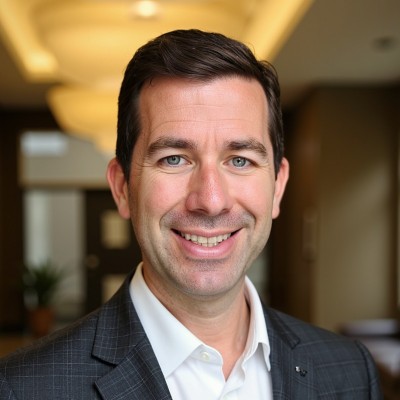
Jude David, JD, DCL, MBA
Jude made investment banking his primary focus after practicing for 12 years as a successful M&A attorney. From lower mid-market family-owned companies to multi-billion dollar corporate behemoths, Jude has advised sellers and buyers on over 200 transactions totaling billions in enterprise value.
Jude has leveraged his M&A experience to start a self-funded company in the building materials sector. Since its inception, the business has grown via acquisitions to over 400 employees across the USA.
Jude and his wife Ashley have six beautiful children and are very active in their community. Jude’s favorite pastime is taking the family to their fishing lodge on the beautiful Gulf Coast.
Mayor-President
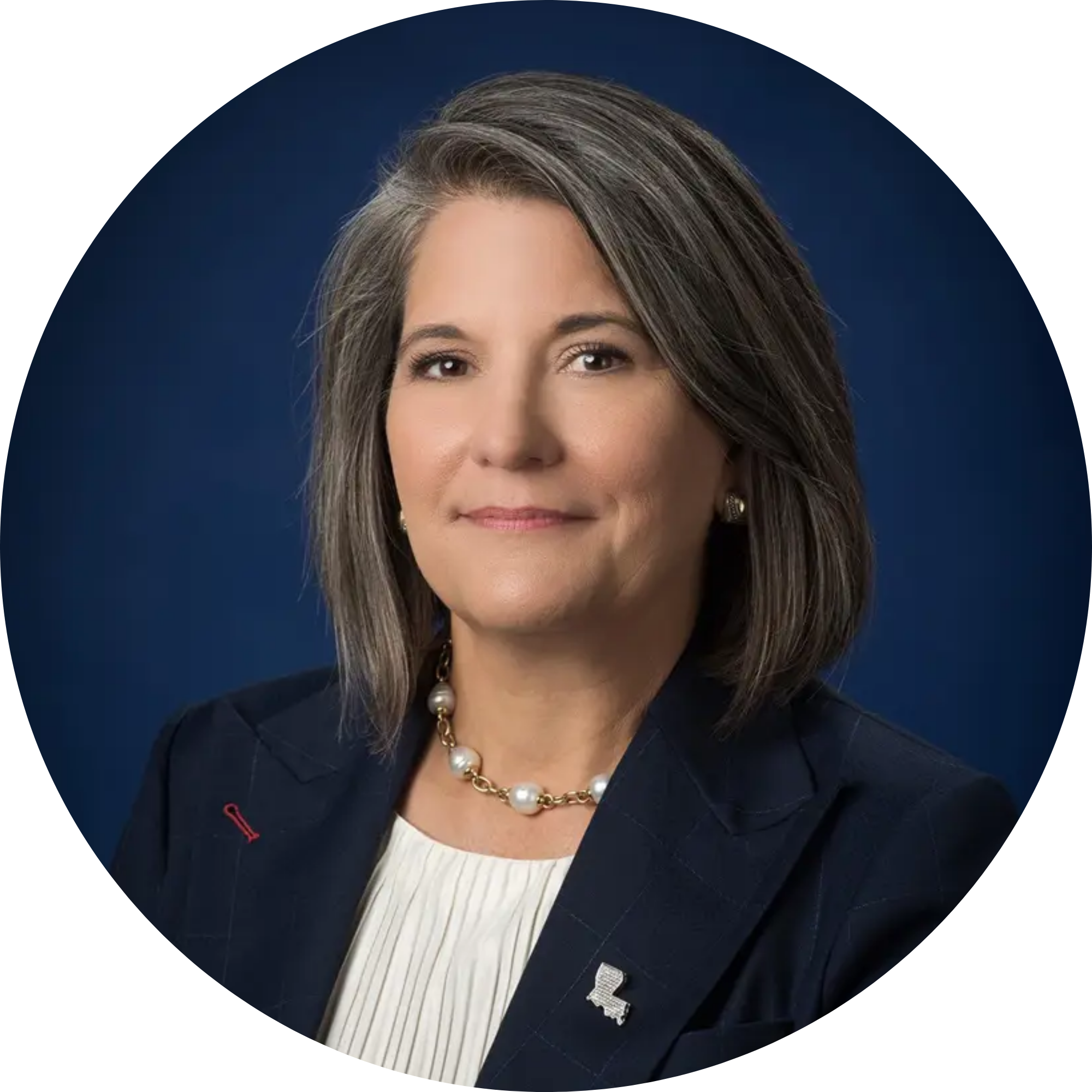
A lifelong resident of Lafayette, Mayor-President Boulet has dedicated her career to public service and regional leadership. Prior to taking office, she served as CEO of the Acadiana Planning Commission, leading major initiatives in infrastructure, economic development, and regional planning.
Her leadership is rooted in collaboration, transparency, and a commitment to delivering results that improve quality of life for residents across Lafayette Parish. Today, she continues to build on that foundation—working alongside departments, partners, and the community to shape Lafayette’s future.
Priorities & Focus Areas
The Boulet Administration is focused on delivering measurable results in the areas that matter most to our residents:
Infrastructure & Capital Improvements
Investing in roads, drainage, and public facilities while increasing transparency around projects and timelines.
Public Safety & Quality of Life
Supporting law enforcement, strengthening emergency response, and enhancing parks and community spaces.
Economic Growth & Workforce Opportunity
Expanding opportunities for businesses and workers while positioning Lafayette for long-term success.
Government Transparency & Modernization
Improving how residents access services through better communication, technology, and efficiency.