

 Amazon Music
 Apple Podcasts
 iHeartRadio
 Spotify
 YouTube
 RSS Feed
 Podcast Addict
 Podchaser
 Deezer
 Goodpods
 PlayerFM
 Castro
 Castbox
 Finding Your Highest and Best Use as an Entrepreneur — Dominic Dupré
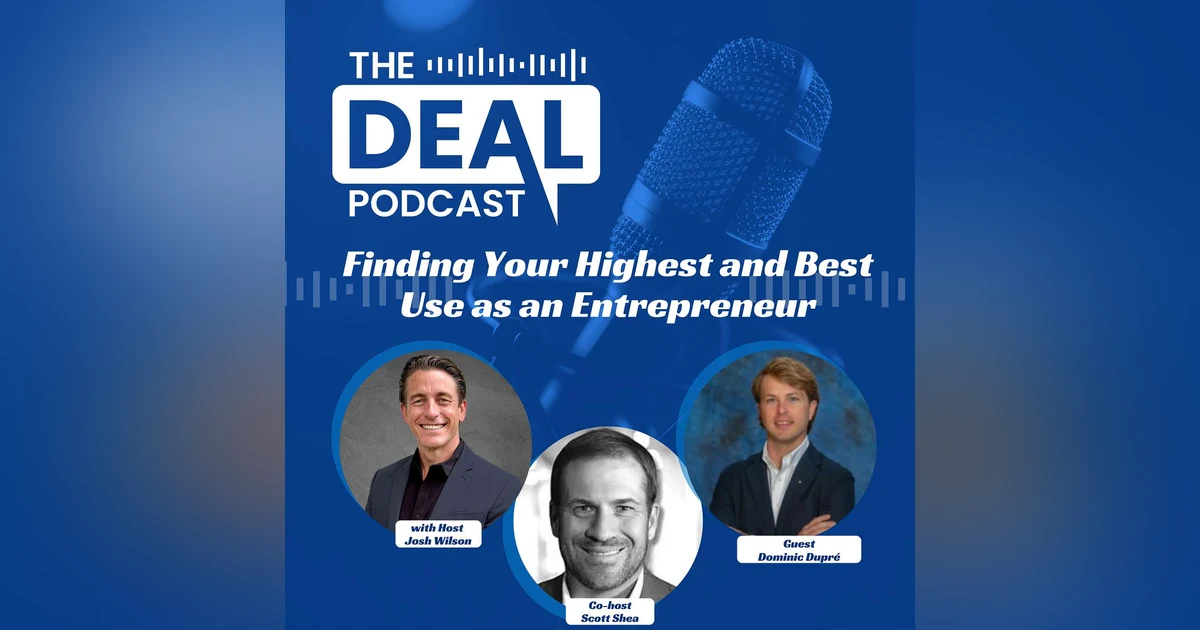
Dominic Dupré of Tule Creek Capital on going from operator to investor — surviving the 2014 oil bust, turning around the family crude hauling division, and what disqualifies most SMB sellers.
What if the biggest mistake you're making isn't a bad deal or a wrong hire — but spending your life doing things you're capable of instead of things you were made for?
Dominic Dupré grew up watching four cousins build successful companies in Louisiana's energy corridor. He graduated into the shale boom, swung sledgehammers on a workover rig, and had his entrepreneurial dreams derailed by the 2014 oil bust — only to be called back into the family business to turn around a failing crude hauling division. What followed was one of the most clarifying journeys we've heard on this show: from survival mode to self-discovery, from operator to investor.
Today Dominic is the founding member of Tule Creek Capital, a Gulf Coast investment firm focused on heavy industrial and environmental businesses. Joining host Joshua Wilson is co-host Scott Shea, who first crossed paths with Dominic when FA Mergers was working a logistics deal — and the connection stuck.
🎯 What We Cover:
- Growing up in a Cajun entrepreneurial family and why business was Sunday dinner conversation
- Why Dominic never wanted to work in the family business — and what changed
- The 2014 oil bust: what happened, who got hurt, and what it taught a young entrepreneur
- Turning around a failing crude hauling division inside Dupré Logistics
- How the family business exit was structured and what made the transition work
- Moving from operator mindset to investor mindset — and the gaps in between
- Why Tule Creek Capital over-indexes on culture and gut instinct in deal evaluation
- The key man risk problem that disqualifies most SMB sellers before diligence even starts
- How to know when you've found your highest and best use as a founder
- Rich Dad Poor Dad, Traction, and the books that shaped how Dominic thinks about wealth and growth
Topics: operator to investor mindset shift, key man risk in SMB acquisitions, family business turnaround, heavy industrial investing, culture-driven deal evaluation, finding your highest and best use as a founder, selling your business podcast
🤝 Connect with Dominic Dupré: 🌐 https://www.thedealpodcast.com/guests/dominic-dupre/ 💼 https://www.linkedin.com/in/dominic-dupre/
🤝 Connect with Co-Host Scott Shea: 💼 https://www.linkedin.com/in/escottshea/
💼 Thinking About a Transaction? FA Mergers helps founders, investors, and business owners navigate the full M&A process — from valuation to close. If you're exploring a sale, acquisition, or capital raise, let's talk. 🔗 https://www.famergers.com/
🎙️ Follow The Deal Podcast: 🌐 https://www.thedealpodcast.com/ 💼 https://www.linkedin.com/in/joshuabrucewilson/ ▶️ https://www.youtube.com/@dealpodcast
DISCLAIMER The Deal Podcast is for informational and educational purposes only. Nothing discussed constitutes investment advice, a solicitation, or a recommendation to buy or sell any security. Always consult a licensed professional before making financial or investment decisions.
00:00 - Welcome & Introducing Dominic Dupré
03:02 - Tule Creek Capital: What It Is and Why It Exists
04:38 - Growing Up in a Family of Entrepreneurs
06:00 - Diving Into Oil Field Services — From the Bottom Up
07:28 - The 2014 Oil Bust and What It Cost
11:00 - Returning to the Family Business
16:27 - The Dupré Logistics Exit: Structure, Process, and Lessons
18:29 - Finding Your Highest and Best Use
27:33 - Operator vs. Investor: How Dominic Evaluates Deals
47:38 - What Sellers Get Wrong About Buyer Readiness
50:58 - Closing Thoughts and How to Reach Dominic
Welcome & Introducing Dominic Dupré
SPEAKER_00
Good day, everybody. Welcome to the Deal Podcast. On today's show, we're gonna have a conversation. Actually, Scott, why don't you kick it off? You told me the last episode, you're like, man, I really liked doing the introduction. So this is one of your friends. Scott, what are we gonna talk about today?
SPEAKER_01
Yeah, man. So we have Dominic uh on the show today. Um I first met Dominic. We actually tried to sell his family a uh logistics company that we were working on. And uh turned out we had lots of mutual connections and very similar story as far as growing up in a family business and watching it evolve and then as of recently ultimately exit and uh kind of what's next and where do you go from there? So he's got a cool story and he's working on some cool stuff. So thanks for coming on.
SPEAKER_00
Yeah, thanks you guys for having me. Looking forward to it. Yeah, so Dominique, the the reason we started the the deal podcast was to inspire future generations of deal makers and entrepreneurs. And as a group, we love doing deals. So this gives us an opportunity to connect with people who are looking to sell their business or or looking to do, you know, synergistic things. So for people in the audience, our number one ask you is that you reach out to the guests after the episodes and you listen, especially if they fit with what you're trying to accomplish or if you have questions, their contact information will be in the show notes. And then if you have a business that you'd like to sell, especially like mid-market company doing a ton of IBITA, like, yeah, we want to have a t a conversation with you. So thedealpodcast.com, good place to go. Dominique, why don't you tell us a little bit about who you are and what do you do?
SPEAKER_02
Yeah, absolutely. So uh, you know, coonass, born and bred, uh Opalousis, Louisiana is where I'm from. But uh I have been turned out Texan, although I hold close to my coonass roots. I've been in Texas now 10 and a half years, and uh my wife and I have created a life there that we we really, really enjoy. We have two kids, and uh so yeah, I I'm a dad, I'm a husband, uh, I'm an LSU Tiger alum. Um come from a family of entrepreneurs, so I consider myself uh an entrepreneur, and I'm sure we'll get to my path uh a little bit and my story. But uh, but yeah, I love business, uh, and I and I really love relationships, which comes from my family and will probably be a theme that that pops up a tremendous amount throughout our conversation.
SPEAKER_00
For sure. So oh man, I love this. So from Kunass to Texan, and uh is it true what they say about Texas, where you know everything's bigger in Texas? Did that happen to you? Like you go there and got taller and bigger and stronger and everything. You guys tell me, I don't know. You look great, buddy. You look awesome.
SPEAKER_01
I spent four years in Texas, it didn't work, didn't work well.
SPEAKER_02
Yeah, yeah. I don't I don't think that's been the case for me, unfortunately.
SPEAKER_00
Yeah, I I lived in Texas for a little bit. My son was born in Grapevine, and nope, I didn't get bigger at all. Maybe I actually I got big my my belly got bigger because I the food there is amazing. Yep.
SPEAKER_02
People sleep on uh people sleep on Houston as a food city, uh, but it is uh, in my opinion, one of the best food cities in the country. It's uh it's one of the most culturally diverse cities in the country, which I think lends itself to obviously being a great place to eat. So yeah, it's a great city.
Tule Creek Capital: What It Is and Why It Exists
SPEAKER_00
Cool, man. Well, I'm I'm grateful that you're here. Um kind of go into let's start with this. We'll we'll go to what what are you doing now as an entrepreneur, and then we'll we'll go into the evolution of Dominique.
SPEAKER_02
Yeah, absolutely. So, what I'm doing today is uh I run an investment firm called Thule Creek Capital. Uh I'm the the founding member of that group. And what we are is we're a Gulf Coast uh investment firm that focuses in the heavy industrial environmental space. Um I think we offer a bit of a unique proposition in a world that just seems inundated with buyers right now. There's a tremendous amount of buyers out there. Um, but with my family history, having been in heavy industrial operations uh in the transportation logistics space and my previous career in oil field services, I kind of take that small business entrepreneur and operator mentality. Um, and that intersects nicely with an investment thesis and a and a finance kind of skills and chops. That makes me a really good partner for founders looking to transact their business or even take on a partner. So I offer quite flexible deal solutions uh for founders to maybe take some chips off the table and take on a growth partner or maybe exit their business completely. So I I I can be more flexible in that regard. Okay. Cool. What did you study in school? Is this what you set out to do?
unknown
Yeah.
Growing Up in a Family of Entrepreneurs
Diving Into Oil Field Services — From the Bottom Up
The 2014 Oil Bust and What It Cost
SPEAKER_02
So I at LSU there was a nascent program. Uh it was they were starting their entrepreneurship program. It was really offshoot of the just the business management focus, and it was pretty new. It was basically management with some creativity injected into it. But um, I've known since I was a small kid that I wanted to be an entrepreneur, and that really stems from my family's history in entrepreneurship. So both my dad and his brother uh went on to start companies in the petroleum kind of value chain. And uh their first cousins uh also started businesses, two brothers uh in in the more the upstream space. And all four of those uh cousins ended up having successful entrepreneurial careers. And so when you think about Sunday dinner as a family or Christmas, uh, you know, we're talking business. That was very much the conversation uh that just kind of permeated my life, really. And so um I knew going into school I wanted to be an entrepreneur. I didn't know what that meant uh at the time, and uh studied that and then kind of got into the working world. This was 2011 when I graduated LSU. Shale Revolution is full swing. And I'm watching uh oil field services and really everything around upstream oil and gas, uh land-based, is in such high demand. There's young entrepreneurs with a little bit of grit um out there and making really, really great careers for themselves. There's investor capital just flooding into the space. And so I dove two feet into that space with kind of a five-year plan to be an OFS entrepreneur. Um story didn't go that way because it's pretty easy to do the math and say, five-year plan in 2011, where does that kind of carry you to? So um I I actually worked, uh, I'm a bottoms-up learner. So jumped into OFS. I mean, my first job was on a workover rig in Donaldsonville, Louisiana, uh, as the assistant floor hand. So I was less than the lowest man on the totem pole, swinging a sledgehammer every day, getting covered in, you know, drilling mud and pipe dope. Uh, I graduated from that to coal tube and offshore and did that for a year and some change, and uh ended up in South Texas helping a Lafayette group start up a well testing and flowback division. So really started kind of from the bottom. And uh, and right about that time, I was like, okay, I have an understanding of this space, I have a network of operators uh that we could go and do something on our own. Uh, and I have a story to tell, you know, to investors to raise a little capital. And that was literally the middle of 2014 when I started to to kind of round that group up and start to think about what service do we want to play in. And and naturally that, you know, Thanksgiving of 2014 bust um happened and and it kind of shattered those dreams, unfortunately. So first career pivot there.
SPEAKER_00
Yeah, man, I I totally get that. Uh 2014 bus. For people who might not be aware of what's going on on this side of the world or that industry, talk to us about what was going on in the in uh in the world there.
SPEAKER_02
Yeah, absolutely. So um shale had become so prolific from an on-land oil and gas production at that time through the engineering, you know, unlock of of horizontal fracking. The United States had become a net exporter of um, you know, hydrocarbons, oil and natural gas. Well, the OPEC countries didn't take too kindly to us, you know, becoming a net exporter. And so uh they sought to correct the market by flooding the market, dropping the price, and making a bet that they could just outlast the U.S. shale producers. That was a pretty bold bet and kind of proved not to be the case that the the shale producers were more durable uh than they could hold out. But um it it did tank the market, and we had a big correction in that 14-15 time frame where, as the oil and gas cycles do, you know, everybody who was uh tied closely to the wellhead got hit very, very hard.
SPEAKER_00
Dominic, as you were growing up, your father was successful, uncle successful, second cousins or whatever they are, super successful. Was this before that time period or was this after or around that same time?
SPEAKER_02
Uh I would say probably through through that time period. So uh my family was always in the energy, you know, the the energy value chain. Um there were some lean years for the part of my family that was in the upstream space. Um, but fortunately they were late enough in the career where they had built some war chest and and you know, really some personal brand and goodwill in the space that um they didn't get tanked. It it was actually quite good on the downstream side, um, or less impactful, I should say. Um, a small part of the transportation logistics business that my dad was running um was exposed to the upstream side, but did the downstream side was all right. And so for sure.
SPEAKER_00
One day you could explain the upstream and downstream, because I have no clue what that means. But the the question that I want to hit first is, and we'll go up and down after this, is you know, here you are going out on your own. You you know, you did the bottoms-up learner, swinging hammers and getting, you know, covered in drilling mud, right? So, you know, getting into that role, studying in school, like like going out and then kind of being like the this is just an assumption, everybody's looking at you as the next big win. And then you you said you had a major like life pivot, career pivot 2014-ish. Talk to us about that and how did that impact you as a entrepreneur? What did that do to your mindset? Walk us through that.
Returning to the Family Business
SPEAKER_02
Yeah, I'll tell you, um, I would say at the time I was still young enough for it not to have uh, you know, some identity crisis or any or anything like that, right? Um, and uh, you know, I've been raised, you know, with those kind of the foundation of an entrepreneur is to just be able to survive in the conditions and roll with the punches. And so that's kind of part of who I've been raised to be. Um and so I looked at it as I was quite disappointed because there was so much hype and fanfare around shale and people were making a tremendous amount of money. And I thought that that was gonna be the industry I was gonna, you know, that was gonna be where my career lived. And so to see that come crashing down was um that was tough. But um what happened was, and and you know, kind of God's plan, I never wanted to work for the family business, but it was that whole situation that brought me back to the family business. So Dupree Logistics has started a crude oil hauling group as part of the same shale explosion because there was no um land-based takeaway that could service the amount of crude that was being produced uh now on land, because that was a new phenomenon. In the US, uh, as part of the downturn, uh Dupree was getting hit pretty hard. And the COO at the time, the company was professionally managed, called me and said, Look, man, I know you don't want to work for the family business, but we are losing a ton of money and we need somebody who knows oil and gas. We know logistics, you know oil and gas. Come in here and help us out. And that's what brought me back to the family business was everything that I had learned for the last you know three and a half, four years made me uniquely positioned to help out the family business. Uh, and it's actually one of the most interesting parts of my story or what people find quite interesting. I came into Dupre and effectively had to turn around a failing business unit and spent uh three and a half to four years doing that, which is probably one of the hardest things I've done in my career, but one of the most gratifying. So uh I think one of the if you look at it with rose-colored glasses, it wound up working itself out quite well.
SPEAKER_01
So you said something that I find interesting to relate to about the never planning to work for the family business. Because for most people, there's no other thought, right? Like that's what you're gonna do. Um and I know we always connected because I always had aspirations to go do something else. Um how did you come to that and and why?
SPEAKER_02
Yeah. There there's two things in play there, and I don't know which is the stronger force. And so the two things in play are I've always kind of been an independent kind of person, you know, wanted to do it for myself hard-headed, you might say. Um the other thing was um my family, my dad specifically, never put an expectation on me to run the family business. So I was given a lot of freedom uh in that regard, in that there was no air apparent situation that kind of followed me around. Uh the public looked at me in that way, but I didn't feel that pressure internally from my family. And so it it did to it it allowed me to ch truly chase my dreams. I wasn't I was unencumbered by um expectation, which uh for me was a beautiful thing. I'm very thankful for that.
SPEAKER_00
Yeah, I think um I think the expectations that are put upon us um could be you know super comforting or uh it could be absolute a blessing, but it could also be, you know, not something that I want for myself, you know, or you know, Scott, you said this, or even you. Where do you think um where do you think that stems from? And then like were you running to something or maybe running from something?
SPEAKER_02
Yeah, I mean, what's the difference, right? Like because you could be doing the same thing. I I'll say this while there was not expectation to step in as an heir parent in my family's business, there was an expectation to do something and be something. Um and and I and those expectations started kind of within me. Um, look, I'm a very blessed person. I got a great family, wonderful parents, raised with so many blessings, privileges. It's just, you know, it's immeasurable. And the way I think about my life is that I would be doing a disservice to all those blessings to not go and uh and kind of share those with the world. And so um, with that comes an immense sense of responsibility, although it wasn't to take over my family's business, it is to go and create and uh and share blessings with others and that kind of thing. So uh my dad always raised us to like bring our skills to the world, whatever they may be, myself and my siblings. And uh, and look, I I I I can say that um when I think about what my superpowers are, particularly in the business world, I have the ability to connect with people um and I have the ability to uh create value in strategic businesses. And so if those are my gifts, I need to bring them to the world, frankly. And uh and I feel a responsibility to do that. So I don't know, I I I would imagine that could sound a certain kind of way to some people listening. Um, and I don't intend for it to be that way, um, but I I do feel that that's like a universal truth across everyone.
The Dupré Logistics Exit: Structure, Process, and Lessons
SPEAKER_01
So staying on the family business. Um I know that there's probably certain things you can't say. Um there was an exit recently. Um what did you learn through that experience, or how involved were you with that? And for people with family businesses, to me, it's always a different dynamic because there's a lot more emotional ties typically. Um kind of talk us through that whole process.
SPEAKER_02
Yeah, so the nice thing about uh Dupre Logistics was it had been professionally run for quite a long time, different than many family businesses. Um my dad was first gen, and I was the only other family member working in the business. So of an organization of 1,200 people called Dupre Logistics, there were two Duprees working in the business. So uh by all accounts, it it felt um it didn't culturally it felt like a family business, but from a nepotism or kind of like how the business was controlled and the decisions that were made did not. And so I think that made a transition actually quite easy in that sense. And look, that was always um a consideration of uh of the shareholders was that a transaction uh would be in the future. And so the thing was built with that in mind. Um, and so what I would tell you is it actually made um the consideration of a transaction quite easy. And it it's a long process, Scott. As you know, I mean you prepare for these things five, six years in advance. Um, if if not longer, if not from the beginning, as you're building it, right? And that was no different with Dupre. We we went through quite a long process um to finally get to the finish line, which looked the world's been quite crazy since you know 2020, especially in the logistics world. So there was some there was uncertain times, uh a number of times, frankly.
SPEAKER_00
You one of the things that you mentioned that I that I I want to dig into a little bit, we we had a conversation with Wade earlier and he talks about kind of digging into your your superpower. We talk, you know, we talked about the hedgehog principle and kind of finding out what you're created for and and that what you're designed for, what brings you joy, what what creates an economic driver. And you said you found yours, kind of at a a young age, I would say. It's like how did you discover your your skill set, your superpower, and and how did you know to double down on that?
SPEAKER_02
Yeah, it's it's interesting. I um I would tell you that I it did not dawn on me truly what my superpower was until a little later in my career. These are like relatively new findings. So if you think about being in a startup environment in OFS and then being in a turnaround environment for the family business, you are surviving. You are not um thinking about what gets me excited or what I like to do. You are putting one foot in front of the other and you're looking for your next next breath of oxygen. And so I really um for for a good part of my career was in that doership mentality of just, you know, task, task, surviving, surviving. And um in in that situation, naturally, your skills are gonna shine, but the way you're thinking is not what is making me happy, it's what's gonna keep this business alive. And it wasn't until I got some distance from being in such a pressure cooker. Um, so we divested the assets of that creed business in 2021, and I got to step back a little bit. I moved into into a commercial role for DuPray, and um, and that's when I really got to start considering, man, what do I like to do? Not what can I do, what am I capable of, but what do I like to do? And uh, and it was then that I started to kind of have some self-realization about, you know, gift entrepreneurs who have gifts can do a lot of things, but what is the highest and best use of those talents? And that was what I started to think about. It's like, what is the highest and best use of my time? What gets me out of bed super excited? And um, and as I as I realized that it all started centering around people, people and growth. And I realized when I was having the most fun, I was operating in a strong team that I had helped to build and cultivate, and we were growing, we were celebrating wins together, and we were having a lot of fun.
SPEAKER_01
It's a recurring theme we we hear with most of our guests is one, the importance of people, and then two, the myth that running a business is fun. I think rainbows and butterflies was used earlier. Um but you nailed it, like you end up doing a lot of things you have to do. You don't want to do and you don't like doing them, but survival is a lot of business, especially in the early years.
SPEAKER_02
Yeah, that's exactly right. I and it can be it can kind of have a damning effect. I because you end up um becoming and doing things that like they're not the best for your spirit um at times. And so you can get stuck in that, and and I found myself kind of stuck in that based on what I just told you guys. Um, and so uh that was a that was a really big kind of aha moment for me was to take a step back and say it's not all about getting stuff done and accomplishment, but like you're put on this earth for a reason. What is that reason? Um, and your talent serves you in a way, find find the place that's the best use of that. Yeah. There's a Latin phrase.
SPEAKER_00
Um I always try to like maybe sound smarter, I know, but it's a lot of languages. I know, but you get them wrong. I get them wrong every time. So like let but nobody knows. Yeah, I know. Just blah, blah, blah. But no, there's this uh saying it's uh I'm I'm not even gonna try it, but it it's to work his. To pray. Labator Esther. It doesn't there.
SPEAKER_01
You go again.
SPEAKER_00
Yeah. But I I had to give it a shot, freaking Scott. I'm gonna I'm gonna give it a go. But it's to work is to pray. And and I guess the meaning behind this was like our work is you know something that we'll do, we'll spend more time at work than we will with our wife, our kids, our you know, friends. And this idea of work is we were put here for a purpose to create, to multiply, to tend the garden or whatever it might be for that person and their skill set. You kind of at a young age, I would say, you know, fairly young age, I don't know how old you are now. How old are you? I'm 37. Okay, cool. You know, I think that this is a a cool revelation that you're having with yourself is like, why am I here? What was I put here on this earth for? What am I gonna do with my time, talent, resources that will cause the biggest impact? Right? Hierarchy of needs, self-actualization is kind of trying to answer that question. As you were trying to ask that question and answer that question, what were some of the things that you might have gotten wrong early on that you'd look back and you go, oh, actually it was more this than that?
SPEAKER_02
Yeah, I think, and you kind of asked the question earlier. It's like were you running away from something or were you running towards something? Um I think like a lot of type A um highly ambitious people, you're kind of looking for the attaboy, you're kind of looking for the accomplishment, whether it's you know, within yourself or from, you know, the folks around you or the greater public or what or whatever. Um, and I was no different. I mean, I like a pat on the back just like anybody else, right? And I like to be looked at as an accomplished person that's you know getting stuff done. Um, you just real or I realized um probably around the same time COVID happened, around the same time I had my first child, that there's there's very little enduring relevance to that. And that's just not something to chase in your life. Um, and so you start to ask those deeper questions, right? Well, why am I here and how do I how do I impact people? And so it's like some of those lessons that were instilled in me as a young child, you know, you kind of got to go through that maturation process where those seeds can really, you know, blossom into into a fully baked out thought that you're mature enough to kind of take, um, take and use and implement in your life. I mean, really. Yeah.
SPEAKER_00
Now, I assume you think LSU is perfect, right? And and like what you studied in school was like exactly what you saw in the workforce. So, but what what do you wish you would have maybe studied or learned in school that you were unprepared for in the business world, turning around a family company?
SPEAKER_02
Yeah, I think uh I I naturally think of what am I um I'm naturally inclined for certain things, and my family's culture was one of people and operations. Um, and so I came by those things naturally, as you do when you go to school, you kind of gravitate, or in life, you gravitate to the things that you're good at. So naturally, I studied management, entrepreneurship, something I was good at. It would have been really nice to go into something that was um stretched me a little more creatively. Um, and even on the technical side, some finance stuff would have been nice. When you're living that kind of like grinder operational, heavy industrial operations life. Um, I wasn't taking a heavy component of finance into that. It was heavy operations. Um, we were building teams, we were getting jobs done. And so it's later in my career now that I'm kind of circling back to uh some of those uh financial concepts, you know, thinking about capital execution and and now in the in the deal making game. Um those are not things that I was brought up in. I'm learning those late career.
SPEAKER_00
Yeah, that's super cool. Yeah. So are you going back to school? Are you watching YouTube and studying podcasts and reading books? Like how do you self-educate?
SPEAKER_02
Yeah, so uh books I love to read. Um I went back and got my professional MBA, um, which was useful uh for doing some of that hard finance tech uh technical skill. But uh YouTube, I I would tell you, YouTube is gonna like challenge or probably continues to challenge the higher academic institutions because you can learn anything now. And and I mean with AgenTech AI, that's a whole nother conversation. But I probably could have sat behind YouTube for a quarter of the time I spent getting my MBA and learned every single thing that I learned uh on you know, and saved a lot of money, you know. Um, but I it was kind of a both and I mean I did it all. Uh once I once I turned my sights towards like marrying my operations with a private invest into the private investment career, um, I just got kind of voracious with the learning. And so by hook and crook, you know, books, podcasts, YouTube, and then bolting on the NBA.
SPEAKER_00
Nice. Yeah, I like this. Um when it comes to uh operator versus kind of fund manager investor, what are some of the different things that you're having to look at that that you're that you've learned over doing it?
SPEAKER_02
Yeah, I think um I over I naturally over-index when I'm looking at investment opportunity on culture and soft um the softer side of the investment. That's not to say I disregard, you know, the numbers. Those are typically, you know, table stakes. That's a qualifier to look at the deal. Um, but I've disqualified, you know, I've disqualified uh most of the deals that passed the number check because I didn't like what I saw, either from a kind of market headwind, tailwind, or softer side, the owner and I or the seller and I just didn't have uh the exact same style of leadership or the way we view culture. Um and so I I think I that's kind of what I take with me um when I go to look at these businesses and how I think about succession. Um, but that's gonna be the same with most any private investor, is there's gotta be that yaw, you know, with you in the seller. Uh the what? The yaw. Explain what that is. Yeah, so the yaw. Is that a military term? Um yeah, y'all. So uh some old army guys I used to work with in logistics, yaw is chemistry. So yaw is just, hey, Josh, I meet you. Within the first 15 minutes, I'm like, man, me and this guy, we're we're we're we're speaking the same language, we believe in the same stuff. Um, I can work with this guy. How do you spell that? I have no idea. I mean it's not something I've written.
SPEAKER_00
He's words that he doesn't understand either. You said it correctly. Yeah, you said it correctly. All right, I'll give you that. We think, yeah, yeah, we'll we will know. You might have made it up. I don't know. So if you're listening and you know what that means, please let me know because that it's super cool. Or actually how to spell it because he explained it. Um, no, that that that that makes sense. And what I've heard over, you know, interviewing a lot of people is this idea of you know, with mergers, acquisitions, and and marriages of companies or even people, alignment in mission, vision, values is so important. And the numbers could line up, but if those other things don't, the numbers probably won't line up for long. How did you learn that?
SPEAKER_02
Yeah, it's a good question. Um probably the probably the earliest way I learned that was by hiring people, and and I'll explain. Um as a young manager, you get a stack of resumes, you're hiring for a specific role, you look on paper, and a guy might have it all, or gal. Um, and I have fallen victim to interviewing people and something not feeling quite right, kind of the gut instinct, but on paper, man, the person looks perfect. And you hire that person, they get into your organization, and you realize pretty quickly, man, that was a mistake. Like I ignored that gut instinct, the chemistry piece, whatever it is in my brain that was telling me this is not gonna work. Um, and so I you learn, you know, you touch that stove enough times as a hiring manager, you kind of take those lessons with you in that kind of microcosm event. Um, but it's no different when we made bolt-on acquisitions at Dupree Logistics and, you know, we bought companies. Um one specific example I can think of remains a tremendous financial deal that we did. Um, more on us than the company, we did a terrible job of integrating, and there was some cultural difference due to geography, and it just um it just became a deal that wound up not being a disaster, but um if there'd have been some cultural synergy, it would have been a 10x what it wound up being. And that was a really interesting learning experience for me.
SPEAKER_01
Fun topic. So hiring and resumes. In today's world, most resumes look really good because they were written by AI, or most of the job listing sites have resume building tools. So trusting your gut is I think more important now than ever. How much do you rely on that? And how much do you rely on like just emotional type decision making? Because data can be very misleading in today's world.
SPEAKER_02
Yeah, I think when it comes to people, um I I I listen to the gut heavily. I would say that's like a key driver, uh, is how do I feel? Um, which is interesting because like if you would talk to my wife, you know, she would tell you that I never think about how I feel when I'm making decisions. Um, but when it comes to the human component, less quant, more qualitative, um, I'm using my gut more often than not. Now, don't get me wrong, man. I'm nobody bats a hundred percent, so my gut's been wrong. Uh, so you do have to you you gotta network, which is a big piece of it, and um hear about people from others and those kinds of things.
SPEAKER_00
So yeah, that was a good question, Scott. Um when your gut is wrong, bro, that's a hit to like your confidence. Like, there's been times where I was so sure on my decision making. And looking back, I was wrong. How do you how do you put new data in or how do you how do you rechange the way you think or change your gut? Like, what happens when your gut is wrong?
SPEAKER_02
Yeah, I mean, I look, I think if you're perpetually wrong, then you probably need to think about your yeah, yeah, think about your process, right? Yeah, um, but I I think uh as I was coming up, um I I had to learn to trust my gut. Yeah. And it was over time and experience that I learned to listen to that thing, and it it has continued to like prove to be right more often than wrong. So there's a there's a grace component of knowing, hey, look, you're not perfect. I'm not perfect, you know, our guts are gonna be wrong, we're gonna read something, we might have been having a bad day, whatever, you know, all the all those components. But umce you've honed a skill through experience of reading people, I think that's something that stays with you.
SPEAKER_00
Yeah, yeah, that's cool. You mentioned Quant earlier. Did was that a reference from the show Billions back in the day? No, no, got it. All right, cool movie or a cool show. Um speaking of like shows or you know, movies or arts or something, what is something that you find joy in outside of work and family that's maybe some Dominique time?
SPEAKER_02
Yeah, I mean, my escape as a good South Louisiana boy is uh being somewhere in the outdoors. Um historically a pursuit of some creature, whether it be something that flies or something that swims. Um I'm finding as uh as I get a little bit older, it's less about the pursuit and more about the peace. Um, and even more than that, who I'm sharing it with. So um this is the time when I get a little bit of free time, which I don't get a ton of these days, but um, I can spend with friends, and you know, if we we can be doing anything, but we're probably gonna be outdoors. But the most fun I've had in the last year is with my five and a half year old son, who can now cast a fishing rod. I took him on his first duck hunt this year. Um, took him out two weekends ago, and he and I caught 12 speckled trout on the boat in the morning, and uh to watch him light up, uh getting to uh experience nature kind of firsthand um is has been so much fun.
SPEAKER_00
Yeah, going from enjoying it yourself to having your son naturally enjoy something, not forcing it, but like seeing him light up, man, it is it it's the best best day of your life. Yeah, that's special. So you know, as you go through life and as you're looking towards the future, you know, you've got some kids, you've got a beautiful wife, and you're you're building stuff. Actually, I I've never seen her. I'm I'm just you know very beautiful. Yeah, I'm assuming.
SPEAKER_01
Uh tee that one up for me.
SPEAKER_00
Thank you. Yeah, you got some brownie points. Uh, you know, what does what does the future look like and how will you measure your own success? That's a Christensen book.
SPEAKER_02
Uh yeah, it's a really good question. I I I um I think about this a lot uh as you're kind of at the beginning of starting something and kind of resetting back to a theme that we've talked about a couple of times in our conversation, which is you're kind of where I am in this new venture. I'm putting one foot in front of the other, right? You're trying to kind of take those first couple steps. And with Thule Creek Capital, that's exactly where I am. So I've been quite focused on my feet and and just kind of that that mundane process of putting one step, one foot in front of the other, step by step. Um if I had to say what does success look like for me, yeah, it's a it's a good question. I think within the next five years, um the hope, and this is like kind of integral to my thesis, is that I have a portfolio of companies, um, particularly in the industrial or environmental space, that um is creating good employment for a lot of people. Um one thing that I that I hold very close to my heart is um coming up in the oil patch the way I did it, surrounded by hardworking blue-collar guys in South Louisiana, and um some of which may not have even had high school diplomas, but they were creating these incredible lives for their families. Um, and then you saw the bus happen and all that kind of get stripped away from some of these people. I thought to myself, and this is like kind of continued to be a theme. How can I create durable jobs for middle class families to um continue to create the life that like that I had, uh a middle class lifestyle, send their kids to good schools to get good educations, go to college and see their kids go and be really useful members of society and go and create lives for themselves. So um that to me is one of the key features of what I'm trying to do. And so when I think about what success looks like, attaining it would be employing a lot of people. Explain the name. Thule Creek. Yeah, so uh so there was a piece of property that was like integral in my life, um, being an outdoorsman uh is in Gaydon, Louisiana, and uh it was a 1,500-acre farm that we spent we we got on that farm when I was probably 10 years old, and we were on that farm for over 20 years, and we called the farm the Thule. So I was starting to think about what I was gonna call this thing, and I was trying to think about things that meant a lot to me in my life and my development. What are some kind of catalysts? Um, and I wanted it to be outdoors associated, and so naturally I start pulling on the outdoor thread and Thule uh continued to show up as a name. Um, and so I I went ahead with it.
SPEAKER_01
Why was that the name of the form?
SPEAKER_02
Thule is the name of two things. Uh, it is a subspecies of a speckle belly goose, which is one of my favorite birds to hunt. Fun fact. Yeah, shot a bunch, didn't know that was a thing. Yeah, yeah. I and I still don't fully understand how it fits in, but if you look up Thule, a speckle belly goose will come up. It's also um, I don't know if it's French, you would imagine it is, but for cattailgrass. Okay. It can be called Thule grass. So I I I would imagine for both of those reasons, what that's how the farm got its name.
SPEAKER_01
I love it. Yeah. Spent a lot of time there. Not at your farm, but yeah, in that area.
SPEAKER_00
Actually, at your farm. I just didn't know we were there. We're hanging out.
SPEAKER_02
Official duck capital of the world, I believe. Self-proclaimed. You know, don't ask Stuttgart. Yeah.
SPEAKER_00
So as you're learning and studying and growing, you you said you're digging in foraciously, right? Give us a book or or something that you think is is a good read to learning the world of investments.
SPEAKER_02
Yeah, I mean, I for every young person that I talk to, um, I think, and it's a it's a book that I'm gonna give to my son, but Rich Ed Poor Dad, and so probably not for the listeners of this podcast, but for the kids of the listeners to this podcast, such an influential book about how to think about um how to think about earning money, you know. W-2 uh employment is is the is the typical path. And I think that book just exposes you to a totally different way of how to look at earning.
SPEAKER_03
Yeah.
SPEAKER_02
Um yeah, I I think uh a book that I continue to pick up is traction. Um, you know, I you can't say enough about that book. You know, we were talking about EOS before we kicked off. Um post-MBA, I I need to pick back up the reading for fun because textbooks I wouldn't consider reading for fun, and that's been what I've mostly reading lately. So um I got a stack that I'm uh that I'm ready to go on. But uh one cool one, or two cool ones I'll say, uh the Elon Musk book was really interesting. Um, and then Steven Schwartzman has a book called What It Takes, and it's about his life and how he views risk taking and opportunity and uh how to think big. And I think that book was very, very influential to me.
SPEAKER_00
How to think big. You know, being a being a visionary, you know, sometimes I I feel like thinking big or being a visionary, we talked about attraction, you know. Sometimes I feel like being a visionary is a curse, right? Net new deal ideas and you know, the the chasing squirrels. I mean, Scott's like giggling over here because he's guilty. You know, like how do you, as visionary, how do you harness that power rather than let it run and ruin your life?
SPEAKER_02
Yeah, it's a good question. I interestingly, I find myself more on the integrator side, or at least my career has been more on the integrator side when you think about startup, turnaround. I mean, you're really in the doership, you're kind of in the muck of it. Um, and so I think it wasn't until I got space from that that I realized that I have a lot more visionary components than I maybe had initially thought. Um, which is funny because here lately, doing what I'm doing, I find my mind racing because I have a lot more strategic space to think than when you're in a doership role in tactile operations. So I've actually been having to kind of adjust my myself. I'm like, did I develop like ADD as a late 30 guy? Like, what is going on here? And I think it's my mind truly left to its own devices and not having something to churn on, uh, like business operations that kind of have to get done. And so, man, it I I'll take tips from you guys on how you guys are solving that problem.
SPEAKER_01
Scott, you nobody ever wants our tips.
SPEAKER_00
Yeah.
SPEAKER_01
I've got a question. Yeah, go for it, dude. And you know I like to come up with some out the box questions. So I like duck hunting, you do too. If you were a duck, which one would you be and why?
SPEAKER_02
Ooh, okay.
SPEAKER_01
Why are we gonna take this? I've got a couple guesses. Yeah. I want to see where he goes with it.
SPEAKER_02
Yeah, I mean, uh I'd not to be too vain, but God dog, wouldn't it be cool to be a pentail and just be a stud? Of all studs. I mean, they're such beautiful birds. Uh, and you know, hunting in Texas, we shoot a lot of them. They are fun birds to hunt. They are beautiful ducks to hold in your hand. Um, so it's hard not to like go straight there. I'm sure there are a bunch of other fun ones you could be.
SPEAKER_01
I think that's a good one. Pentail are very in control and kind of have a leadership type vibe to them. I thought maybe you'd go like a teal or a wood duck, kind of more fragile. Bragile.
SPEAKER_02
Yeah.
SPEAKER_01
Kind of quick in and out.
SPEAKER_02
Yeah, I mean, what's uh what's not to like about a tree duck, though, man? They're just like always there. Always there, they're always there, man. Just living the good life, singing their song, you know?
SPEAKER_01
Absolutely.
SPEAKER_00
That's the most interesting question I've ever heard.
SPEAKER_01
Really? You probably heard a lot more good questions than that.
SPEAKER_00
I didn't say great. I said it was interesting. No, Scott, I love the way you think. And that and that's that's why we we really enjoy having these conversations with uh with deal makers and founders and business owners and people who've bought, built, sold companies. And one of our great joys is connecting the guest to a previous guest through a question. So you get to leave behind a question, but someone left a question behind for you.
unknown
Okay.
SPEAKER_01
Let's see what we got here.
SPEAKER_00
Read who it's from first.
SPEAKER_01
This is from Mr. Nate Moore, the daycare king.
SPEAKER_02
Thank you, Nate.
SPEAKER_01
Ooh, another good one. What crucial conversation are you avoiding, but know you need to have and with whom? Oh man.
unknown
Jeez.
SPEAKER_01
It's another theme of the show is hard decisions, hard conversations. Nobody likes them.
SPEAKER_02
Yeah.
SPEAKER_01
Yeah, I think there's a And if it's your wife, don't answer. Yeah, yeah.
SPEAKER_02
Never. I would never. My wife and I don't have hard conversations, Scott.
SPEAKER_01
Good answer.
SPEAKER_02
Um, I think um probably the the conversation that I'm avoiding right now is uh there's a capital partner of mine that I feel like there's some misalignment on investment thesis, and like we've kind of been dancing around that a little bit, and uh, and that's probably something we need to just address specifically. Um you can you know you can kind of feel a little bit of not friction, but misalignment, and uh and so yeah, I hadn't I hadn't thought specifically about that, but now I am. Thank you that's a good question.
SPEAKER_01
Thank you, Nate. Thanks, Nate. Thanks, Nate. Hard decisions are hard.
SPEAKER_00
Yeah, hard decisions are hard.
SPEAKER_01
That's yeah, and easy to put off.
SPEAKER_00
If you just put it off or put it under the rug, it disappears. It doesn't. Another myth. Yeah, yeah. So as you um, as we're rounding out today's conversation, is there a question that you walked into this? Because you had a a good drive driving here. Is there a question that you're like, man, I I hope that they ask me? Or maybe even I hope that they don't ask me.
SPEAKER_01
Thanks for the drive, by the way. Yeah, we appreciate it. You're officially the furthest traveled studio guest. Is that right?
SPEAKER_00
Yeah.
SPEAKER_01
We've had some virtuals, but you're the furthest.
What Sellers Get Wrong About Buyer Readiness
SPEAKER_02
Oh, yeah, you went in and mute. Yeah. Oh, I I'll be looking for that when we uh when we wrap up. Yeah, we think that that may hold up for a while too. Yeah, I uh I'm from I'm from 337, so it's a it's a good opportunity to get back and see some folks. So yeah, when I think about um what I was hopeful to talk about, um I think we talked around it, um, but really how I think about uh creating value for sellers and business owners with succession. Um there are a lot of ways you can do a transaction with your company. Um and there are a lot the buying pool is deep and wide, and there are a lot of different ways to structure a deal and who you structure a deal with. Um and so I think given all the things we've talked about today in my career in operations and living on kind of the seller side of the table, and uh understanding what it means to literally have your life's work be in an asset that you're holding in your balance sheet and all the emotional ties that come with that and how you consider transacting. Um I think there's a large part of the selling population that um would be interested in talking to a guy like me, whether it be to actually have a transaction or to just talk shop and say, man, here's how I'm thinking about things, or you know, how I mean, frankly, how would the capital markets look at my company? Um, because I find more often than not a buyer's been building, or excuse me, a seller's been building. Um and oftentimes that doesn't give you much opportunity to think about how's a financier going to look at this business, and I can kind of bring that um in a very, you know, non but binding, non-um sales-y type of way.
SPEAKER_01
That's incredible advice for potential sellers. And we have those conversations a lot. Um you've mentioned you've looked at a lot of deals that have kind of been checked off for cultural fits or whatever. What advice would you give to sellers from what from your lens? We've got our own opinions on on what's missing most often that would make them more attractive to a buyer?
Closing Thoughts and How to Reach Dominic
SPEAKER_02
Yeah, I mean, if you think about where I'm in the market, I'm in the I'm in the the SMB meets lower middle market, so the low side of the low market. And um if you think about a business that's been living in that space for 20, 30, sometimes 40 years, you know, the book The E-Myth is a book for a reason, right? Um, tons of key man risk around the founder. And so I'm sure it's what you guys, you know, coach business leaders on uh as they're beginning to think about running a process is they gotta get themselves out of the business. Um there's still at the end of the day, culturally, the heartbeat of the company is gonna flow through the owner, and so culturally it'll always be, you know, uh heavily influenced by that owner. Um, but the day-to-day operations typically need to be flowing through somebody else as much as they can. Now, you know, many of these businesses don't have huge work staff, so you know there's a reasonable, you gotta be reasonable there. But um, you know, that's a that's a quick disqualifier for for nearly every financial buyer.
SPEAKER_00
Well, great question, Scott. Scott, why don't you close us out, man?
SPEAKER_01
Yeah, man. Uh great conversation. Again, thanks for the drive. You have a lot of time to reflect on the way back. Um love your story. Love getting to know you and hear more about what you're doing today. And um, anybody have deals that that need a buyer, come to us first, preferably. But if not, go straight to uh go straight to Dominic over here and uh he'd be a great partner, no doubt. Cool.
SPEAKER_00
Well, fellow deal makers, thanks for listening in. Uh, reach out to our guests, say thanks for being on the show. Contact information is in the show notes. If you do have a business that you would like to sell, yeah, please uh reach out to us. We do love helping people sell their business. And if you have a deal that you'd like to maybe talk about here on the show, thedealpodcast.com, fill out a quick form, maybe get you on the show next. Till then, we'll talk to you all on the next episode. Cheers, guys. Awesome, man.
Entrepreneur / Private Investor / Operator
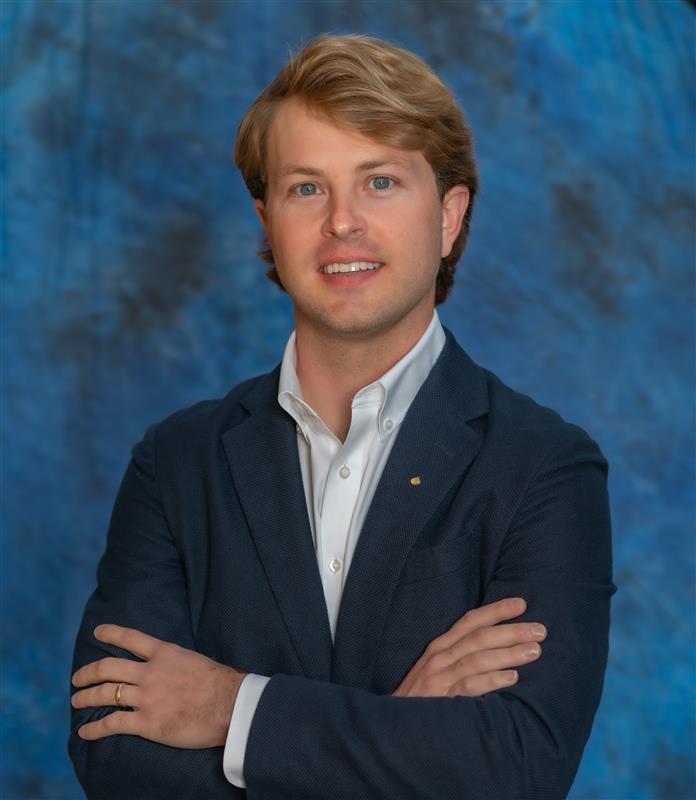
Dominic Dupré is the founder of Tule Creek Capital, a Gulf Coast investment firm focused on industrial and environmental services in the lower middle market. Raised in a family of successful entrepreneurs, he charted a path to build his own oilfield services company early in his career. The market had different plans. The lessons stayed.
What seemed like a dying dream led him to join the family business during a challenging time, where he led the turnaround of a failing business unit and stayed on as the company scaled and ultimately exited.
Today, he invests with an operator’s mindset, with a clear focus on culture, leadership, and continuity. Having been on the seller side, he approaches founders differently, more consultative, less transactional.
Although now based in Texas, his identity remains rooted in South Louisiana, shaped by his family and a lifelong connection to the outdoors.