Amazon Music

 Apple Podcasts

 iHeartRadio

 Spotify

 YouTube

 RSS Feed

 Podcast Addict

 Podchaser

 Deezer

 Goodpods

 PlayerFM

 Castro

 Castbox
The Team Selling New Orleans to the World — Michael Hecht & Matt Wolfe
You can't sell a city by talking about it. GNO, Inc.'s Michael Hecht and Matt Wolfe on showing companies the New Orleans the brand leaves out.
New Orleans has a brand the whole world already knows. Michael Hecht and Matt Wolfe of GNO, Inc. sell the part of the city that brand leaves out.
In this episode of The Deal Podcast, recorded live to open the GNO, Inc. & The Deal Podcast New Orleans tour, host Joshua Wilson and co-host Scott Shea, M&A Advisor and Partner at FA Mergers, sit down with Michael Hecht, President & CEO of Greater New Orleans, Inc., and Matt Wolfe, its Chief Marketing Officer. They explain what GNO, Inc. looks for in a company, why public-private partnerships make projects last, and how lessons from 9/11 and Katrina shaped the region's rebuild. Michael and Matt walk through the Super Bowl as a forcing function, the business mix behind Greater New Orleans, and how you actually sell a city to business.
🎯 What We Cover:
- What GNO, Inc. does beyond recruiting companies
- The businesses that create a halo effect in a community
- Why public-private partnerships build more resilient projects
- Rebuilding after 9/11 and Katrina: building something better
- Using the Super Bowl as a forcing function for the city
- The mix of headquarters, family companies and startups in the region
- Why big projects reward the regions that prepare and wait
- How you sell a city when you can't just talk about it
- Truing up the New Orleans brand to the reality
- A question left behind: AI and the value of authenticity
🤝 Connect with Michael Hecht:
🌐 https://gnoinc.org/
💼 https://www.linkedin.com/in/mlhechtgno/
🤝 Connect with Matt Wolfe:
🌐 https://gnoinc.org/
💼 https://www.linkedin.com/in/matthewpwolfe/
🤝 Connect with Co-Host Scott Shea:
💼 https://www.linkedin.com/in/escottshea/
🌐 https://famergers.com
💼 Thinking About a Transaction?
FA Mergers helps founders, investors, and business owners navigate the full M&A process — from valuation to close. If you're exploring a sale, acquisition, or capital raise, let's talk.
🔗 https://famergers.com
🎙️ Follow The Deal Podcast:
🌐 https://www.thedealpodcast.com/
💼 https://www.linkedin.com/in/joshuabrucewilson/
▶️ https://www.youtube.com/@dealpodcast
A One Iron Network production: Executive Producer Joshua Wilson
Topics: selling a city to business, economic development for business owners, public-private partnerships, relocating a business to New Orleans, Hurricane Katrina recovery, Joshua Wilson on regional deal flow
Disclaimer: Joshua Wilson is a licensed Florida real estate broker and holds FINRA Series 79 and Series 63 licensure. The Deal Podcast is presented by FA Mergers and is produced for informational and educational purposes only.
Nothing discussed constitutes investment advice, legal or tax advice, a solicitation, or a recommendation to buy or sell any security or to pursue or avoid any transaction. All views and opinions expressed by the hosts, co-hosts, and guests are their own and do not necessarily reflect the positions of FA Mergers, One Iron Network LLC, any regulatory agency, or any employer. Listeners should consult their own legal, financial, and tax professionals before making any business, financial, or transaction decision. This podcast does not constitute a solicitation or recommendation for any financial products or services.
Let's Connect on LinkedIn:
https://www.linkedin.com/in/joshuabrucewilson/
To Contact Us, Please Visit:
https://www.thedealpodcast.com/contact/
Disclaimer: Joshua Wilson is a licensed Florida real estate broker and holds FINRA Series 79 and Series 63 licensure. The Deal Podcast is presented by FA Mergers and is produced for informational and educational purposes only. Nothing discussed constitutes investment advice, legal or tax advice, a solicitation, or a recommendation to buy or sell any security or to pursue or avoid any transaction. All views and opinions expressed by the hosts, co-hosts, and guests are their own and do not necessarily reflect the positions of FA Mergers, One Iron Network LLC, any regulatory agency, or any employer. Listeners should consult their own legal, financial, and tax professionals before making any business, financial, or transaction decision. This podcast does not constitute a solicitation or recommendation for any financial products or services.
00:00 - Welcome to The Deal Podcast: New Orleans Tour Kickoff
01:23 - Meet Michael Hecht and Matt Wolfe of GNO, Inc.
03:32 - The Businesses New Orleans Wants Most
05:49 - Public-Private Partnerships, With Sprinkles
07:25 - From 9/11 to Katrina: Building Something Better
09:19 - The Super Bowl as a Forcing Function
13:44 - The Business Mix in Greater New Orleans
17:12 - Hurry Up and Wait: When Big Projects Land
21:37 - How Do You Sell a City?
25:34 - Guitars and Turntables Outside the Office
28:42 - What the Tour's Business Owners Will Share
30:47 - A Question Left Behind: AI and Authenticity
Promo:
This episode is brought to you by FA Mergers and Acquisitions. If you own a business generating $10 million or more in annual revenue, our team can provide a complimentary opinion of value based on real transaction data in your industry. Whether you're considering a sale now or simply planning for the future, we can help you better understand what your business may be worth and prepare for an exit that aligns with your goals. Request your free valuation today at FAMergers.com.
Joshua Wilson:
Good day everybody. Welcome back to the deal podcast. We are on another road show here in New Orleans, Louisiana I'm looking at the super
Matt Wolfe:
DOOM
Joshua Wilson:
behind Michael and Matt and it's such a beautiful view. We're on floor 39 and the stuff close
Michael Hecht:
For New Orleans were way up in the air. Yeah.
Joshua Wilson:
So I want to introduce you to our guests This is gonna be super special and they're gonna be the co-host the special co-host co-branded with us throughout this week Mr. Michael Welcome to the show
Michael Hecht:
Thank you. Great to see you, Josh. Appreciate it, man.
Joshua Wilson:
Yep. So you're going to hear a few different voices if you're just listening into the podcast. And then we have Matt. Say, Hey Matt, how's your day?
Matt Wolfe:
Going have to be here. Yeah.
Joshua Wilson:
And then you will recognize Scott, our other co-host Scott say hello.
Scott Shea:
Hello everybody.
Joshua Wilson:
All right. Cool. Well, Michael, let's start with this. We're running and gunning. We've got a lot of deals to do. You guys are doing an incredible job here in Louisiana. Why don't you tell us a little bit about who you are and what you do here?
Michael Hecht:
Wow. Okay, so we're starting with the big questions. Yeah, man. it was my birthday yesterday, so I was asking those questions to myself.
Joshua Wilson:
Happy birthday!
Michael Hecht:
Tom I'm Eternal 38. I'm Michael Hector, president CEO of Greater New Orleans Inc. Been here over eighteen years, really since the post Katrina days. our our mission at GNO Inc. is to create a thriving economy and an excellent quality of life for everybody in the region. Which means that we work on traditional economic development, bringing in new businesses, but we also work on issues like public safety and public parks and education, everything that's gonna create an environment where businesses want to risk their capital and people want to raise their families. If it touches either of those kind of spheres, then it's within our realm.
Joshua Wilson:
Fantastic. 18 years in the business. You've seen Louisiana evolve many different ways.
Michael Hecht:
bro, I'm like the state farm of economic development. I've seen a few things. You know. Hail, Lucas, frogs, crawfish.
Joshua Wilson:
it. All of the plagues, right? And then Matt, why don't you tell us a little bit about who you are and what you do here?
Matt Wolfe:
Absolutely. My name is Matt Wolf. I'm the chief marketing officer here at Gino Inc. I've been on Michael's team here for 15 years now. I'm a New Orleans native who left for 15 years, came back 16 years ago. And really what I love doing here is selling what Michael was just talking about. So New Orleans has a brand that's beloved around the world. But what most people don't know is what we're really good at, which is doing really incredible, amazing things. Working in aerospace, working in energy, our port system, biggest in the Western hemisphere. People just don't know that. And so that's what my job is to do, is to make people really understand what we bring to the table.
Joshua Wilson:
So businesses looking to build a business here, risk capital and grow and expand. And then also a place that you want to raise a family. That sounds like a unique balance to kind of focus on. So Michael, kind of give us an idea of from your vantage point as leader, what do you look for in a business that you want to bring here? And why would you say yes to one and maybe no to one?
Michael Hecht:
let's start out by being honest. There are very few businesses we say no to because you know we're kind of greedy, we're we're we're kind of greedy for businesses. But if you want to talk about the the best businesses, those are businesses that are going to truly invest in in the community. They're gonna invest in workforce training, they're gonna invest in community organizations, they're gonna have leadership that's gonna provide civic leadership. And the truth is that. even within the same industry like like banking, for example, retail banking, you're gonna find some banks that are gonna be very community oriented, that are gonna have training programs for tellers in the high schools that are gonna be serving on local boards. And you're gonna have other ones that are just gonna come in, open a branch, do their deal processing in some other city. And so given the choice, we're always trying to focus on those businesses that are going to have a halo effect in the community.
Joshua Wilson:
Yeah. So then Matt, as a CMO, what do you do? What do you focus on throughout the day?
Matt Wolfe:
Well, you know, spinning
Michael Hecht:
Fires.
Matt Wolfe:
a lot of plates, wearing a lot of different hats. you know, what we're, what we're positioning here is, trying to put New Orleans in front of the right conversation in front of the right people. And so what Michael just described, those companies that want to be a part of this type of community, I think it's that we want companies who see themselves in the mirror. New Orleans is a company or is a city that is community based. It's people who take care of each other. It's neighbors who say hi and wave to one another. That doesn't happen everywhere around the country. And so I think what we're trying to find are the companies that savor and value those attributes, because that means that they're going to fit in really well here. And for ones who don't know those pieces of New Orleans, that's one they double down on being here. And those are the ones that we really love nurturing and having great relationships with.
Joshua Wilson:
Yeah. Now, when it comes to the relationships that you guys help foster, right? On one side, you have the government. Sure. And the other side, you have the families and the groups there, and then you have the businesses. Walk to us about like the public private, you know, kind of relationship and what that looks like for an economic development group.
Michael Hecht:
We're if we have a choice between chocolate and vanilla, we always want the swirl with the sprinkles. and so we're always looking for a public I'm going, I'm going to stick with me on this. I like chocolate. All right, yeah, but vanilla's good though. It's creamy. Yeah. We're gonna so we're always looking for a mix of public private. We find that our best projects are when we bring government and the private sector and private citizens together. I'll give you an example. We are building out now a space for New Lab, which is one of the premier technology incubators in the country and in the world. They're in Brooklyn, they're in Detroit, they're in Saudi Arabia, they're in South America. to do that, we brought together public universities, private universities, the government, GNO Inc., other other private sector partners, because one, each is bringing a different component to it in terms of financing or expertise, but also we know that It's going to be a richer environment and have more support if it's public private. I really can think of very few projects that we embark on that aren't in some way a mixture of the two. And part of that is out of necessity, but also it's just like when you're compounding metals, when you get the two parts working together, you tend to end up having something that's more resilient in the end. Yeah.
Joshua Wilson:
Scott, I see you sitting next to me writing notes. What are some of your thoughts? What are some of your questions?
Scott Shea:
I want to go back to you said you started right after Katrina. Yeah, and correct me if I'm wrong, but I think I read you were also involved with some small business after 9-eleven
Michael Hecht:
Yeah, basically wherever I go, you don't want to be there. Before
Matt Wolfe:
That's so for ya!
Michael Hecht:
me. Yeah, it's a bit yeah, I'm a bit of a tailing indic trailing indicator. But yeah, so I did in New York City I did small business recovery in the Bloomberg administration post nine eleven. My family goes back to the eighteen thirties in Donisonville, actually originally. And so and I've so New Orleans was always my second home. And so when folks came after Katrina and asked if we wanted to come down, if I wanted to come down. And help with develop a similar program for the state. that's what I ended up doing.
Scott Shea:
So you like the rebuild?
Michael Hecht:
Well, you know, the way I think about it is when you are when you have a when you are rebuilding, and I learned this certainly in New York after nine eleven and also here, the way that you you can't bring back the people that have been lost. You can't bring back you can't the scar tissue is permanent, but the way that you honor those who have been hurt is to build something better. And so there's a real not just a challenge. But I think an honor to be put in the position of honoring the past, but building something going forward that transcends where you were in the past. And that's the only way you can make sense out of these things. an example is like the New Orleans schools. the New Orleans schools were infamously poor pre-Katrina. now Louisiana is the best performing state in the country in terms of education growth, and the New Orleans schools are best in the state. That's a good example of a before and after and kind of not wasting that crisis.
Matt Wolfe:
I'm going to make an observation here, which is I think it's not only when things are bad that where you thrive. think it's also when things are good. Whenever the rules kind of disappear, think about the Superbowl, for example, that's just really a time when everyone kind of knows we're all on the same page. Does parochial habits start to disappear and disintegrate? That's where real work can get done is where the eye is really on the prize and everyone's driving in the same.
Michael Hecht:
great point, Matt. So this is, I'm sorry, but go back to New York, but watching Dan Doktoroff, who was kind of my Uber mensch in New York, he was the guy that tried to bring the Olympics to New York City in twenty twelve. New York lost to Paris. We were probably never going to get them, but what he knew is that he could use the the the Olympics as a forcing function to get things done that never would have been done otherwise. And so we did the same thing for the Super Bowl. When we said we have nine months to get ready for the Super Bowl, we're going to use it for a forcing function to create collaboration, investment, infrastructure repairs that would not have been done otherwise, and that were going to last well beyond the the the game. And probably the most visible aspect of that, if you look out there, there's one of our murals that was done by B. Mike, famous muralist. We have over 20 of those that Matt and I did around the city, including with some. Very famous national, international artist that got done because of the Super Bowl, but will not be there for for many years.
Joshua Wilson:
Wow. Super cool. So I'm looking at the Superdome right behind you. When the Super, what year was the Superbowl here?
Matt Wolfe:
Last year.
Joshua Wilson:
When that was going on, what was the environment here in New Orleans? live central Florida. Like, what was it like? I mean, I could see it. We could walk there.
Michael Hecht:
It was I it's it's a it's a tired term, but it was electric. It was visually electric, it was bright, it was joyful. I think that I I dare say it was wholesome, which is not something that's usually associated with New Orleans. what New Orleans brings to the Super Bowl that a place like, you know, let's pick on California because that's fun. the last Super Bowl in San Francisco was actually in Santa Clara. Which is like two hours by car south, right? or when you have the Super Bowl this pick on New York, right? In New York. It was in East Rutherford, New Jersey, right? You get none of the intimacy, none of the excitement. But here you have a dome that's walkable to the French quarter. It not only is is lower cost and easier, but it creates a kind of density of energy, which can't be replicated. And that's why Roger Goodell, who has a checkered history with New Orleans, said it was the greatest Super Bowl ever.
Joshua Wilson:
And that's fantastic. So when it comes to sports, right? And entertainment, what other things is New Orleans known for in sports and entertainment?
Matt Wolfe:
Yeah. Well, I mean, I think that for all the reasons that Michael just described, there's no better city to do a takeover and all of these big sports leagues love to do it. Whether it be a WWE doing WrestleMania, which had done here a few times.
Michael Hecht:
There's games.
Matt Wolfe:
Yeah. X games world championships were here in New Orleans in the Superdome. We've held multiple final fours, NBA all-star games. I mean, you name it. There's, there's really not a big event that you, that you can't have here and make the biggest splash possible. For entertainment, Taylor Swift did a three night takeover here in New Orleans. They hung one of her friendship bracelets around the base of the Superdome, which is kind of an unforgettable image to see.
Michael Hecht:
I think the way to understand New Orleans and how it's so different as a city compared to say an Atlanta or or Houston or an Islands, is that it's a city of of under 400,000 people that hosts 20 million visitors a year. So it it's it in that in that sense it's it's quite different than these other large cities where a sporting event can kind of get subsumed in the you know, when when the Super Bowl is going on in Atlanta, you don't know that it's going on if you're out. In Buckhead, for example, right? when the Super Bowl's going on in New Orleans, it suffuses every nook and cranny, every bar, every restaurant, every street. and that makes it a much more festive and kind of inclusive event. And super cool.
Joshua Wilson:
Now let's talk business, right? If you had to kind of put things in buckets in terms of small business, enterprise, large corporations headquartered here, how would you, know, what's the mix here?
Michael Hecht:
So, you know, the mix here, we used to have many more corporate headquarters back in the 80s. And unfortunately, after the oil bust of the 80s, we started to lose a lot of those headquarters, mostly to Houston and some degree to to Atlanta and other places. so now we have we have some some corporate headquarters that we're very proud of, some fantastic global scale companies, like Pan American Life or Latrim or Entergy or Fortune 500. But a lot of our companies are mid-cap. multi- generational family-owned companies that trace their roots back decades here in energy, in maritime, in manufacturing, and and are very much of this place. We also have a, since Katrina, a thriving entrepreneurial sector. This was not a particularly entrepreneurial place pre-Katrina. it was really conservative in the literal sense. but if necessity is a mother of invention, then you know Katrina necessitated a lot more inventiveness in our business climate and I think we just what what did you we just got ranked top thirty accelerator in the country, which is good for us. And we what was the recent ranking we got that was super high? Like Nasdaq ranked us Yeah it's like
Matt Wolfe:
top five startup cities in the country.
Michael Hecht:
So that's that's a pretty vital sector. And then on the public side, we have NASA Misha, one of the most important space assembly facilities in the country here.
Joshua Wilson:
Scott has been talking about SpaceX coming into Louisiana and what kind of spillover do you think that's going to happen in this area?
Scott Shea:
You can't use the word spillover in New Orleans.
Joshua Wilson:
Yeah, bad for a take. What
Matt Wolfe:
bonus
Joshua Wilson:
kind of phone is-
Michael Hecht:
Yeah. I think the way to think about it is, you know, if SpaceX were to put their largest facility ever into Houston, you would say, well, this is going to impact all of Houston. Well, the reality is that Houston as a as a city is about 50% larger than Louisiana as a state. and so I think you're going to see SpaceX to some degree rebranding both in football. Changing the perception of Louisiana, both in perception and reality, truly into a space state, because this is now Elon Musk's headquarters, effectively, because the whole Elon Musk empire is now going through SpaceX. I mean, it's SpaceX AI, right? Everything is going through SpaceX. And this is they're going to be their premier launch facility, four times bigger than Brownsville, Texas. So I think you're going to see white-collar jobs here in New Orleans. You're gonna see manufacturing for SpaceX going on at Mishu. And I think you're gonna see scores of these suppliers that exist in Elon's orbit, I guess is the right word to use, that are gonna exist all around Louisiana. It's a you know, game changing is way overused on podcasts, but like this is a legit game changer. Nope.
Joshua Wilson:
Yeah. Scott.
Scott Shea:
Yeah. So walk us through kind of similar deals like that, whether it's getting a Superbowl or obviously it starts well in advance of the Superbowl. of walk us through what that looks like from, your viewpoint and the negotiations and the deal making side of those events.
Michael Hecht:
So, you know, the economic development is a is a long term place. It's it's a hard up and wait business because you have to create these conditions that I've been talking about. And some of those are social conditions, some of those are site preparation, kind of technical, and some of those are brand. You have to create the excitement and brand so people are excited. And then when the opportunity breaks, you have to be ready to to make it work. So I'll give it an example of this. so Venture Global. it has made the largest private investment in human history in Placamin's Parish, about 45 minutes from here. it is an LNG facility, export facility, where they are investing in this particular one close to forty billion dollars. and they did it in what used to be a crawfish pond, essentially. it's 700 acres. It's like it's like the Death Star. It's an incredible facility. It is basically saving Europe. From Russian gas. Last time I was there, there was a ship that was bound for Belgium. That facility happened because the people in Plaquemins Parish who owned the land, it was the port, were able to, they held the land, they were waiting, they were able to respond quickly when Venture Global came came knocking on their door. And then it became a collaborative process between the company, the government, and also the public who you have to bring along and explain the benefits to something that Mark Zuckerberg is learning now in his world. and so they were able to get this massive structure built in about three years, which is something unprecedented in the United States, where I don't know, back in New York it took them 20 years to build four blocks of the number two subway on the Upper East Side. so you have to have the right conditions, be waiting, and then when opportunity springs, let's talk about SpaceX. SpaceX was six months from the first phone call in February to the announcement. last week. That is, you know, on a time per dollar basis that's never been matched in the history of the world. But it's when you have it's when preparation meets opportunity. Yeah. That's when you get lucky.
Joshua Wilson:
That's when you get like, we just had a conversation, with a, someone on, on our podcast tour, we went through, Lafayette and he was just talking about, he's a land man. He was talking about, you know, hard work grind. And then there's this luck, right? Sometimes it's just luck. And, you know, I think that if you look at what you guys have done since rebuilding Katrina and what you guys have built the brand of New Orleans is, is really incredible. the fourth in the country for startups, know, education. It's really cool. What do you think you want people to know most about when it comes to economic development here?
Matt Wolfe:
I think the most important thing to understand is we understand the opportunity that sits in front of us and we're willing to do what it takes to get deals done, whether it be quickly or whether it's a three, five, 10 year deal. was just in an announcement earlier today, it was a $10 million grant from the state that's building a road on a plot of land that has sat undeveloped for decades and passed along from generation to generation. Nothing's been able to happen because they've just been missing that little piece, which is a road. It's how you get anywhere. It's how you get any business done. And the state came along because they built a program where they've been distributing money to sites that look like that one does. And I'm Tony, it was wonderful to hear the grandchildren of the original landowner talk about how this is exactly what their grandfather envisioned when he bought the land for $43,000 years ago. And now it's going to be a business park. So, I think that that's. That's what I want people to really understand is whether it be that we're going to work on public policy issues to make sure that there's funding or resources available, that we're going to work with higher education partners. We've got 13 colleges and universities in the rare New Orleans area that we work with to make sure they're building programs that actually create workers for the companies that are here. That didn't used to happen. That's because of what Gino Inc's been doing since Michael's been here. know, everything's on the table. We're here to make sure that a company can thrive here. That's what we really want people to know.
Joshua Wilson:
Yeah, Scott.
Scott Shea:
You already answered this several times, but how do you sell a city?
Joshua Wilson:
That's a good question.
Matt Wolfe:
Well, I mean, you can't talk about it to be totally honest. You know, the biggest thing that we can do is we can bring people here. And so we, whether it be that we're hosting familiarization tours with site selectors, making sure they understand the secret sauce of what happens in great New Orleans, or whether it be that we're working with a company, we bring their leadership team down, get them to sample it. During the Super Bowl, we had around two dozen executives from countries around the world. Some of them who have now announced projects here in Louisiana since then. They just need to see it because you can't talk about it. You've got to actually experience it. You've got to meet the people. You've got to see the inner workings from, from my level.
Michael Hecht:
But it it is true that you that cities have brands, they have personalities, and they can be sold. And now to Matt's point, the lived experience has to match the brand. Otherwise it doesn't work. Like when Vegas tried to sell itself as a family friendly destination. Not it. You try it for about six months and they're like, nah, what happens here stays here. So there's gotta be kind of a a co you know a correspondence. But I'll take you back to so after Katrine, I went up to see a guy named Fertita. I'm forgetting his last name, but he was a guy who was leading NYC and company post nine eleven. And I said, George Fertita. And I said, George, how did you get people to come back to New York City after nine eleven? And he said, it's easy. we just took three hundred million dollars and we spent a hundred million dollars a year telling people to come back and it worked. So I was like, Okay, wow. Yeah. But the point is that You know, New York was safe. It did get rebuilt better than before, including downtown. And so if you repeat the message enough in a consistent enough way and then that corresponds to people's experience, then you can have something like a Nashville where it really does begin to build a positive brand.
Scott Shea:
Yeah. So how did the sales pitch change from post Katrina to now? I'm assuming it was substantial.
Matt Wolfe:
Well, I remember one of the stories that you talk about a lot, which is, it was a conference that branded New Orleans as being analog versus digital. And, know, I think on the surface that may seem very harmless, but when you really dig underneath the surface a little bit, understand essentially what you're saying is we're antiquated and we're not really up to modern times. We don't really know how to do business in the modern era. That's not very sellable. So I think that's, that is a little bit difficult for New Orleans to do is embrace what some of the things that do make us special. are a historic city. We do embrace our past significantly, but also when we're doing business, we're in the future.
Michael Hecht:
Yeah. So in New Orleans, our brand challenge in New Orleans is to true up the brand to the reality. We're working on the reality and we're far from perfect. However, if people could understand what New Orleans is doing in energy, in all of the above clean energy, what we're doing in aerospace, what we're doing in defense technology, particularly autonomous defense technology, the fact that we're building the only deep water port in the country. and they could understand that along with the food music culture part that they already understand almost intuitively, that would be a benefit. In terms of living here, people would understand that because of our flood protection, if a Katrina hit tomorrow, we'd be bone dry, that the the violence rate is at its lowest level since the nineteen sixties. that we have the most public universities per capita, most colleges and universities per capita second only to Boston, that we have world- class parks. So these are our reality that just kinda get obscured by the Bourbon Street brand. And so I would argue that that's our greatest challenge is trueing up to the more the broader reality.
Joshua Wilson:
Now let's talk about each one of you. Matt, what is something you want the people here and our audience to know about you? Maybe something that you studied or performed or played in sport. What's something that we would know about you?
Matt Wolfe:
Man, that's a great one.
Michael Hecht:
That was a French
Matt Wolfe:
That was new, John. That was a different. He's a fugalist. I do have a former life playing guitar. was in a few bands. really touring or anything on those lines, but definitely played some shows in some of the cities I've lived in. what what what what what what
Joshua Wilson:
style of music did you play on this?
Michael Hecht:
A lot of Nickelback and Creed.
Matt Wolfe:
No, not quite. More like Nirvana and Pixies, things of that nature, Smashing Pumpkins.
Michael Hecht:
Whiny white boy rock, right.
Matt Wolfe:
None of that. was after my time anyway. That's probably the, you know, I would just say, just my time in Southern California was just a really, you know, great, time to really explore, you know, that part of the country and, you know, got to soak up. Coachella in my backyard for eight years and all the great golf tournaments had happened there. There are 132 golf courses there. So there was a lot happening in that sport. So, I don't know that that's terribly unique, but,
Michael Hecht:
Part of the journey.
Joshua Wilson:
Yeah, and then Michael I see sports illustrated picture up on wall
Michael Hecht:
That was just that was that was a pre AI rendering by Matt to ris me up. I I DJ on the side and have been doing it for for a long, long time. So you can go Do you really DJ DJ El Camino dot com.
Joshua Wilson:
of music.
Michael Hecht:
You know, a at this point I'm open format. I mean, weddings, funerals, bar mitzvahs. If I could if I had my choice, yeah, I'm a real kind of drum and bass head and I would I would kind of do break
Joshua Wilson:
electric
Michael Hecht:
beat. You know, I'm a kinda I'm a nineties kid, so
Scott Shea:
You coulda never guessed, DJ.
Joshua Wilson:
are you using like actual vinyl?
Michael Hecht:
you electric? Well, I I use a mixer on my computer. Yeah, yeah. I did von a little it's just it's too much. I just play off, you know, Serato on the computer. Okay.
Joshua Wilson:
Have you learned the art of like making a drop like where everybody's like dancing and then like that slows down and then like the beast
Michael Hecht:
I can do that.
Joshua Wilson:
Alright, man, we need to bring in your equipment and have a little dance party here. I would have never guessed that
Michael Hecht:
This is New Orleans, man. The only sin is being boring. Now, what did happen in here one time I was talking to Matt before is Big Freedom did a video that involved a lot of twerking on the desk. And I was asked if I wanted to be in the video, and I almost said yes, but then I realized I probably did not want to be shirtless twerking on my desk. And so and nobody wanted to see me shirtless twerking on my desk, so I didn't do that.
Matt Wolfe:
so that a red relic
Michael Hecht:
Yeah, I got up there, but
Joshua Wilson:
Shout out to Freeda. There's dollar bills all over the place. That's as cool as I could get right there. Yeah. Make it rain. Awesome. So when it comes to, let's ask a few more questions and then we'll wrap it up. On this podcast tour, we're going to be highlighting some local business owners and some locals here to kind of bring different stories as a part of this. When it comes to sharing their stories, What are some of the things that you guys are most looking forward to like hearing and sharing those stories? Don't tell the whole story, but just maybe a little bit.
Michael Hecht:
So so which like in terms of businesses that you're gonna be Yeah.
Joshua Wilson:
or stories, know, like when it comes to the hidden gems, like what are some of the things that you think people would have never guessed about Louisiana?
Matt Wolfe:
I don't know what their surprises are going to be because they haven't told their stories quite yet, but I think what people are going to able to hear is the vital part that New Orleans has played in the growth of their companies, whether it be the geography, allow them to do things that they wouldn't have been able to do any other way, whether it be when you're talking to Pepper Balmer, obviously food is such an important part of life here in New Orleans. That's allowed him to rethink what his family legacy company looks like for the future. so I think each of them are going to be able to explain exactly how New Orleans has absolutely, absolutely made their company become a better version of what it would have been if it were in that other place.
Michael Hecht:
That's exactly right, Matt. I think New Orleans is one of the few cities in the country. And there might be a few others that creep into this realm, like a San Francisco and and in New York, where to paraphrase or to get towards Mark Twain, where the the city, the terroir, is part of the of the community. And in the match right, every company that is here will in some way be characterized. You know, it's kind of like like like grapes. You know, they you know, they they they they're the wine's gonna You know, it's gonna pick up the soil and New Orleans does that, except it's very peedy and marshy soil.
Joshua Wilson:
There you go. One of our, as we wrap up today, one of our greatest joys of running this podcast is connecting guests to guests from episode to episode. And the way we do that is when we do a podcast tour in studio, one of the guests gets to leave a question behind for the next guest. So this is from Todd. We interviewed him earlier today in Lafayette. Okay. And this question is for you guys.
Michael Hecht:
I love this one. This is like it's like paying it forward or paying it back. All right.
Scott Shea:
So what impact will AI have on your business in the next five years? Probably more so business in New Orleans would be more appropriate here.
Michael Hecht:
Got a good answer for that, actually, besides that, it's gonna eat our faces off. The the consequence of AI is that authenticity is going to be valued more than ever before. whether it is authenticity in music or authenticity in the written word, or even in in the human experience and interactions. New Orleans is argu I think it's inarguably the most authentic and human city in America. So I think it's a great opportunity for New Orleans to really lean into the fact that in a world where it's difficult, well, again to quote I forgot who this one was, it might be Bob Dylan, right? Only New Orleans is real. Everything else is AI.
Matt Wolfe:
Yeah, I mean look that's something that you know You've asked like what are some of the things that people like about New Orleans and what can they see? Almost every one of them that comes here even if they're coming from from somewhere like New York or Chicago LA They recognize that you can't manufacture what New Orleans has you know, Austin calls itself weird we don't have to
Michael Hecht:
Yeah. Yeah, when you have to like tag yourself as weird, like you know, it's yeah, it's just awkward. It's kind of like, yeah, it's like dad, stop wearing like the skinny jeans. New Orleans doesn't need to wear skinny jeans.
Joshua Wilson:
I don't need to wear skinny jeans. We just, we are what we are. Yeah, I like it.
Michael Hecht:
am what I am. I am what I am. we get to leave a question for the next people. That's great.
Joshua Wilson:
Yes, we got two piece of paper for you guys and after we close out
Michael Hecht:
Any questions from like airplane? Like any questions naked.
Joshua Wilson:
Call me Shirley. man, fellow dealmakers in the audience, as always, reach out to our guests. Their contact information will be in the show notes and stay tuned for other episodes from the New Orleans Podcast Roadshow with The Deal Podcast. Guys, I hope you're having a great day and we'll see you all on the next episode. Thank you.
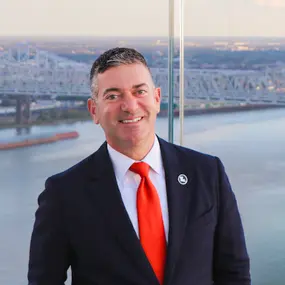
President & CEO, Greater New Orleans, Inc. (GNO, Inc.)
Michael Hecht is President & CEO of Greater New Orleans, Inc., the economic development nonprofit organization for Southeast Louisiana. The mission of GNO, Inc. is to create a region with a thriving economy and an excellent quality of life, for all. Under his leadership, GNO, Inc. was named "Economic Development Organization of the Year" and a "Top Ten Economic Development Organization in America."
Michael was appointed by Governor Jeff Landry as State Coordinator for Infrastructure and Economic Development for Super Bowl LIX, tasked with overseeing more than 500 projects in preparation for the big game. The Governor again turned to Hecht to lead delivery of the Louisiana International Terminal (LIT), a critical project for the state. At the start of the current City of New Orleans administration, Hecht was selected to co-chair the Infrastructure Coordination Council, deploying best practices learned during Super Bowl LIX preparations across the city.
Before coming to GNO, Inc., Michael led the quarter-billion-dollar Katrina Small Business Recovery Program for the State. Before coming home to Louisiana, Michael worked for Mayor Michael Bloomberg in New York City, running the post-9/11 small business program.
Michael's entrepreneurial experience includes co-founding a group of restaurant ventures, including "Foreign Cinema," named Restaurant of the Year 2000 in San Francisco. He began his career as a strategic management consultant in the US, Canada, Europe, and Australia.
Michael holds an MBA from St… Read More
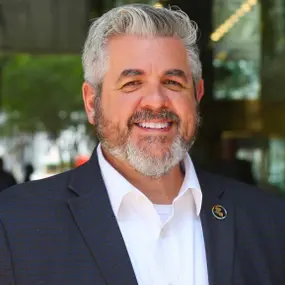
Chief Marketing Officer, Greater New Orleans, Inc. (GNO, Inc.)
Matt Wolfe is the Chief Marketing Officer for Greater New Orleans, Inc. In this role, he oversees all communications and marketing activities for the organization and leads initiatives to brand the region as an ideal business location. His work targets companies for relocation to the Greater New Orleans market, contributing to the attraction of more than 120 companies since he joined the organization in 2011, including British Airways, Ube, and Woodland Biofuels.
Matt also engages in business development, meeting with technology companies and bringing national and global conferences to the region, including Xbox Games, Copado, DAQA, High Voltage Studios, and more.
Before his marketing role, Matt spent more than 11 years in media newsrooms, with experience in broadcast television and print publications. During his time in journalism, he received numerous industry and company awards.
Matt's communications work for GNO, Inc. has yielded 450+ annual mentions in publications such as Forbes, The Wall Street Journal, and The Economist, and more than 150 earned national rankings for the region. He has also worked on major events including the 2013 and 2025 Super Bowls, the Katrina 10th Anniversary, TEDxNewOrleans, the NBA All-Star Game, the Final Four, and New Orleans' Tricentennial.
A Crescent City native, Matt lives in Lakeview with his wife and two dogs.
CONNECT
🌐 Website: https://gnoinc.org/
💼 LinkedIn: https://www.linkedin.com/in/matthewpwolfe/
𝕏 X: https://x.com/mwolfegno