Amazon Music

 Apple Podcasts

 iHeartRadio

 Spotify

 YouTube

 RSS Feed

 Podcast Addict

 Podchaser

 Deezer

 Goodpods

 PlayerFM

 Castro

 Castbox
When Your Employer's Values Aren't Yours: Starting Your Own Practice — Dr. Damon Cudihy

An OB/GYN explains why he walked away from a hospital job he couldn't do in good conscience, and what it took to build his own practice.
What do you do when the organization you work for asks you to do something you won't do? For Dr. Damon Cudihy, the answer was to leave a hospital job and build his own practice.
Host Joshua Wilson and co-host Jude David, JD, DCL, MBA, Managing Partner of FA Mergers, sit down with Dr. Damon Cudihy, an OB/GYN who has run a private practice in Lafayette, Louisiana for more than 13 years. After four years as an employed physician in Pennsylvania, Damon reached a point where staying meant compromising his Catholic convictions, so he moved his family south and started his own business. He explains how small compromises add up over a career, why being told "you can't" became the spark for his calling, and how faith shaped every business decision since. It's a candid conversation about conscience, risk, and building something on your own terms.
🎯 What We Cover:
- Choosing medicine as a calling, not a paycheck
- From FSU and UF to a first job in Pennsylvania
- Incrementalism: how small compromises add up
- The moment he knew it was time to leave
- Going from employee to practice owner
- The night a mentor told him "you can't"
- Why "you can't" motivates entrepreneurs
- Trusting God with the business and the finances
- Community and accountability for leaders
🤝 Connect with Dr. Damon Cudihy:
🌐 https://www.acadianaobgyn.com/
💼 https://www.linkedin.com/in/damon-cudihy-010a2326/
🤝 Connect with Co-Host Jude David:
💼 https://www.linkedin.com/in/jude-david-jd-dcl-mba-172a6a76/
🌐 https://famergers.com
💼 Thinking About a Transaction?
FA Mergers advises lower-middle-market business owners on preparing for and navigating a sale. Start the conversation at https://famergers.com
🎙️ Follow The Deal Podcast:
🌐 https://www.thedealpodcast.com/
💼 https://www.linkedin.com/in/joshuabrucewilson/
▶️ https://www.youtube.com/@dealpodcast
A One Iron Network production: Executive Producer Joshua Wilson
Topics: starting a medical practice, employee to business owner, values-based leadership, faith-driven entrepreneurship, physician practice ownership, Joshua Wilson on The Deal Podcast
Disclaimer: Joshua Wilson is a licensed Florida real estate broker and holds FINRA Series 79 and Series 63 licensure. The Deal Podcast is presented by FA Mergers and is produced for informational and educational purposes only.
Nothing discussed constitutes investment advice, legal or tax advice, a solicitation, or a recommendation to buy or sell any security or to pursue or avoid any transaction. All views and opinions expressed by the hosts, co-hosts, and guests are their own and do not necessarily reflect the positions of FA Mergers, One Iron Network LLC, any regulatory agency, or any employer. Listeners should consult their own legal, financial, and tax professionals before making any business, financial, or transaction decision. This podcast does not constitute a solicitation or recommendation for any financial products or services.
Let's Connect on LinkedIn:
https://www.linkedin.com/in/joshuabrucewilson/
To Contact Us, Please Visit:
https://www.thedealpodcast.com/contact/
Disclaimer: Joshua Wilson is a licensed Florida real estate broker and holds FINRA Series 79 and Series 63 licensure. The Deal Podcast is presented by FA Mergers and is produced for informational and educational purposes only. Nothing discussed constitutes investment advice, legal or tax advice, a solicitation, or a recommendation to buy or sell any security or to pursue or avoid any transaction. All views and opinions expressed by the hosts, co-hosts, and guests are their own and do not necessarily reflect the positions of FA Mergers, One Iron Network LLC, any regulatory agency, or any employer. Listeners should consult their own legal, financial, and tax professionals before making any business, financial, or transaction decision. This podcast does not constitute a solicitation or recommendation for any financial products or services.
00:00 - Welcome and Introductions
02:03 - From Marietta to FSU and UF
04:18 - A Calling, Not a Career Plan
08:29 - Can a Faithful Catholic Practice OB/GYN?
14:48 - Incrementalism: How Small Compromises Add Up
17:11 - The Spark to Leave and Start His Own Practice
20:11 - Why the Ends Don't Justify the Means
27:42 - The Night a Mentor Said "You Can't"
31:50 - The Entrepreneur's Dilemma
33:58 - Trusting God with the Business
40:26 - A Question from Past Guest Elise Colomb
44:51 - Community, Accountability, and Staying Connected
Promo Ad:
This episode is brought to you by FA Mergers and Acquisitions. If you own a business generating $10 million or more in annual revenue, our team can provide a complimentary opinion of value based on real transaction data in your industry. Whether you're considering a sale now or simply planning for the future, we can help you better understand what your business may be worth and prepare for an exit that aligns with your goals. Request your free valuation today at FAMergers.com.
Joshua Wilson:
Good day, everybody. Welcome to The Deal Podcast. we're grateful to have you guys listening in. The mission and the purpose of this show is to inspire future generations of deal makers. Also, we like doing deals. This is powered by FA Mergers, where we sell middle-market businesses. Right. So this is going to be kind of a fun transition into this conversation because we're selling businesses, we talk to deal makers, and we bring in deal makers from all sorts of backgrounds and practices. Today is gonna be we're having a conversation with the doctor and I'm I'll I'll let him kind of explain who he is and what what he does. So Doctor Damon, welcome to The Deal Podcast.
Damon Cudihy:
Thank you. It's great to be here. It's a real honor. And it's it's definitely a unique type of interview. I've never done anything quite on this topic, so I'm looking forward to seeing where this goes and what we and and the nature of our discussion. So yeah, my name's Damon Cudihy. I'm an OB/GYN physician. I've been in private practice since moving here to Lafayette for just over 13 years. prior to coming here, I was an employee of a Catholic health system in Pennsylvania. the Harrisburg area. And that was the first four years of my practice as an independent physician after finishing my training, my specialty training as an obstetrician and gynecologist.
Joshua Wilson:
Yeah. And what's really interesting is when we started sharing where we're from, I'm I live in Florida and you went to school right down the road. Kind of talk to us about your your schooling.
Damon Cudihy:
So yeah, when people ask me where I'm from, you know, sometimes I I need to ask them how much time do you have? Yeah. Because it's not a a short answer. So I grew up in Georgia, north of Atlanta, in a town called Marietta. and I ended up going to college and medical school in Florida. started I did my undergraduate at Florida State in Tallahassee, and that's where I met my wonderful wife. And we were actually married in Tallahassee during my second year of medical school. I went to medical school in Gainesville, Florida, right up the road from you. And so I became friends with a a a good priest who served as a real spiritual father, mentor to me, who was actually there in Ocala, Florida. So I would go down there to visit him for spiritual direction and and and other you know, to to go to his parish, you know, to for mass and even adoration on a regular basis.
Joshua Wilson:
Yeah. Special. So how does one go from two rival schools
Damon Cudihy:
Right. Yeah.
Joshua Wilson:
from FSU to the Gatorland? you know, when you made that decision, marrying your wife at FSU, sure. How did you convince her to go to UF with you?
Damon Cudihy:
It's a it's a funny story. So at the time, Florida State didn't have a medical school. They had a pilot program where you would do your first year of medical school after undergraduate in Tallahassee. And there were about 30 of us. And then we would merge with the the medical school class at at the University of Florida in Gainesville. So that was a program I was at. So I actually did five years in Tallahassee, and then it did the remaining three years of my medical of my four-year medical school in Gainesville. so You know, it was you know, it was kind of a natural fit. and and my wife actually has a connection to the University of Florida with her parents. Both of her parents were gators. They graduated from Gainesville. And I like to brag about my father in law that he was actually a football player, was a quarterback at University of Florida. you know, he was he was riding the bench mostly while Steve Spurrier was playing. So he didn't get as much playtime, but you know, he's he's still, you know, my you know, my connection to, you know, some kind of football, you know, Fame.
Jude David:
So she was saying chomp chomp before you even got there.
Damon Cudihy:
That's right, that's right. But she yeah. But I was very blessed that she ended up going to Florida State instead of her parents' alma mater.
Joshua Wilson:
There you go. All right. So w when you were choosing, why'd you choose to be a doctor? And then why did you choose this practice?
Damon Cudihy:
Good question. I so in in high school, I guess it started that I definitely had an interest and a talent, I believe the Lord gave me in the sciences and the biologic sciences in particular. And I think that interest led to me really taking those classes more seriously and and really wanting to learn as much as possible. I there's no one in my immediate family or in the medical field as far as practicing. I think I I have a distant aunt who was a nurse but never worked as one. So it wasn't anything familiar to me. And and so the idea of becoming a physician wasn't something really present in mind. I thought that I might want to do some kind of medical research in a lab. but so I started out an an undergraduate pursuing a major in biology, and my faith really was deepened there in college. And I became very active in a campus ministry called the Catholic Student Union there. And and I really feel that my education in my growing into an adult and my maturing was as much and even more so spiritual than it was intellectual. And I really enjoyed getting to know people and I experienced f in in in a way that never had prior to that, the just the blessing that community is, especially the community of of believers. And so kind of in that and I believe in that environment I was able to discern that God was actually calling me to the medical profession. taking that talent and that gift he had given me with you know the in the sciences, biology in particular, to helping and working with other people. I had spent because of the other w kind of work doing medical research, I spent a summer in a lab and I really did not enjoy that at all. And so I I really enjoyed meeting and talking and getting to know people. And that's as it turns out, that's a big part of what being a physician is you're talking to people, having conversations with other people all day long. And and it was that time in college that that our Lord really showed me that that was something I was made for and that he d that he was calling me for.
Joshua Wilson:
I I think we've interviewed a few people who they just knew kind of early in their life, like this was my calling, this is the direction, God told me, I heard it and I moved forward. I think a lot of people are struggling to find out like their identity and then where where they're supposed to find their fit. To those people who are trying to find their fit, w w what kind of feedback do you have for them or or direction for them?
Damon Cudihy:
Yeah, I would say, you know, th thinking back on my story, you know, I would ask them what are they interested in? What do they have a passion for in life? What really motivates them? What do they feel, you know, is something that God has put on their heart, even if they don't recognize as God putting it on their heart, but what kind of important message they feel they need to share with the world? And and that's a part of my discernment of the medical question I hadn't even gotten into yet because Even prior to college, God had put a real passion in my heart for the the suffering of the most vulnerable pre-born children because of legalized abortion. And that was something that as a high school student, it wasn't something that I arrived at intellectually. I can't take credit for that. It was something I really believe was inspired by God, just a real passion for that, and just a horror that this was legal in our country. And so I You know, that I didn't think would end up growing into a career in the medical profession, but you know, wanting to be a a light, wanting to be an advocate for the most defenseless and vulnerable, you know, was a big part of it.
Joshua Wilson:
Yeah. So you took that that internal signal
Damon Cudihy:
Right.
Joshua Wilson:
mixed with some skills and talents that you believe God gave you and it led you towards OB/GYN.
Damon Cudihy:
Exactly. So there was a time as I started accepting and growing into really becoming a Christian, you know, seriously as an adult rather than just going to church and to mass because my parents took me. there was actually a time when I didn't think it would be possible to be a faithful Christian, you know, a faithful Catholic Christian as a physician. I had this impression that the medical profession was irredeemably corrupt because this was the profession where There were people that were medically legally allowed to destroy the lives of in innocents. So I didn't think that there was a place for someone like me. And within the medical profession, I certainly didn't think there would be a place for a someone that was pro-life that didn't believe that abortion was was should be allowed in the OB/GYN profession, because I felt like this was sort of the the heart of the dragon. And so my the mentors of other faithful Catholic physicians I had. were mostly primary care, family practice. So they're taking care of kids, you know, and and you know, adolescents, adults, and elderly, but they weren't by and large doing a lot of obstetrics and gynecology. Because an obstetrician and a gynecologist, they're considered the subject matter experts in not only abortion, but also sterilization and contraception. And so this whole culture and ideology really aimed at trying to prevent children. and then destroy them if the the contraception and sterilization didn't work. And so it really took some discernment and God had to really show me and it's an a an amusing kind of moment that I'll share a a little bit about that, that he actually was in fact calling me to the very thing I didn't think was possible.
Joshua Wilson:
Yeah.
Jude David:
There are so many, you know, people that are are reasonably good Catholics in South Louisiana who have gone into the medical field and they would say, sure, I'm anti abortion, you I'm I'm pro life. But then you start asking questions like, Well, what about contraception? What about contraception that contains abortifacients? Right. What about in vitro fertilization? What if during the in vitro fertilization embryos are destroyed and those sorts of things? And it's like They say, Well, I'm I'm pro life up to that point, you know, up up to those things. Where did you discern that you know there was a hard line for you and you weren't gonna cross it?
Damon Cudihy:
No yeah, I thank you for that question, Jude. it really I think started because in my journey, the foundation was my conviction that this was God calling me to do something. I didn't really choose the medical profession because I was looking for the most effective means to earn an income to support a family and the mo the career that I thought might be most adventurous and exciting. I really believe it was a calling from God. And so it was the the foundation of just these convictions that I wanted to please God. I wanted to do what what what God was asking of me. And so my faith coming first, you know, is the foundation for this. because I I think what you're getting at, Jude, and I see it too, you know, my entire career, where it's very tempting for a lot of us to want to you know, let our faith, you know, our our practice of the faith start and end with walking into mass on Sunday and then we leave it behind. We put on that Catholic cap and we walk in and take it off and then walk into the office or the the hospital, the OR. And that Catholic identity was just it was like a hobby, like something I do on the weekends, not something that, you know, you know, I I I feel responsible to bring into every aspect of my daily life. And so It's it's interesting because in the course of my training, unexpectedly, some of the harshest treatment I experienced was by colleagues or faculty, superiors in the chain of command and the way training works, who themselves identified as Catholic but you know were particularly harsh towards me. And I I think ultimately because I disturbed their conscience, I think I was doing something that they, you know, were troubled by because they weren't doing it. And the fact that I was refraining from participating and sterilizations and abortifacient medications. And so it wasn't because I was trying to proselytize and handing out pamphlets about what they should do. It was just the very silence of not doing what I think deep down they knew they shouldn't have been doing.
Jude David:
Yeah, I I I listened to a something from Father Mike Schmitz the other day and it was about discernment. And he said, our God is a God of clarity. You know, don't don't just lean into what you think God might want, you know, actually discern and God is a God of clarity. But I also think that, you know, God whispers more than he yells at you. And so for a lot of people, whenever they're discerning, they really have to get quiet and listen to the whispering. It doesn't sound like that was the case with you. You had it like God was screaming at you when you were in high school about what you were supposed to be doing. How was the discernment that simple for you? You know, how should other people keep their eyes open for that discernment?
Damon Cudihy:
I think that I found I it was I can relate to sometimes like the prophet Jeremiah, this kind of burning in my heart. Like I I couldn't not speak, you know, speak what was in my heart and and as a I was what would be seen as like a a pro life anti abortion activist as a college student on campus. I was organizing trips for the March for Life in DC, other being involved in the the r this respect life table and on in campus with a Catholic student union where we're handing out pro-life literature, trying to educate our classmates on the horrors of abortion. So for me, I wouldn't have had peace doing any less than that. There is this restlessness in my heart that had to, you know, share this kind of burning passion that God put on on my heart on these issues. But I I will say and I don't know if this is directly answering your question, but I'll try to come back to it. The earlier question, an aspect I would like to say about how do so many of my peers that are raised Catholic that understand intellectually these principles of Catholic ethics, but then fall short of putting them into practice. I think it starts with like a slow, small compromises early in their career beginning in training. And so there's a lot of pressure as a medical student just to participate a little bit, you know. You're just going to tell your supervising physician that this patient wants birth control. You're gonna be scrubbed in a C section. You're just gonna help hold the tube while they cut it. And you're gonna th and so gradually I think there's a a fading into this compromise that but and there's always this promise that people make to themselves, well, once I finish medical school, then I'll do the right thing. I'll stand up for the truth. But there it's the tr the temptation is just to push it down. Then you're in your OB/GYN residency, and well, I need to I need to get past this first year. So I'm just gonna compromise much so I don't become a target and get pushed out because I need to graduate. Well then you graduate, and now you're in your first, you know, practice and you're the only physician that you know ha that is that realizes that these things are wrong, but you're and by the time that you ever get to that point, you're always pushing it back. So that's I think what happens. And And now you have maybe a decade or so where your comfort zone, your familiarity, unfortunately, is in doing things that actually do go against what our our faith teaches us.
Jude David:
Yeah. I mean what you're describing is incrementalism. Correct. Which happens in every job, every profession, happens in companies all over the place. And it's actually one of the main drivers that leads people to become entrepreneurs. They were put in a compromising position doing what they were doing and it it makes them want to do things differently. And and sometimes that's like a boss, you know, trying to hide things from a customer or or lie to a customer or whatever it is. You know, a as a person working for that boss, I don't I don't want to have any complicity in lying to that customer, even if I wasn't the one who did it. same thing with what you're talking about. You know, you're incrementally getting involved in more and more and more morally compromising things. It caused you to go out on your own and do something different.
Damon Cudihy:
And yeah, that's actually an aspect that I haven't shared publicly very much before. But when I finished my training in Pennsylv in Buffalo, New York, and then went to work in my first job in Pennsylvania, I was there for four years, but it was something that you're speaking to that was kind of the the push, the spark for me to move. There was always a draw to move back to the South, closer, especially to my in laws who live in the Pensacola, Florida area. but it was actually a moment where I felt that my the values of one of the physicians that was really in charge of the program I was working for, even though in most ways as Catholics we aligned, but I felt like there was not the same solicitude and care and and caution with regard to diagnosing miscarriages. There was a little bit of danger in in terms of being possibly misdiagnosing a miscarriage that was just an early pregnancy. And so that when I when I felt in that moment that there was a compromise, it was very clear to me that it's time to to start looking to leave this program. And so that was also a transition exactly as you described, Jude, where I went from being an employee of a larger institution where I was working under the authorities of others, when I came to the point where this superior that I was working under was felt pushing me into situations I felt like I was going to have to violate my conscience to continue participating. That was the spark that motivated me to actually move and come down here to Lafayette where I did start my own business as an entrepreneur.
Jude David:
And you continue to practice that morality today. you know, whenever my wife and I struggled with fertility issues, we saw several different doctors who, you know, I think were all Catholic and seemed to be preaching that they were doing the right thing. But we were advised in several different ways that, you know, there's moral ways to practice IVF or there's moral ways to you know, do some of these things that you know, we know inherently are wrong in our church and it it was never right to us. And so, you know, that's whenever we actually came to see you and you, you know, performed a surgery on my wife that maybe worked too well'cause we got so many kids now. But
Damon Cudihy:
Praise be to God. Yeah, you're welcome.
Jude David:
you know, we're we're so blessed and and so thankful to have all the babies that we do. But you know, I think those other doctors, I don't think any of them were evil people. I don't think any of them were trying to do the wrong thing, but they started the belief with with the belief that, you know, let's start with what what is possible and then see if we can somehow turn that into something moral. Instead of starting with what's moral and work towards what's possible.
Damon Cudihy:
Yeah, this is a very important point, Jude. Thank you for that segue. It's it's the principle deeply rooted in Christian tradition that the means the rather the ends do not justify the means. Another way of stating it is that we may not do evil, that good may come of it. And this is a fundamental principle that if you get this wrong, you can do get go to some pretty dark places with justifying evil things. for example, you know, I was You I don't want to get into too too controversial things, but can we use indiscriminately a weapon of mass destruction, you know, to bring about the end of a war if we think it's gonna, from a utilitarian calculation, end up with with fewer lives lost, even if that means intentionally killing innocent lives? The answer as as a Christian is no, we may not intentionally kill an innocent person. So I think that in this situation about infertility, I I believe you're absolutely right. I don't you know, even though I strongly disagree with what a lot of my peers in this field are doing, I have to remember our Lord in the cross, you know, saying, Father, forgive them, they know not what to do. And I believe that is the case for those for, you know, I we have to assume only God knows the heart, that that's the case of these physicians that are engaging in practices like IVF. because, you know, IVF on the surface, it appears to be a pro-life thing because some children survive the process. But if you dig, if you pull back the curtain a little bit, you and you look deeper into it, you learn that the majority of children don't survive it, that a small fraction, far less than ten percent. And most of these children are knowingly gonna die unavoidably, or worse, many of them are actually intentionally destroyed or put into perpetual cryo preservation, which in actuality is just a slow death. No one actually lives forever in in the liquid nitrogen, the longer that these embryos are left there, the the less likely they're ever gonna survive thawing, which the majority don't anyway. So so yeah, IVF is is one of these sad examples of you know missing and not understanding that principle that is has to be foundational, that we may not do something evil that good may come of it, that the ends do not justify the means.
Jude David:
Alright, so I'm thinking of the age old question. If you could go back in time and kill baby Hitler, would you do it? I'm I'm getting a pretty clear picture about what you would say.
Damon Cudihy:
Absolutely not. Yeah, yeah. Because it's that's it's a purely utilitarian argument to say that you would. You know, there's I think there's a futuristic movie where I forget the name of it, but where they try to look to the future and arrest someone before they've committed a crime. Minority Report. Yes, that's a Minority Report. Thank you. And that's the same kind of idea that if you can predict who's gonna be a villain, then you just destroy them early on. But but yeah, that would absolutely you know, violate that fundamental principle. And it's and it but the argument for that erroneous idea idea is utilitarianism. And ironically that is what the the Nazism was ultimately about is is utilitarian the greatest good for the greatest number. This was this flawed philosophical principle that led to the destruction of countless, you know, millions of innocent lives.
Jude David:
Yeah, it still happens all over the world today.
Damon Cudihy:
It certainly does. It certainly does.
Joshua Wilson:
So you came to Lafayette based on a based on morality for you and the way you view it. Correct. Right? Like you could no longer work under the situations that you were in.
Damon Cudihy:
Correct.
Joshua Wilson:
at first you talk about incrementalism, big word. Love it. You you talk about that on the side of like leaning one direction where it's like, you y you start to like bend towards that. There's also I think the flip of it where you get exposed to it and the the internal you you mentioned like Jeremiah, that burning in your heart, it gets hotter and hotter and hotter 'til one day you're like, I could no longer put up with this, right? Yeah. When was that breaking point where you're like, I'm done? And you and your wife were like, I guess we're moving or I guess we're finding a new job or starting a business. Like what did what was that moment for you?
Damon Cudihy:
So yeah, going back to my adolescence and high school where there there's nothing more certain to me, even to this day in the world, in the universe, than the the fact that the killing of an innocent child by direct abortion is evil. To me, and I'm at peace with this to say this, to me I'm more certain of that than even the existence of God. I'm very certain of the existence of God, but I'm even more certain of of this that that abortion is evil. and it actually it's the church's witness to the defense of the pre-born that actually drew me closer into my faith because of the church's witness to that. And so so you know, going back to this situation, and this is you know vague enough that there's no patient identities revealed, but th there was a situation where a colleague had asked me to do a D&C procedure, which is completely morally licit when the child has died. It's the it's basically removing the remains of a child that's died, you know, maybe six, seven, eight weeks, very early miscarriage. now from the outside, it looks and it is technically the same that an abortionist would do with a surgical abortion. The key difference is that child, the abortionist is operating on or is destroying, has a beating heart until the child is destroyed by the D&C procedure. It stands for dilation and curettage. It's something that is done fairly often in this one situation I was asked to do this surgery with a presumed miscarriage. And since it's gonna be my hands doing the surgery, I have to look into the medical record to verify, okay, is there or can we be a hundred percent I needed, you know, I needed to have absolute certainty, as much as feasible, to know that that this was a miscarriage and not just a you know missed timed diagnosis that the of the pregnancy. And so there's ways to do that. There's ultrasound, there's hormone levels. And so, you know, I'm quickly trying to look through the record because this was an add-on case to my OR and I couldn't find all the information. So I called the physician that had arranged and added this to my surgery schedule. And and and and she said that yes, you know, these these hormones and I When I was back in the office later and I found the records of looked and what she told me didn't necessarily add up. Now, you know, I I do have, you know, a reasonable degree of confidence that I didn't actually destroy an innocent life, but it was a c near miss. You know, it could have been it and and I don't have a hundred percent certain that I didn't. I mean but but I do I mean I have a clear conscience in knowing that I did what I could. But it was a situation that you know, brought me close enough to doing the very thing that I hate that I despise more than anything else in this world.
Joshua Wilson:
Yeah. man, I I love this conversation and I'm and I'm grateful for it. you did mention earlier that I wanted to remind you you said there was an am moment, an amusing moment that actually brought you know, brought you into this field and brought you sure down this path. Kinda share that. What was
Damon Cudihy:
Sure. So, you know, my last name is Cudihy. it's an Irish name. It's a unique spelling. and but Irish are known for being pretty hardheaded and even a little bit rebellious. So wiry. What's that? Wiry. That's right, wiry. And and but God works through even our quirks and and and our you know, maybe even our faults in in certain ways. So I'm now in my third year of medical school. And this is when we started doing clinical rotations. And I was as a you know as a medical student, you know, you're at the bottom of the totem pole. And so, you know, if one of the other residents, I'm not a resident now, I'm just a medical student, if one of the other physicians asks you to, you know, get coffee, you're gonna run to the cafeteria and grab them coffee. You're gonna clean the floors. I mean, you're below the janitors in a sense. And so the idea of not doing something they asked is is unthinkable. Well, So in an undergrad, ma a double majored in biology and Spanish. So they I guess the word got out that I spoke Spanish reasonably well. And they had this routine at the time of postpartum round. So this is a woman that had delivered a baby the previous day or two, they're gonna be going home in a day or two. And they were going around passing out birth control pills and explaining to this woman why they needed to start taking birth control pills the next Sunday. Now it There's something there spiritually, I think, but it's all it's only medication I know of where the norm is to r instruct patients to start it on Sunday, you know, the Lord's Day. you know, we we don't do that in the inner medication except birth control pills. And and I was convicted enough that I could not in in good conscience do this. Because number one, I knew they were born a patient. And I also, for all sorts of reasons, you know, I, you know, could not in good conscience basically translate this. contraception spiel, telling women they need to start birth control pills just as they've had their baby, you know, and and and in fact you're telling them, you know, let's make sure this never never happens again. So they asked me to do it. I told them they wanted me to translate because I was the only one there that spoke Spanish. And I I told them, no, I couldn't. and I know now that must have gone over like a lead balloon, a very awkward moment. It was probably one of the first times as an adult professionally that I was challenged. This was like a first public kind of test. And And by God's grace and the prayers of my wife, I was newly married, you know, I was able to to you know, do the right thing. Well that night, the the resident in charge of us medical students pulled me aside. I I'll never forget this scene. We were walking to our vehicles in the parking garage. It was kind of dark and he was, you know, you know, sufficiently taller than me that he was kind of looking down at me and he said, Damon, I heard, you know, from your classmates that you were considering going into OB/GYN to apply for an OB/GYN residency. And I didn't deny it. I wasn't really, but we all kind of at least want to show as much interest as we can in the the given rotation. because at this point I still didn't think it was really feasible and I didn't have enough of a passion to go into that. Well, he said to me, he said, you need to know that if you are not willing to do contraception counseling, and by that, He meant to tell patients and tell them why they need to be on contraception. If you're not willing to do contraception counseling, there's really no place at all for you in the OB/GYN profession. And you really shouldn't even consider it. You know, this isn't for you. And I just kind of, you know, politely nodded, okay, thank you for the advice. Well, that night, you know, that you know really left an impression on me when I when I got home to our apartment, I told my wife, dear, Think God's actually calling me to become an OB/GYN. So God really, you know, worked through that. And it took someone telling me, I can't do it. You can't do this. You can't hold this, you know, belief. You can't have believe in this and hold this position and still be a part of this medical this profession. And and so that's what it took. That was really the the spark towards becoming an OB/GYN.
Jude David:
That's the entrepreneur's dilemma though. Like you don't really want to do anything until somebody tells you that you can't.
Damon Cudihy:
Right.
Jude David:
I feel like my business partner and I do that constantly. You know, we we look at companies to buy and you know we have different ideas about how things could run or how you could grow the business or whatever else. And then we constantly hear, well, you can't do that in this industry. It's like, yes, that's exciting. I love hearing that.
Damon Cudihy:
So you can relate to that kind of rebellious motivation. Yeah.
Jude David:
Absolutely. Well, you know, entrepreneurs at heart and it sounds like you're an entrepreneur in the medical field.
Damon Cudihy:
Yeah, and I and I and I what do you want to share with something just to give you know, some credit to my parents because both b both of my parents were entrepreneurs, so there was probably something in the in the blood that, you know, I I've inherited in that. So they you know, they had started, you know, their own businesses, more than once. So that I I think just seeing that, observing that as a as a child, you know, also planted a seed.
Jude David:
Well, I imagine we have a lot of listeners who are good Catholics who probably still are having their eyes opened a little bit by listening to what you have to say and some of these delineations that a lot of Catholics just don't talk about. You know, there's plenty of Catholics on birth control and plenty of Catholics practicing these procedures that, you know, they really shouldn't, and people aren't advising them otherwise. So hopefully we have a good number of them who are having their eyes opened. But I imagine there's also a lot of our listeners who maybe are less inclined to hear it or listen to it or absorb it in. But I hope they also get something from listening to what you had to say, you know, that if you if you see something in your world, in your working world, and you don't agree with it, or you don't think that you should be doing it, or you think you can do it better, you know, there's there's another path out there. You know, you can get inspired to go be an entrepreneur and do it yourself and do it better. And you know, you don't have to work under somebody who, you know, tells you that you can't do it or you don't belong here or whatever else. What what do you say to those folks? You know, the folks that you know are in a different industry, but maybe they are, you know, feeling a little bit oppressed by their circumstance.
Damon Cudihy:
Yes, I as you're saying that I'm thinking that that it it it's so important to put your faith in God first. And our friend Josh here can probably help us as a a good Protestant. This scripture, you know, I know it starts Eye has not seen, ear has not heard. I don't know if you help me finish it, you nor has it even entered the heart what God has in store. And another place, you know, if you put f you know, put first things first, you put f you know, the kingdom of God first, everything else will follow. And I've seen this in my profession on this particular issue, at least in testimony. there is a a book written called Physicians Healed, and it was the account of several, mostly family practice physicians who had come to a conversion moment where they stopped prescribing birth control pill. And every one of them sent letters out to the patients and they feared that their practice was going to collapse, that they were going to have to find another career, that they would have to, you know, they were going to be without a job. but in every case of the this now there was certainly some disruption. I know like my you know the my predecessor here, you know, Dr. Hardey, he had to end up moving practice and there were some trials, but ultimately people were overwhelmed with how much God blessed them in return for taking that chance and making that sacrifice. And I've definitely experienced that. The the ways in which God has blessed my medical practice, even financially, to be honest. You know, I, you know you know, lacked for nothing, you know, financially. We've been richly rewarded. And so I can't imagine that there would be any amount of financial success beyond what I have right now that would make it worth even a little bit of compromise. And on a deeper level, I wouldn't be happy. I would be, you depressed. I, you know, wouldn't have a clear conscience. I wouldn't be able to sleep well at night if I was financially successful at the cost of compromising what I knew to be the right thing. but but I I'm really just overwhelmed with gratitude and it it's such a a reminder to me of of of those verses that God, you know, I could not have imagined living where I am today, being in this community that it didn't even know existed before coming here. And, you know, the community, the the friendships, the relationships with patients that have become so many patients to you like your wife and and your family have become friends of my wife and my family, and that's Something very unique. I I wish that more physicians could have just or other entrepreneurs could just have a a taste of what what I see and the way that God has blessed me in return.
Joshua Wilson:
I I think for the for people listening in who maybe are Catholic and who eyes are being opened and they have maybe physician wise, you know, like maybe they have gone down this path and there's been a sear in their consciousness. Right. And they're listening to this and and maybe, you know, their consciousness is maybe the Holy Spirit speaking to them and they go on Hey, maybe I need to make some changes, but it's gonna affect my my family, my wallet, my whatever. And they have this fear. So not only are they struggling with seared conscious or or maybe even a new consciousness that that they're being exposed to this, but also financial. What are your what are your thoughts? What say you doctor?
Damon Cudihy:
a piece of advice long before I was financially secure, but trusting in God, I guess I was a different kind of way. I was told by, you know, a a chaplain in the account in the student ministry in college that God will not be done outdone in generosity, that our Lord will not be outdone in generosity. and that's definitely, you know, there's various scriptures I can't quote exactly that back that up, but that has been my experience. I've never lacked for anything. and there's been times when I went out on a limb to do something I couldn't afford in terms of a pro-life mission. and it's he's provided. He's provided. And so I have complete confidence that my family and my children you know, will always be provided for somehow. I may not know how he will provide, but it but it will be. I've I've you know, learn this also through the witness of others. I was doing mission work in Honduras one summer and I was visiting an order of Missionaries of Charity. These are the sisters, the community that Mother Teresa started in Tegucigalpa, the poorest part of of Honduras, one of the poorest parts of the Western Hemisphere. And they had this mission that was like an oasis in this shanty town of poverty all around them. And I was talking to the Mother Superior there. And and I was I'm just the wheels of my mind are calculating. So how do they support that? Are they like going doing, you know, campaigns, raising money to the United States, maybe the missionaries that tear to the US help fund them? And so I just, you know, just the contrast, it was like this little oasis. They had barbed wire, they had to because they're surrounded in a very, you know, dangerous area. They were taking care of the abandoned elderly and abandoned children there. so but I said to to the the sister, the mother superior there, so you know. What's like your financial plan? What's like your business plan? How do you do this? And without missing a beat, she looked at me and she said, God provides. We don't lack for anything. That was her answer. There's no five-year plan, no strategy. Just that total childlike abandonment to God's providence. And and I was yeah, I was a student at the time. And so little witnesses like that, seeing the contrast and how do you get there? It's it's trust in God.
Joshua Wilson:
Yeah.
Jude David:
You can do that no matter what you do though. You can do it in your OB practice. You know, we we do it in you know, private equity of all things, a family office where we're buying and selling companies. People go like, Well, how can you take that level of risk? How can you go without knowing the answer to the question? God's got this. Like, don't don't even worry about it. Like we we're just gonna do it and we're gonna trust that God's gonna show up on on
Damon Cudihy:
As you see it happen, you know, you learn from experience, God actually does do this. You know, it's not just a theory. I I see it.
Jude David:
Yeah. How do you give back? Well, because every time I give back, God gives it ten X. Yes. You know? Every time. Every time. Every time.
Damon Cudihy:
Ten bucks.
Jude David:
And you know I'd give you ten bucks. Yeah, I'm just kidding. you know, we have a great joy on our podcast of connecting our listener or connecting our guests one to the next. and I was able to get Miss Elise Colomb to text in her question. Okay. because we forgot to get it from her the last time. Yeah, that's it. But she wanted to ask you what is something you wish people knew more about your profession?
Damon Cudihy:
About my profession. Wow. Well, right now in recent years since coming here, you you shared your a little bit of your s story, Jude, with your you and your wife's struggle with infertility. I think that b people need to realize that that IVF is not the answer. it's not pro-life, it never can be. and that it's really a disservice to women because what women really seek, so from fertility, is to be made whole. They want to know. The root cause of their problem. And an IVF is really an abandonment of those principles and replacing it with inhuman technology, inhumane technology, immoral technology. that that is one thing about my profession that even otherwise well-meaning Catholics or Christians don't realize that about the IVF industry that markets itself as being the fertility specialist. that's that's one. The other is a corollary. That women that are suffering from pelvic pain and menstrual irregularities, the my profession is usually going to promote and and suggest that birth control pills are the answer. And again, this is a disservice to women. It's an easy thing for us to do just to write a prescription, but to get to the root cause of her suffering, the irregularity of her cycles, the pain, the excessive bleeding, requires more work. And that's what she really deserves. And I think deep down that's really what she desires. And then finally, something that maybe might sum all of this up is that, you know, as a a Catholic, it's not about rules like IVF wrong, abortion wrong, contraception wrong, but it's about what is the good here? And the the fundamental good that's lost in modern culture and in my field is that human life is a good. You know, we are created in God's image. That's where our dignity comes from. So if we start with that premise that the human being is ultimately a good and not an evil, not an ill, then it only follows that fertility, a woman, it's capacity of woman and man's, but particularly in my work, a woman's capacity to bring new life is a good. Her fertility is a good thing. It's not a disease state that needs to be suppressed at every chance possible or surgically altered and and impeded in possible. So if we start with understanding that God made human life as a pinnacle of his creation, that it's a good, then these other principles follow through. And and when you get to IVF, I think the error there is not it's not so much a failing to recognize human life as a good, but it's failing to recognize that human life is a gift. It's not an entitlement that we can seek to create on our own terms. I hope that answers the question.
Jude David:
I bet Elise would approve.
Joshua Wilson:
Yeah. Thanks, Jude, for getting that one in. Dr. Damon, when it comes to you know, we we can look at consciousness, you know, your conscious consciousness. Yeah. Yeah, conscious. Yeah. Yeah,
Damon Cudihy:
Conscience.
Joshua Wilson:
that's funny. you know, and in terms of measuring that on a P and L, right? Profitability, like sometimes if I do this then yeah, money, right? And think you you mentioned this in a previous, you know, it's harder for a rich man to enter you know
Damon Cudihy:
Yeah.
Joshua Wilson:
than a camel through the eye of a needle. And it's not just talking about richness, it's talking about like dependency on God. Right. So like for someone who has maybe seared conscious and who has gone down that path and let's put money aside, but they're going, how do I find redemption? How do I f how do I turn away from this? How do I move towards truth or, you know, the the way that they might be feeling it or maybe with your leadership. Like what is a way for people to find what's the word, repentance in that?
Damon Cudihy:
I I think that the first one thing that comes to mind, maybe not the first, but is community. a large part of my formation and and the convictions I have have to do with being in a community of fellow like- minded believers that were challenging me, holding me accountable. but also you know, I I feel like we all in our faith stand on the shoulders of giants. You know, I I you know, I'm privileged to have been in you know, to learn from the theologians and saints who have God before me, who understood these principles and witnessed to them to the the point of death, martyrs in our our faith. So, you know, God doesn't call it us to do this alone. He he put us in a place with a community to to help one another. And so I think this idea of it's just me and God alone can be a little bit misguided, especially when we're dealing with something as life-changing and as serious as making a radical departure from a certain thing that we've been doing. Because that's where the enemy will just destroy us and squash us like a bug if we think we can do it alone, with in our our pride. So yeah, to to to depend first on God, but also on those that God sends to us to encourage us and to help us, I think is absolutely essential. And I I really feel like God has put on my heart to personally be open to and I would welcome any, you know, conversation or way I could help a colleague or, you know, I I have conversations with patients all the time, but any other physician I feel is going through this because I'm here because of other physicians and I didn't get a chance to share as much of that. But, you know, I wasn't, you know, a solo, you know, person. It's there's so many other and people that brought me where I am, including other physicians that were living the the life, you know, to the point of of sacrificing you know, worldly, you know, fame and honors and even financial risks that they took in doing that.
Joshua Wilson:
Yeah. Well man, super grateful that you're here. the the story I think the story arc here and the reason I think that this was such a a wonderful episode is it's you know, entrepreneurship, a lot of times like Jude was saying, is cu coming from a time where you're like, I'm not going to do it that way. Yeah. And you know, it could be a process, it could be a a moral decision, but entrepreneurs I there's a better way. Yeah. And I'm gonna do it the way I feel. called to, convicted for, right? And moving towards that. So I think that this was a a great story of landing into entrepreneurship because of your faith. Yeah. Right. And that's it's really cool. And I and I I don't want to honor you for that. Yeah.
Damon Cudihy:
Thank you. Thank you. And it wasn't something I necessarily sought out for that purpose. It's where God kinda brought me. Yeah. And I'm and it yeah, I'm I'm so grateful to I've I've fo you know, found this.
Joshua Wilson:
Jude, why don't you wrap us up, man?
Jude David:
Well, Doctor Cudihy, if people wanna find you, what's the best way to find you in your practice or connect with you after?
Damon Cudihy:
So acadianaobgyn.com is the website for my office and info@acadianaobgyn.com is our general email. But if someone wants to reach out to me personally, you know, I'm welcome, you know, to to share my personal email. It's just my first initial last name, dcudihy@acadianaobgyn.com. And yeah, it's something that Yeah, that's probably the best way to to get in touch with me. And people would I get questions from all over the the country. I've even gotten, you know, inquiries from overseas from other countries at times, you know, asking for, you know, my input and advice in certain situations.
Joshua Wilson:
Very cool. Well, we're glad glad you came on the show. fellow deal makers in the audience, we'd love to hear your story. We'd love to hear some feedback. And you know, head over to thedealpodcast.com, fill out a quick form, get in contact with us. we do this to inspire, but we also do this to connect with deal makers, whether it's to help them exit a business or maybe connect them with one of our guests. you know, we want to hear from you. So thedealpodcast.com is a great place to go. And until then, we'll talk to you all on the next episode. Cheers, guys.
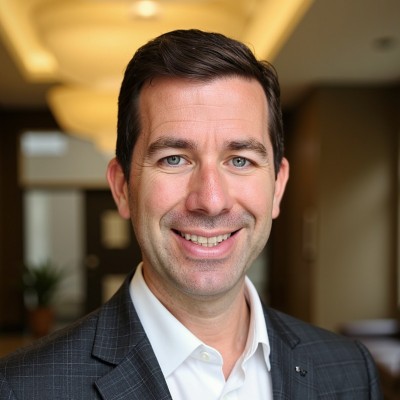
Managing Partner / JD / DCL / MBA
Jude David, JD, DCL, MBA
Jude made investment banking his primary focus after practicing for 12 years as a successful M&A attorney. From lower mid-market family-owned companies to multi-billion dollar corporate behemoths, Jude has advised sellers and buyers on over 200 transactions totaling billions in enterprise value.
Jude has leveraged his M&A experience to start a self-funded company in the building materials sector. Since its inception, the business has grown via acquisitions to over 400 employees across the USA.
Jude and his wife Ashley have six beautiful children and are very active in their community. Jude’s favorite pastime is taking the family to their fishing lodge on the beautiful Gulf Coast.
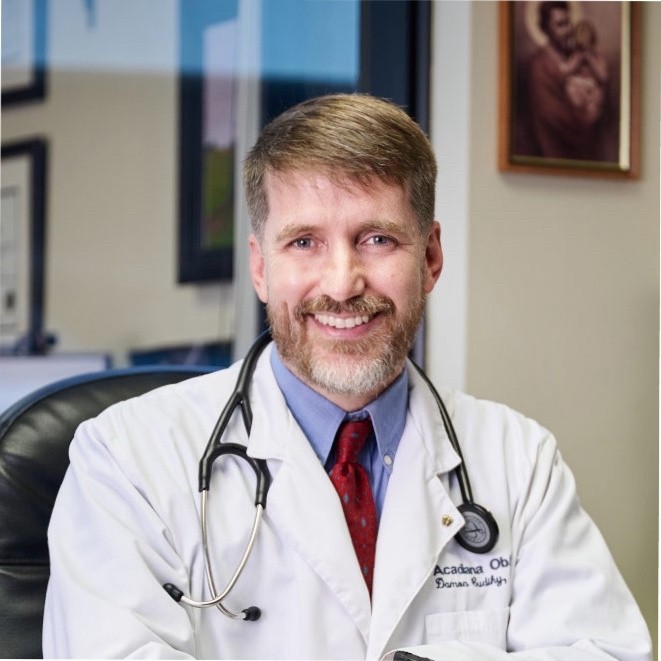
Co-Founder, Acadiana OB/GYN
Damon T. Cudihy, MD, is a board-certified obstetrician-gynecologist in Lafayette, Louisiana, and the co-founder of Acadiana OB/GYN, the private practice he helped launch in 2013. He is a Diplomate of the American Board of Obstetrics and Gynecology.
A National Merit Scholar, Damon earned dual bachelor's degrees in Biology and Spanish from Florida State University and his MD from the University of Florida. He served in the U.S. Army as a field surgeon, including as a Battalion Surgeon in Iraq in 2006–07. He trained in obstetrics and gynecology at the San Antonio Uniformed Services Health Education Consortium (SAUSHEC) and completed his residency through SUNY Buffalo at Sisters of Charity Hospital.
Before coming to Lafayette, Damon spent four years as a staff OB/GYN at Holy Spirit Hospital's Center for Women's Health in Camp Hill, Pennsylvania, where he performed da Vinci robotic surgery and proctored other surgeons in minimally invasive techniques. He also serves as Medical Director for Natural BirthHouse and the DesOrmeaux Foundation's Women's Center of Lafayette, and sits on the boards of the Acadiana Breastfeeding Coalition, the DesOrmeaux Foundation, and Acadiana Homeschool Athletics.
Damon and his wife, Lauren, have been married more than 23 years and have eight children. An avid runner and CrossFit athlete, he spends his free time outdoors with his kids camping, backpacking, kayaking, dirt-bike riding, hunting, and fishing.
CONNECT
🌐 Website: https://www.acadianaobgyn.com/
💼 LinkedIn: https://www.linkedi…