

 Amazon Music
 Apple Podcasts
 iHeartRadio
 Spotify
 YouTube
 RSS Feed
 Podcast Addict
 Podchaser
 Deezer
 Goodpods
 PlayerFM
 Castro
 Castbox
 How Founders Use Community Foundations to Protect Their Legacy with Missy Andrade
What if the smartest move before your liquidity event isn't talking to your banker — it's talking to a community foundation? In this episode of The Deal Podcast, host Joshua Wilson and co-host Scott Shea sit down with Missy Andrade, President & CEO of the Community Foundation of Acadiana (CFA), to unpack one of the most overlooked tools in middle market dealmaking: the community foundation. Missy leads a 26-year-old organization stewarding more than $253 million in assets across roughly 1...
What if the smartest move before your liquidity event isn't talking to your banker — it's talking to a community foundation?
In this episode of The Deal Podcast, host Joshua Wilson and co-host Scott Shea sit down with Missy Andrade, President & CEO of the Community Foundation of Acadiana (CFA), to unpack one of the most overlooked tools in middle market dealmaking: the community foundation. Missy leads a 26-year-old organization stewarding more than $253 million in assets across roughly 1,000 component funds, working alongside CPAs, attorneys, and wealth advisors to turn liquidity events into multi-generational legacies. From donor-advised funds and complex asset gifts — appreciated stock, real estate, mineral rights, art collections, even ownership of operating companies — to the conversation founders should be having before they sign an LOI, Missy walks through how community foundations function as a strategic partner for entrepreneurs, families, and the advisors who serve them.
🎯 What We Cover:
- How community foundations actually work (and why they're like "a bank for donors")
- Why CPAs send clients to community foundations before a sale closes
- The case for charitable planning before liquidity — not after
- Donor-advised funds vs. private foundations: when each makes sense
- How a billion-dollar Baton Rouge company was transferred to a community foundation
- Complex asset gifts: stock, real estate, mineral rights, IP, art, and more
- Donor intent and how to protect a founder's legacy across generations
- The G2 and G3 succession question every fund holder should ask
- Why the most successful philanthropists are obsessive — and team-builders
- Trust-based philanthropy and why neutrality is a community foundation's superpower
🤝 Connect with Missy Andrade:
💼 https://www.linkedin.com/in/missy-bienvenu-andrade-81363b65/
🤝 Connect with Co-Host Scott Shea: 💼 https://www.linkedin.com/in/escottshea/
💼 Thinking About a Transaction? FA Mergers helps founders, investors, and business owners navigate the full M&A process — from valuation to close. If you're exploring a sale, acquisition, or capital raise, let's talk. 🔗 https://www.famergers.com/
🎙️ Follow The Deal Podcast:
🌐 https://www.thedealpodcast.com/
💼 https://www.linkedin.com/in/joshuabrucewilson/
▶️ https://www.youtube.com/@dealpodcast
DISCLAIMER The Deal Podcast is for informational and educational purposes only. Nothing discussed constitutes investment advice, a solicitation, or a recommendation to buy or sell any security. Always consult a licensed professional before making financial or investment decisions.
00:00 - Welcome and Why This Episode Matters
01:39 - Meet Missy Andrade and the Community Foundation Model
04:56 - Why People Give: Faith, Family, and Life Events
07:09 - Have You Ever Donated? Reframing the Question
09:22 - Who the Donors Are and Why $10K Gets You In
11:09 - The CPA's Cue: When to Send a Client to CFA
13:33 - Pre-Sale Planning and the Fear of Committing Early
15:03 - The Billion-Dollar Baton Rouge Transfer Story
17:33 - Money Isn't Always the Driver: Traits of Generous Founders
22:14 - Donor Intent and Protecting the Legacy
25:46 - The G2/G3 Succession Conversation Most Families Skip
32:48 - Complex Asset Gifts: Real Estate, Stock, Buffalo, and the Royals
37:15 - Faith, Neutrality, and the Best Job in the World
40:12 - How to Reach Missy and Closing Thoughts
Joshua Wilson:
Good day everybody. Welcome back to The Deal podcast. The mission and purpose of this show is to inspire the future generation of deal makers to, uh, who are looking to get into maybe mergers, acquisitions, or investment banking or finance, or one of these careers or maybe your, your mid-career and you're looking to take the jump into entrepreneurship. Man, we'd love to inspire you. We bring on, uh, people of the community. Thought leaders, business owners, people who've bought, built, sold people who've had some successes and failures, and these people all are dedicating their time investing in you giving. To you, um, their wisdom, their knowledge, what they've experienced. So as always, please reach out to the guests and say, thank you. Let's be a community of gratitude for these people who are devoting their, their energy towards you. Uh, also one of the things that we love to do, this is powered by FA, mergers, this podcast, we love doing deals. We love helping people. Sell companies, middle market businesses. So if you have one of those businesses and you're like, Hey, I'd like to know how much it's worth, or maybe what's the process of selling a business? Head on over to fa mergers.com. Tell 'em that you've heard us, you know, on the podcast and maybe you wanna sell a business. But when, when I talk about giving. Um, you know, the community and the people who are coming on the show to give you something, we have another gift for you today and, uh, we're bringing in someone whose job it is to inspire others to give, to educate people on giving, and to kind of lead the way as a charitable advisor. So with that. Uh, welcome to the show, Missy.
Missy Andrade:
Hello. I'm so happy to be here.
Joshua Wilson:
Yeah. So Scott, let's do this. I know that you've, uh, you wrote a lot of notes. You're really good at this. Why don't you introduce our guest today?
Scott Shea:
Yeah. So today we have, uh, Missy Andre, who is a Lafayette resident, former neighbor of mine. True way back when.
Missy Andrade:
Yes.
Scott Shea:
Um, this will be fun'cause most of our conversations are about selling and building companies. Um, you see deal making kind of from a different angle, which is typically after people have been successful, um, and help them with charity and, and making an impact after they've made a, an impact through business. Um, so yeah, welcome to the show and this will be fun. Missy's a rockstar.
Joshua Wilson:
Well, hello Rockstar.
Missy Andrade:
Hello.
Joshua Wilson:
Yeah. So Missy, why don't you tell us what is it that you do? What is a community foundation? What do you do?
Missy Andrade:
Yes, so I'm the president and CEO of the Community Foundation of Acadiana. Um, this organization is 26 years old. We're headquartered here in Lafayette and we serve the region, uh, the eight parishes of Acadiana. Um. Community foundations are nonprofits, of course, and they exist to, um, serve the community and to improve the quality of life for the people who call that geography home. Um, the way that community foundations function, uh, in many ways it's, it's kind of like a bank for donors. It's a financial institution for donors, um, and for nonprofits, I'll say. But historically. Uh, a community foundation will work with an individual or a family or a group of people, um, to establish specific funds based on their goals. Um, those funds become an asset of the community foundation, and then we work with donors, uh, to figure out what their goals are in terms of their giving. Um, we have about a thousand component funds at the Community Foundation of Acadiana and, uh. As of today, we have about 253 million in assets under management. A portion of that, um, includes some real estate holdings, but with a thousand funds under, uh, our roof. Um, you can tell that we work with a ton of people, businesses, and nonprofits, um, on their charitable giving goals. Um, so I am the organization's second, CEO. Uh, in its history, I, I joined the team in 2022 taking over, um, from Raymond Abert, who was the founding CEO, and he deserves a ton of credit for how, uh, the community foundation grew year over year since inception. Um, and when I was hired, I was really brought on board, of course, to build upon the legacy that he had. Put into motion. Um, but also the, the call to action from our board and the community in general was not just about that transactional side of the work, um, but it was really about how do you position a community foundation to be more of, um, a collaborator, a convener, and a true strategic tool to leverage charitable dollars in the community. To do great things, to solve big problems. And so I have spent the last three years, um, building my team, learning about the donors, uh, who've been a part of our organization for many years, studying other community foundations to figure out, um, how do we answer that call?
Joshua Wilson:
Yeah. So before we get into kind of the, the tactics, the, the different types of giving, Scott has some really great questions. Let's start with this like, I guess, philosophical question.
Missy Andrade:
Mm-hmm.
Joshua Wilson:
Why do people give. Right. They're making money. They're doing something. Like in your experience, you know, 253 million a UM, you've learned a little bit about, you know, what motivates people to give Yeah. What, what, what are your thoughts
Missy Andrade:
that, um, there's so many answers to that question. I will say in South Louisiana and Acadiana specifically, um, I would classify this region and this community as very familial, very faithful. And very generous. I do think it is in our DNA as people, um, in this part of the country in particular. Um, to feel compelled to give. We are called to give. So I do think there's, there's that. Um, I also think that part of what, you know, motivates people to give sometimes is, uh, timing and the circumstances of their life. You know, what's going on. Um, I've certainly, uh, seen people who maybe. Perhaps weren't super charitable, and then they had a major life event. Uh, you know, a, a family member who's diagnosed, uh, with a challenging, um, you know, disease or, uh, you know, a neighbor who was in need and they needed to help them. I mean, sometimes it can be a, a specific circumstance that. Motivate someone to give back in a different way. And then something we see too in our work with professional advisors, um, sometimes people come to the Community foundation because they say, my CPA told me I needed to come here. Um, we're doing some tax planning and my CPA said I need to come and talk to you. Um, and so it, it, it's a little bit of everything. Uh, but even for that last example where my CPA said to come and talk to you, we at the Community Foundation do try and dig a bit deeper to figure out. Um, beyond the tactical piece of setting up a fund, a donor-advised fund, maybe, um, tell us a little bit about you and your life and your story so that we can try and ascertain, um, your giving goals. Because they're, they do have giving goals and frequently I think, um, we encounter people who maybe just haven't been asked those. Questions. So we try really hard to ask good questions, thoughtful questions to get people's wheels spinning, um, to maybe uncover some things that they didn't even really realize about their giving goals or, or what it is that is motivating them.
Joshua Wilson:
Go Scott. On the spot. Y'all on the spot, man. You got pages of notes. Dude. You, you, you are one of the most prepared people for, for podcasting. Stop. Go for it.
Scott Shea:
How many of your donors come to you and have never donated to charity before?
Missy Andrade:
I'm actually gonna say zero now. Perhaps they've never used the community foundation, but I mean, this is kind of a silly thing, but like, okay, we'll have you purchase Girl Scout cookies. I mean, the girl, the Girl Scout cookies look at us. Of course we have, you know, girl Scout cookies. Uh, they're delicious, but they support the work of the Girl Scouts. Have you bought a raffle ticket? You know, I have not encountered one person who has said, well, I've never done anything. Sometimes you have to again, ask different questions to kind of shape, um, or help, help for people to realize, oh, well, yeah, I, I have given, maybe I didn't have a strategy around it, or maybe I didn't. Have, um, you know, a whole lot of like, thought behind why I was doing it and, or I did it because someone asked me to.
Joshua Wilson:
Mm-hmm.
Missy Andrade:
Right. Uh, back to what I said earlier about being a very, um, relational, familial community, I do think some people's giving is motivated by that person in their life who says, will you support this thing? Because it's important to me. We do see a lot of that.
Scott Shea:
Right.
Missy Andrade:
Um, but interestingly, I really, I would say there's a small. A percentage of our donors who know exactly what they're trying to accomplish, they've thought about it. There's a specific project in mind. They've kind of narrowed their focus. The vast majority of the other donors that we work with are open, curious, or they just really haven't figured it out yet. And so we can walk alongside them on that journey to figure it out.
Scott Shea:
What stage of life are most of these donors? Is it business owners? Have they had an exit? Yeah, I'm sure it's a variety of those, but
Missy Andrade:
it is, it's a mixed bag. I mean, I think, um, it won't be a surprising thing for me to tell you that many of our fund holders are more mature.
Scott Shea:
Mm-hmm.
Missy Andrade:
Um, however many of them started their relationship with the community foundation long before me. So they may have been in their late forties, fifties, maybe starting to think about like, I don't know. What, what is this gonna look like? Perhaps they had a liquidity event at some point, and that was the thing that, um. Motivated them to at least establish some sort of a fund. Um, but yes, we do. I mean, we work with people of all ages, but the vast, uh, majority of, uh, of our fund holders. Um, they have some life experience under their belt. Now, what I will say, uh, I think a common misconception is that if you're gonna work with the community foundation, it is only for the ultra high net worth or, you know, you have to have a ton of money. Um, the minimum to open a non endowed donor-advised fund that the community foundation is $10,000. Um, and we have funds that are$10,000 and we have funds that are 25 million and everything in between. Um. So we always like to remind people that you don't have to have it all figured out. You don't have to, you know, have already like, made it, you can still come to the community foundation to start getting more thoughtful and strategic about your giving.
Joshua Wilson:
Yeah, I, I love this. Uh, so let's just say I'm Scott and I, we built a business and we're sitting in front of our CPA and the CPA goes, Hey guys, you need to go talk to Missy. And we're like, okay, why? What will those signs and symptoms, what will those balance sheet look like? What, what are the things that indicate a CPA to say, you should probably talk to Missy. What, what are those things?
Missy Andrade:
So I would say from, you know, from our perspective, and, and these are some I guess, real life examples from the last few years, um, someone has sold a company or they're about to, and their CPA. Uh, they've maybe sussed out that this person is charitably inclined or that they want that to be a component of their, you know, overall plan and strategy. Um, and so they will encourage them to, let's go explore, let's see what's possible, what the, what can the community foundation, what do they have to offer, what mechanisms do they have that could maybe be helpful in this process? Um, I will say in terms of timing, we've learned that, um. Having those conversations early on is really important because, um, making a plan based on, you know, in anticipation of a sale versus, you know, it's already said and done. I know there's some financial implications with that that may impact the amount you're truly able to set aside, um, in a fund. Now, something also that we hear from CPAs, um. And fund holders, um, if there is something that they are looking to do that may be, you know, a multi-year project. Right. Uh, I'll, I'll just use, um, you know, a church is being built in your community and you've been approached about being a part of that. Um. And you're gonna make a, a commitment or you'd like to make a commitment, you know, over a few years, what we do see a number of people do, or again, their CPA will guide them. You can front load some of that in a fund at the community foundation. You're gonna get what you need from a tax perspective when that gift is made. But you are able to be more patient with how it is distributed. You can do a recurring grant over a few years instead of feeling like you gotta pay it all out at one time. Um, and. Because all the funds at the Community Foundation are invested. You can actually get that fund set up. We can be patient, it can grow. Your charitable giving can actually grow as a result of that. Um, and so the timing of the distribution of those gifts can be helpful too.
Joshua Wilson:
Yeah. So Scott and I, in that scenario we're, we built a $1 billion business. You like that, Scott? I
Scott Shea:
hope I own most of it. No, dude, I've got 51%,
Joshua Wilson:
so we're, but we're looking and we're like, cool. You know, like when we sell this, we want to be charitable. And the CPA's like, well, there might be some financial implications that if you were to do some type of charitable event prior to the sale, it might be more beneficial for the charities that you can impact. Mm-hmm. Right. Maybe leave a legacy and then maybe less money goes here to the taxes or less money, whatever the case is. So they say, go have a conversation before you make these major life changes in support. So they're coming to you prior to one of the biggest events in their, one of their biggest like financial events in their life. Be before liquidity. Let's ask questions about what are the concerns, what are the fears? What about the, what if this company doesn't sell? And I've committed to you one, you know, hundred million dollars. So like I wanna get into the mind of the people that they come before they've. Made a decision and they're coming to you and they're talking about charity before the money's hit their bank. That's gotta be scary for them.
Missy Andrade:
Yeah. And I'm gonna give you a half Switzerland answer right now.
Joshua Wilson:
I like
Missy Andrade:
it. Is that, for those kind, that, that depth of conversation, um, there need to be multiple advisors around the table because how A CPA is gonna look at this, or, you know, a tax attorney who there's a lot of. Um, expertise that needs to be at the table to make those decisions. And we, as the community foundation, we don't give out, you know, tax advice. We always point people back to their professional advisor because our lane is gonna be in that philanthropic advising lane. We have the tools and we have the ME mechanisms, but in terms of. Um, tax liability and, you know, different things. We're always gonna push you back to your CPA, um, because they're, that's, I mean, that's their wheelhouse, that's their world. Now I do just wanna say, uh, an interesting thing happened in the last few weeks in Baton Rouge where, um, this is something that was, was figured out about a decade ago. Um, but a billion dollar company, uh, transferred ownership to the Baton Rouge Area Foundation. A few weeks ago. Um, wow. Yes. Uh, a company that, uh, was established and grown and built in Baton Rouge, and the founder of that company passed away a year ago, but 10 years prior had worked with the CEO of the Community Foundation to set this up. And the rationale, which I'm sure there were lots of complexities that I don't understand, but this was a very community minded man. He was extremely philanthropic. Felt very strongly about what Baton Rouge, um, as a community had done for him. And he wanted to ensure that the company stayed in the community. He wanted to ensure that people remained employed and he wanted to ensure that his philanthropic values and the values of the corporation, um, lived on. And so now the Baton Rouge Area Foundation, um, has ownership of that billion dollar company. Uh. And I mean, what a huge win for that community. Um, and this is, I mean, that's an extreme example obviously, for sure. But, um, it's, it's worth looking at and it's worth kind of asking the question, what would motivate a founder like that to make such a bold decision. Um, but wow. What an example of commitment to community that, you know. Even if that were replicated in much smaller amounts. Right. Um, that's extremely meaningful for a community.
Scott Shea:
That's interesting. So, and we see it a lot working with sellers that money's not always the driving decision.
Missy Andrade:
Mm-hmm.
Scott Shea:
It's always important. But in that story, would you say it's common that people who are very charitable were never motivated by money in the first place, which is maybe what led to their success,
Missy Andrade:
you know? I, that's a really, that's a good question and that's a very hard question. Um, you know, I was, I was with a fund holder earlier today who has a huge real estate portfolio and, um, has a fund with us, has a family foundation. I never really knew much about his story. I just knew that he had a, a, you know, a bunch of real estate, but. Um, when he and I sat down about a year ago and he told me about his upbringing and some real, um, inflection points in his life, it was definitely one of those stories where like you realized, okay, he was, he, he didn't always think and function and operate this way, but a huge life circumstance happened and it really changed what motivated him. But without that success and without, you know, building. A really incredible business. Um, he still could have done meaningful things, but not at this level and scale that he can now. Um, so I, I think, I have to imagine people start in different places. I mean, I think one thing I've recognized is, well, I'm not. I think I'm a pretty good salesperson. I'm like, I'm not gonna change your mind if you're not charitably inclined to begin with. I don't really know what I can tell you to, you know, I can give you examples, I can tell you stories. Um, I do think there has to be like an inkling of that within everyone. But when it shows up, how it shows up, why it shows up. It is probably varied depending on someone's personal story.
Scott Shea:
So looking at just the donors who've been business owners or leaders, and you're obviously, you lead organizations yourself, are there certain traits that you think those donors have that have made them successful?
Missy Andrade:
That have made them successful in business? Mm-hmm.
Scott Shea:
Sure. Kind of going back to the same thing where money is your driving force.
Missy Andrade:
Yeah.
Scott Shea:
Maybe that's not gonna lead you to the success.
Missy Andrade:
Mm-hmm. I say this with a tremendous amount of love in my heart. Some of the most successful people that I've encountered, whether it's been through the Community foundation or, or others, you know, and in many cases, these people, they've been successful and they're very generous. Mm-hmm. Um, they're obsessive. Like I've learned that part of what. I believe made them who they are is their fixation on whatever it is that's in front of them, building their business attention to detail, um, like truly fixated. And sometimes I found myself wondering like, gosh. You have this, you know, this big life and like all of these, you could be on a boat or you could be, you know, and you're so concerned about this particular organization or, um, what are we gonna do to fix this problem, you know, in our community. And I think that, uh, I'm using the word, you know, obsessed, but I think that transl
Scott Shea:
maybe
Missy Andrade:
translate. Sure. Yes. Passion. Passion. It translates, um, into all. Into all aspects of kind of how they think and function and operate. Um, I do also think, uh, I, whether it's community or people minded, um, some of the most successful people I know it is not, they're not singularly focused on themselves. They've done a masterful job of. Building a team of people around them. Um, and in my experience with them, like they've done everything they can to really support that, that team mechanism. Um, and you know, perhaps in the charitable world, like of course we'd be dealing with people who care about people. Right, right. Um, but yeah, being, being passionate, thank you for that. Being passionate and realizing that, um. You know, as an individual, we're a small piece of the equation, but that we are, we're called to build up people, to build teams, um, to build up community. Like that's the real win.
Scott Shea:
Yeah, I think that's cool.'cause if you're passionate about money, you're probably not gonna be passionate about giving it away, so it makes sense that those kind of go hand in hand.
Missy Andrade:
Yeah, for sure. I
Scott Shea:
would think
Joshua Wilson:
you've used the, I I try to pay attention to. The words people use and I think obsessed is not a bad thing. I also think that passion's not a bad thing. I think that, you know, there's things in my life that I get fixate fixated on, and because of that curiosity, obsession fixation, I think it's allowed me to kind of excel in that one area. Right? I think that when anything, whether it's money. A job title, material stuff. When it gets in the way of what's truly important, then that's where I think that these things become the demise of ourselves.
Missy Andrade:
Sure.
Joshua Wilson:
Now we could talk about the great side of giving. And the, the wonderful things, but I'm sure you've seen on the flip side where people refuse to give or miser or like they, they held back and you've seen maybe money do on the opposite or, or do you just see all the, on the, on the full given side or, or the fights that happen after someone passes away? Like what has your experience been both on the good and the bad side of money in giving in charity?
Missy Andrade:
Yeah, I think one thing that's interesting to me, um, sometimes when people are, uh, making donations or they, you know, they're making a grant recommendation to us from their donor advised fund, we're, you know. Helping to make that happen. Um, sometimes that's a very hands-off process and that's fine. Other times you have donors who wanna be more involved. And as someone who's run nonprofits, I can tell you that sometimes that involvement from donors is incredible. It helps you achieve new heights. It allows you to unlock a different level of, you know, service or achieving your mission. That's. Incredible. Um, but that can also be a bit challenging. Uh, and so something that you hear more often, uh, these days is, is really about trust based philanthropy. Um, that's not necessarily telling a donor, you gotta be totally hands off. But there is an element of, you know, I'll use just myself as an example. Missy runs the Boys and Girls Club, like let her run the Boys and Girls Club, um, versus. Maybe trying to be too in the weeds of how she's running the Boys and Girls clubs, but there are some donors who really want that involvement. They, you know, they wanna be very close to the gift that they've given. And so it's just a, a, you know, that scenario can look really different. But open, honest communication, transparency. And I think from the donor perspective, trying to to be in a space where, um, you are trusting that, you know, that gift is gonna be used in the right way, I think is important. Um, something on the more of like the family side. Um, fortunately I've not had to deal with. With any, um, super crazy issues, uh, if anything, the Community Foundation has, um, frequently been brought into conversations where we're having to kind of clarify or understand donor intent. Um, and we work really hard. This is something that I think CFA has always done a great job of, and we've really cranked it up. But, um, at the end of the day, donor intent is at the core of our business. What are you looking to accomplish? We need to document that. We need to understand it so that we can protect that donor intent moving forward. Um, and something that. Uh, that we've seen is, um, you know, G two comes to the table,
Joshua Wilson:
generation two.
Missy Andrade:
Mm-hmm.
Joshua Wilson:
The kids,
Missy Andrade:
yes. They come to the table,
Joshua Wilson:
the parents make it, the kids spend it. Right?
Missy Andrade:
Well,
Joshua Wilson:
maybe
Missy Andrade:
they come to the table and they maybe have a different idea of how these charitable dollars should be spent. Um, but again, back to donor intent, you know, whoever. Founded that fund, right? That is the donor. And so we have had to have, um, some conversations about, well, these are really the guardrails. And it, it was our commitment and it is our commitment to ensure that we're protecting donor intent. And, um, one positive that came out of a conversation like that, not that long ago. Um, G two, the second generation, was actually, they were prompting this discussion with us because they had concerns about. The third generation.
Scott Shea:
Yeah. Ah.
Missy Andrade:
And so whenever we got to the table and said, actually, you can't do that because here's what, you know, the patriarch of the family wanted. The second generation said, oh, thank God. Okay. So if she's telling us no, she's not gonna tell, you know, the next generation. Yes. And we were able to make some good decisions that ultimately made me realize like they were also. Thinking about donor intent. Um, and then just another thing that we see, uh, sometimes as we're talking with people about their fund and the succession plan of their fund, um, they will say, okay, well I want my three children to co-advise on this fund. And we're asking them questions about, um, you know, any sort of specifications. And I always ask the question, do your children know? That they're a part of this fund that they will be advising on this fund in the future. And sometimes they're like, Hmm, I think we told them, but I'm not sure. Or no, we haven't talked to them yet. Okay. Well, have you also, are you guys gonna have a conversation with them about your wishes? I mean, we're documenting it, but are you gonna have a conversation about your wishes? Um, and I think that's a conversation people always intend to get to. But they don't always get to it. And so we're just trying to anticipate some of those issues. Like if you're putting someone as an advisor on your fund, or you want them to be involved in their specific rules, let us help you have that conversation so that when the time comes, everyone's on the same page and no one's caught off guard.
Joshua Wilson:
Yeah. And let's be real, right? So Scott and I, in our company example, you know, we built a great business and him and I are ready to retire. He wants to go play golf and mm-hmm. Whatever, uh, I wanna buy a lot of Girl Scout cookies. Mm-hmm. I like cookies. But the, you know, as we, as we get to this point, you know, we're, we're thinking about, okay, we're gonna set aside some money through a foundation because we both believe in entrepreneurship, for example. Right. And we don't want our kids, or grandkids, or great grandkids to, to sway away from that because we believe what entrepreneurship has done for us. So we could set up some guardrails. We might not be around to have those conversations with our grandkids, great grandkids or whatever, but we can trust that donor. You know, that you guys will protect the, what we've built that donor intent of this money's set aside for entrepreneurship within the community. Sure. Right. So that now we can go, cool, this money has a succession plan, just like our business had a succession plan. Mm-hmm. Man, I think that's so cool. I never knew that about, you know, the, the community foundations and how it operates. So when this comes, you know, what if the kids or grandkids, they don't want to be an advisor of the thing. They go, look, it's not my money. I'm not getting anything out of it.
Missy Andrade:
Mm-hmm.
Joshua Wilson:
Why should I put my blood, sweat, and tears into? Now I'm not just saying everybody's like that, but I, I'm curious about that because there might be scenario.
Missy Andrade:
Yeah. And I'm happy that you're asking that question because this is also kind of a, an evolution of something that we are seeing too. Um, we used to really lead with, okay. You know, you want a donor-advised fund. We're gonna set that up. Who do you want your successor advisors to be? And okay, set it and forget it. As we are maturing as an organization now, we've been around for 26 years, something that, um, we've kind of revisited conversations with people who say, you know what? I don't know if I necessarily need for my children to advise on this fund if we are determining really how we want it. Um, distributed, right? Uh, I have an example of a gentleman. He has said, you know, when my wife and I pass away, 25% of this fund is gonna go to our church. 25 is gonna go to this school, 25 is gonna go to this school, and 25 will go to this other organization. You don't really need success for advisors on a fund like. That is situated like that because we have these specific instructions on how you want it, grant it out. Um,
Scott Shea:
and those are legal instructions, I'm assuming?
Missy Andrade:
Yes. Um, it is a, an addendum to their fund agreement that is housed at the community foundation that specifies all of that. Gotcha.
Scott Shea:
And
Missy Andrade:
that can be very easily edited more easily than your actual, you know, will or whatever it is that you're working on with your attorney. So some people will just. Point to, you know, and X, Y, and Z will go to my donor advised fund. And then in the fund, those specifications are outlined. Um, some people say, uh. You know, I'm actually gonna set up a separate fund for my kids, so they have their own donor-advised funds. But what I really want for my fund to be used for when I'm long gone is to support entrepreneurship. And I wanna rely on the community foundation to oversee grant making because you're gonna know what's going on in the community and the organizations that are really doing that work. So. I want you to tell my kids and grandkids about this legacy fund and the great work that it's doing, but I'm gonna trust that you're gonna oversee the grant making because we've had this conversation and you're gonna be most informed about what's happening in the community. Um, and so that. Uh, it's something that we're talking about with people, um, not trying to remove family members from it, but there's more than one way to do it. And, uh, as we are growing into our own, um, as an organization that is more involved in the community and understanding, um, the work of various organizations, we do see people opting for that path more frequently.
Joshua Wilson:
And that's so cool. I, I love this conversation. Um, and I'm grateful that you came in today for this actually, uh, one of our podcast alum. You know, one of our early, uh, early guests is, uh, related to, do you wanna give a shout out to the
Missy Andrade:
Yes. To my youngest brother Edward Bou? Yeah. He's been following in my footsteps all this time, and here I am. Um, in his shadow. Yeah. So yeah. Happy to follow in Ed's footsteps.
Joshua Wilson:
Cool Ed. Great job, man. Um, one of the ways we connect guest to guest is through a question that gets left behind. So, John Ray, uh, Perkins came in earlier today, left a question for you specifically. Oh. And then you get to leave a question for. The people
Scott Shea:
tomorrow.
Missy Andrade:
Cool.
Joshua Wilson:
So Scott's gonna read it off. Go for it. Scott,
Scott Shea:
I've got a question first. Can I ask a question? Yeah, please, man. Is that allowed, you mentioned earlier, printed before some of the, uh, complex assets and that people can donate essentially anything. Give us some examples and then maybe the just weirdest gift you've heard of either with your group or other organizations.
Missy Andrade:
Yes. So thank you for asking this question. Um. Community foundations are unique in the sense that we can accept complex assets now, um, you know, in the spectrum of giving, like most of the gifts that come to CFA are cash, um, but. We, uh, we take in a ton of, um, appreciated stock. And sometimes that's to land in, uh, someone's fund. Sometimes a nonprofit calls us and said, they say someone wants to gimme stock. I can't accept it. Can you help? And so we can step in on behalf of that nonprofit mm-hmm. Um, to accept the stock, liquidate it, and. All that. Um, and there have been some questions over time where I'm like, well, I don't, can we accept that thing or that thing? Um, let's reach out to our resources. So I will say just even if it's not something we've done or seen in our own community foundation, we are very well connected within the community foundation world to at least go and ask the question about, Hey, have you ever seen this or accepted this? And what do we need to know and how can we, you know, help? Um. At the Community Foundation of Acadiana, we have, um, over time accepted various gifts of real estate. In fact, we own two schools.
Scott Shea:
Wow.
Missy Andrade:
Uh, as a part of our real estate portfolio because a donor, many years ago. Um, wanted to ensure that these schools got built, but he wanted some separation of church and, uh, state. So, um, we own, uh, two private schools in the Acadia area, which is pretty cool. Um, there are other individuals that we're working with currently who have homes. You know, vacation homes, whatever, that they are leaving to their fund. So in the future, when they pass away, there's a plan in place for, um, those properties to be sold and for the, um, the proceeds from that sale to land in their fund to then, you know, fund the things that they care about. We're working with someone right now on an art collection that's gonna be left, so cool. Uh, to a fun, um, I will say. Um, well, mineral rights, um, intellectual property, I mean, you name it. Uh, the community foundation in southwest Louisiana, lake Charles.
Scott Shea:
Mm-hmm.
Missy Andrade:
At some point in time a herd of buffalo Nice. In another country was left to them. I would love that.
Scott Shea:
That's awesome.
Missy Andrade:
Yes. And, uh, a couple other fun facts for y'all. Um, what's the baseball team in Kansas City?
Joshua Wilson:
Royals,
Missy Andrade:
the royals. The owner of the Royals many years ago, um, wrote into his estate plan that he was leaving, uh, ownership of the franchise to their community foundation. Cool. Because he wanted to make sure it stayed in the community. It didn't get, you know, taken anywhere else. They don't own it today, but they did own it for a period of time. Yeah. Um. And there's all kinds of cool examples all over the place. Uh, I guess that's like one of my, you know, one of my messages is like, if you even have a thought, an inkling an idea, call the community foundation because there's probably a way to get it over the line. Um, and again, even if we don't have the in-house expertise, we have the relationships in the field to figure out how do we do this? Well,
Joshua Wilson:
have you guys taken on any bitcoin?
Missy Andrade:
Um, I believe that we can receive Bitcoin. We've had some questions about actually. Would the community foundation in terms of, um, our investment strategy. Would we want to invest in Bitcoin? And maybe that's something for the future, but, um, probably too risky right now. Uh, again, it's come up. It's not something that our investment committee has, um, has really taken on, but I am seeing more and more on different community foundation websites about crypto and different things. Cool. Um, so I'm sure it's coming.
Joshua Wilson:
Yep. All right. Scott, read the question, buddy.
Scott Shea:
Oh, this is a good one for missing. How has faith influenced your actions and approach to serving our community?
Missy Andrade:
Well, I am, uh, I'm Catholic, went to Catholic school, start to finish. I have my children in Catholic school. Um, I, uh, I do believe that we are called to give back. And in the job that I'm in today, um. That is, that's what I get to talk about all day long with different people, is how to translate their passions and the things that they care about into, uh, into impact. Um, and I think something else that, uh, that my faith has probably guided me, um, in just kind of. How I, how I think and process and function, um, is always trying to come from a place of, um, generosity and neutrality. I think one of the most important things that we can do, certainly at the community Foundation, but um, in life in general, is, uh, being generous with people in terms of, you know, you're, you're coming from a good place, even if it's not, you know. Being translated, um, that way or just expecting the best in people. I mean, certainly sometimes we, we get let down, but I think generally speaking, um, people are, are good and they wanna do good things. We just have to work through that sometimes. And I think part of the community foundations, um, value proposition and, and power is our neutrality. We are the only entity in the room, um, typically that. Is representative of all types of donors and all missions. So long as it's legal in the eyes of the IRS, we, um, we support, you know, from higher ed education, all sorts of, you know, faith-based giving, arts and culture, youth development, animal, I mean, you name it, we represent everything. Um. And our neutrality allows us, uh, again, to go back to donor intent. Um, we wanna help people accomplish whatever it is that they're looking to accomplish. Um, and that allows us, I think, uh, just to be a really valuable partner. So I guess to, you know, to circle back, like we get to, we get to work with the best of people. Um. On things that are meaningful in this community. Uh, and it's all rooted in, in generosity,
Scott Shea:
right?
Missy Andrade:
Um, so for me, like is there a better job in the world that someone could have? I don't know. I don't know.
Joshua Wilson:
Scott, why don't you, um, Missy, super grateful that you came on.
Missy Andrade:
Thank you.
Joshua Wilson:
Yeah. I'm glad you're here. Scott, why don't you close this out, man.
Scott Shea:
Man, that was fun. Thank you so much for coming. Um. I, I like to thank people at the end, and I'd say for you, just thank you for making such a difference in the community for a long time now. Wow.
Missy Andrade:
I'm, uh, I'm blessed. I really am to have the job that I have to work with, the people that I get to work with. And, um, if there's ever anything that the community Foundation can do, whether it's just being a thought partner or digging into a, a specific area that someone wants to learn about or just bouncing ideas, uh, you know, off of us about what's possible. Um, we really are so fortunate to be in the type of work that we're in. So, um, we're just a phone call away. Uh, an email away. And always ready to have that conversation.
Scott Shea:
Awesome. Well, uh, thanks for coming on. Yeah, thanks for making a difference and keep up the awesome work.
Missy Andrade:
Thank you so much.
Joshua Wilson:
And for our audience members, look, let's just say you're about to have this massive liquidity event like Scott and I are, are about to have, and, uh, you're, you're, you got two phone calls to make. Give Missy a call.
Missy Andrade:
Mm-hmm.
Joshua Wilson:
Let's talk about that and then give fa mergers a call.'cause we'd like to talk to you and together we'll help you set up for your succession. I hope you guys are having a great day. Love you, and we'll talk to you all on the next episode. Cheers.
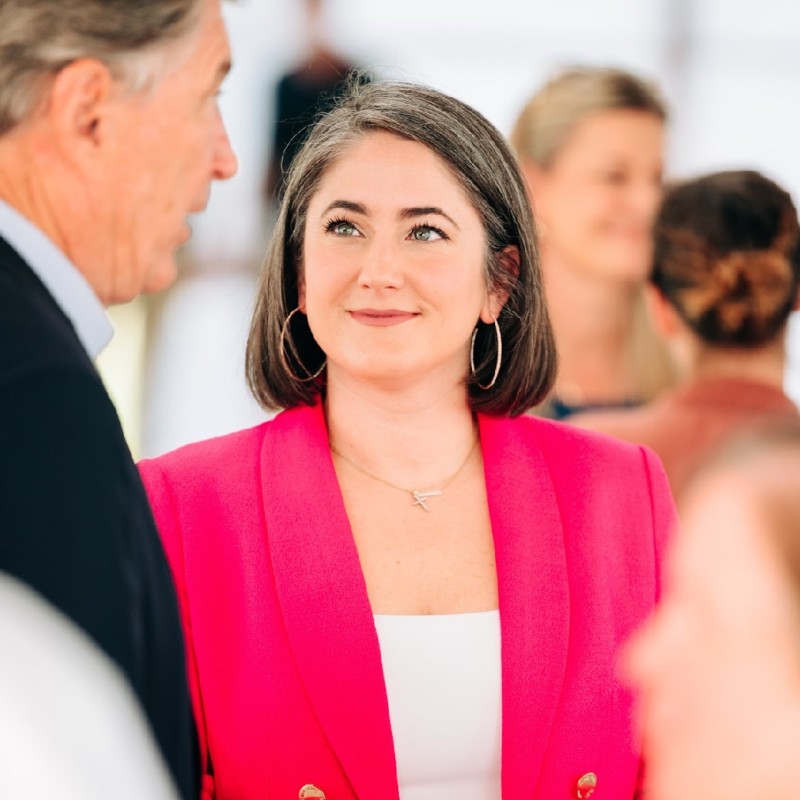
Chief Executive Officer
Missy Bienvenu Andrade is the President & CEO of the Community Foundation of Acadiana (CFA), one of South Louisiana's most influential philanthropic institutions. Since taking the helm in September 2022, Missy has led an organization that has deployed more than $235 million into the communities it serves — including over $24.7 million in 2024 alone — across the eight-parish region of Acadia, Evangeline, Iberia, Lafayette, St. Landry, St. Mary, St. Martin, and Vermilion.
Founded in 2000, CFA stewards more than 1,000 individual funds on behalf of donors, families, and businesses, partnering with professional advisors — attorneys, CPAs, and wealth managers — to design charitable giving strategies that align with their clients' financial and estate plans. Under Missy's leadership, CFA has expanded its civic leadership footprint, launching initiatives like the Lafayette Resource Development Initiative and the Lafayette Housing Needs Assessment, while continuing to grow donor-advised funds, designated funds, scholarships, and affiliate foundations across the region.
A Lafayette native, Missy brings more than a decade of regional and statewide executive leadership to the role. She previously served as Chief Impact Officer of Boys & Girls Clubs in Louisiana and President & CEO of Boys & Girls Clubs of Acadiana, where she expanded programming and led statewide advocacy efforts. Before her work in youth services, she spearheaded investor relations and the multi-million-dollar capital campaign at One Acadiana that transformed the Grea… Read More