Amazon Music
 Apple Podcasts
 iHeartRadio
 Spotify
 YouTube
 RSS Feed
 Podcast Addict
 Podchaser
 Deezer
 Goodpods
 PlayerFM
 Castro
 Castbox
 From Career to Calling: Inside Family Missions Company with Saul Keeton & Kevin Granger

Saul Keeton left 25 years in commercial real estate and Kevin Granger left nursing to lead Family Missions Company. They share how business owners can invest in kingdom ROI.
Key Takeaways
- Saul Keeton left a 25-year commercial real estate career for the mission field; Kevin Granger left nursing and music.
- Family Missions Company is the largest lay Catholic foreign missionary organization in the world.
- In the 'tip of the spear' model, missionaries are the tip and business owners are the shaft.
- 'Kingdom ROI' measures return when souls are the metric.
- The goal is to work yourself out of a job by building self-sustaining missions.
What if the Lord interrupted your career at the peak of the American dream? Saul Keeton walked away from 25 years in commercial real estate. Kevin Granger left nursing and music behind. Both said yes to something bigger.
In this episode of The Deal Podcast, host Joshua Wilson sits down with Saul Keeton and Kevin Granger of Family Missions Company — the largest lay Catholic foreign missionary organization in the world — alongside co-host Jude David, JD, DCL, MBA and Managing Partner at FA Mergers.
Saul and Kevin share how the Lord rerouted their lives, what it takes to run a mission organization sending 200+ missionaries into 11 countries, and how business owners and stewards of capital can become the shaft of the spear that pushes the gospel into the world's most underserved places. This is a conversation about legacy, kingdom ROI, and what happens when ambition meets surrender.
🎯 What We Cover:
- Why Saul left a 25-year commercial real estate career for the mission field
- Kevin's journey from music major to nursing to global missions
- How Family Missions Company became the largest lay Catholic foreign missionary organization in the world
- The "tip of the spear" model — and why business owners are the shaft
- Running a mission organization with 20–30 staff and 200+ missionaries in 11 countries
- Kingdom ROI: how to think about return when souls are the metric
- Why 3.6 billion people have never heard the name of Jesus
- Gospel poverty, transparency, and how missionary funds actually flow
- Working yourself out of a job — building self-sustaining missions
- Identity rooted in being a son of the Father, not a to-do list
🤝 Connect with Saul Keeton & Kevin Granger:
On IG:
Saul + https://www.instagram.com/saulkeeton
Kevin + https://www.instagram.com/kevinjgranger
Family Missions: https://www.instagram.com/fmcmissions/
Web: 🌐 https://www.familymissionscompany.com/
👥 https://www.facebook.com/FamilyMissionsCompany/
🎙️ Go You Are Sent Podcast (Spotify): https://open.spotify.com/show/3as5fmjounyu6588WGO8Ek
▶️ Go You Are Sent (YouTube): https://www.youtube.com/@GoYouAreSent
🤝 Connect with Co-Host Jude David:
💼 https://www.linkedin.com/in/jude-david-jd-dcl-mba-172a6a76/
💼 Thinking About a Transaction? FA Mergers helps founders, investors, and business owners navigate the full M&A process — from valuation to close. If you're exploring a sale, acquisition, or capital raise, let's talk. 🔗 https://www.famergers.com/
🎙️ Follow The Deal Podcast:
🌐 https://www.thedealpodcast.com/
💼 https://www.linkedin.com/in/joshuabrucewilson/
▶️ https://www.youtube.com/@dealpodcast
DISCLAIMER The Deal Podcast is for informational and educational purposes only. Nothing discussed constitutes investment advice, a solicitation, or a recommendation to buy or sell any security. Always consult a licensed professional before making financial or investment decisions.
Disclaimer: Joshua Wilson is a licensed Florida real estate broker and holds FINRA Series 79 and Series 63 licensure. The Deal Podcast is presented by FA Mergers and is produced for informational and educational purposes only. Nothing discussed constitutes investment advice, legal or tax advice, a solicitation, or a recommendation to buy or sell any security or to pursue or avoid any transaction. All views and opinions expressed by the hosts, co-hosts, and guests are their own and do not necessarily reflect the positions of FA Mergers, One Iron Network LLC, any regulatory agency, or any employer. Listeners should consult their own legal, financial, and tax professionals before making any business, financial, or transaction decision. This podcast does not constitute a solicitation or recommendation for any financial products or services.
Frequently Asked Questions
What is Family Missions Company?
Family Missions Company is the largest lay Catholic foreign missionary organization in the world, running with 20–30 staff and more than 200 missionaries in 11 countries.
How can business owners support missions?
Saul Keeton and Kevin Granger describe a 'tip of the spear' model in which missionaries are the tip and business owners are the shaft that supports them.
Who are Saul Keeton and Kevin Granger?
Saul Keeton walked away from a 25-year commercial real estate career, and Kevin Granger left nursing and music, to serve with Family Missions Company.
00:00 - Welcome and Why We Tell These Stories
01:48 - Meet Saul Keeton and Kevin Granger
03:09 - Saul's Story: 25 Years in Commercial Real Estate
05:33 - Kevin's Story: Music, Nursing, and Losing His Father
13:47 - Jude on Stewardship and Life Transitions
15:34 - The Path to Becoming a Missionary
18:00 - Saul's Desert Day and the Call to Suffer for the Gospel
22:29 - Inside Family Missions Company: Operations and Reach
28:39 - Why Should I Give My Money to You?
38:25 - Kingdom ROI: Measuring Return in Souls
43:52 - Identity Rooted in the Father, Not the To-Do List
47:30 - The Most Meaningful Gift They've Ever Given
Good day everybody. Welcome to The Deal Podcast. The Deal Podcast. Now what's the deal like? We do mergers, acquisitions, we sell middle market businesses. We run this podcast as a mission to inspire a future generation of deal makers, you know, who are looking to get into the industry. And we wanna invite people onto the show to, to kind of like open kimono and show them like successes, failures, 'cause we want. You maybe not have to suffer like we did, or we want to help accelerate your, this generation forward. We have kids and, and one day grandkids. So that's why we do this. We've invested, uh, energy into that. So we wanna put a, please reach out to our guests and say thank you for being on the show. They're devoting their time to give to you, but what's the deal? You know, we, we talk a lot about deals, mergers, acquisitions, investment banking, banking in general, but we've been running a series on things that are more spiritual. And you might have heard Brandon Robinson's story. If not, I, I encourage you to go listen to it. And he talks about bringing faith into his business and that really resonated with a lot of people. So we started bringing and incorporating that more because you're asking for it. The data showing that you guys are wanting more of those kind of conversations, not just deals, but things that happen in the world of nonprofits. Because even that, there's a business behind the scenes in that. So I'm sure you didn't show up to hear me talking about this. Let's just dive into today's episode, which is more on the missional side of, and the business behind it and how things run and operate. So with that, Jude. Our co-host, the Brains behind this Operation. Jude, why don't you kick us off and do an intro. Thanks Josh. Uh, our guests today are Saul Keeton and Kevin Granger with Family Missions Company. Uh, you know, I first got involved with these guys, uh, several years ago. Uh, we had an idea about building a retreat center. Uh, several, several people I knew were getting involved and excited to get that off the ground. And then in a totally parallel process at the same time, family missions. Uh, was thinking about the same thing. Uh, and we were so fortunate to get paired together at some point, and, uh, I just got to watch these guys do all the hard work and I got to take a lot of credit. So it was a lot of fun. Um, no, it, these guys have such an amazing focus on the Lord and serving the Lord and spreading his message to the world. Uh, and that has grown into what's actually a very large business Mm-hmm. of missionaries out there serving the Lord out in the world. Uh, so, so excited to have you guys on today and, and to talk to us about what you do. I'm so happy to be here, man. Thank you for, for having us. Absolutely. So you listening in our awesome audience, uh, you're gonna hear a few different voices. I'm Josh. You just heard Jude, but there's two gentlemen sitting in front of me. Uh, to my left is Saul. To my right is Kevin. So Saul, why don't you kind of give us, uh, I'll let you kick it off. Who are you, what do you do? And then we'll jump over to Kevin. Sure. Who am I? I am a, uh, beloved son of the father first. Uh, hopefully I live up to that, uh, every day. Um, I am married to Jan, 26 years. We have six kids, three boys and three girls. And right now what I do every day is I get to hang out with Kevin down in Big Woods. And, uh, we are part of the team, uh, on, on the administrative side of Family Missions Company and uh, which is a foreign missionary organization in the Catholic Church that trains and sends and supports lay Catholics to be. Cross-cultural evangelizers, um, not just, uh, on the short term, you know, not just one or two weeks at a time, but up to years at a time or maybe even for their whole lives to go into the mission field. And, uh, it's an incredibly rewarding, uh, beautifully rich and humbling, uh, mission to be part of. Um, I come to this work. Uh, in the middle of my life, I'm in my early fifties now. I had a 25 year career in sales and marketing, commercial real estate, and uh, the Lord called me to mission, uh, the first time. In, uh, 2018, uh, to go serve with my family. Um, we applied to Family Missions Company. Uh, they were, uh, nice enough to accept us and we, uh, sold our house and started giving away. Uh, some of our things to prepare to go into mission. And at that time, my fifth child, who's my youngest son, was diagnosed with autism. So we weren't able to go into the field after all. We had to put our roots back in the ground and figure out how to love him. Um, and as soon as we moved into that house where we, the second house we bought, um, I got a phone call from a friend of mine at Family Missions Company named Joseph Summers. And, uh, Joe, uh, said, Hey, you know, since you're not gonna be a missionary in the field. Why don't you move to Big Woods and help us run the company? And I laughed and said, Joe, you should have called me, uh, you know, maybe two months ago before I bought this house. Um, and that was the, just the beginning of the Lord calling us to mission a second time, uh, to, to be involved in, uh, foreign missions, but from the administrative side of things and bring all those skills that I spent decades honing in the for-profit world to bear, uh, on this important mission. Yeah. Thank you Saul. Kevin, who are you? Yeah, who am I? I am, I'm Kevin Granger. I'm originally from Baton Rouge. Um, I graduated high school and moved to UL, moved to UL, moved to Lafayette to go to UL. Um, basically moved to UL in 2003 and uh, yeah, I guess my. Involvement in Family Missions Company came, my dad was diagnosed with cancer when I was, uh, a sophomore, um, in college and given six months to live. Pretty much lived exactly six months, passed away. And, um, and yeah, I. I kind of found myself in the space where I was. Yeah, just grappling with mortality. You lose your father at that age. It's like you ask a lot of big questions. I was, um, raised Catholic, but kind of had a space where I was like, I don't know. I don't know. After my dad passed away, I just came to this crossroad like either all this is real and I want to give it my full attention, or it's not real and I don't want to give it. It's not worth any of my time. It's like the kind of like the halfway, um, halfway in spiritual life didn't make sense to me anymore. Around that same time, I was invited, uh, by Joseph Summers, who we just spoke about, uh, who had become a good friend of mine. We were in nursing school together actually. To go on a mission trip, uh, to Mexico. And I went and yeah, the Lord just kinda wrecked me on that mission trip. Um, in a lot of ways, I, I came face to face with poverty that I had never seen before. People who were, um, in, in need and. Also just like a place where the gospel came alive in ways that I had never seen before. And so basically on that trip, I was like, this is what, this is what I wanna do. I wanna give my life to serving the Lord in foreign missions. Um, and so, yeah, uh, a lot happened obviously since then. Uh, I ended up marrying, uh, my wife Sarah is the daughter of the founders of Family Missions Company. We served in foreign missions. Um, we served in various roles in the administrative side. We served as executive directors for about seven years. Um, just passed that role on this past year. And, uh, and yeah, so I'm, I'm currently working with Saul. Saul likes to joke because I, I hired Saul as the executive director and now he's my boss in the organization. So we're kind of unorthodox the old switcheroo. Yeah, that's right. It's a humiliation ritual. Yeah. But yeah, it's liberating is what it is. That's, it is liberating. It's very liberating. I love to go in and call him boss and he hates that. So just say, yes, sir. Um, Kevin, let's, let's dive into, uh, part of your story. Yeah. Before we hit record, you mentioned that you were a, a music, uh, you, you major music. I couldn't even think of that word. A music major. Uh, but then you just mentioned nursing school. Yeah. So it sounds as though you were kind of like trying to figure out your path, trying to figure out the way to go. And then you went on a trip and you were confronted with poverty and pain. Mm-hmm. And then you go, that's what I want to do. Walk us through the journey of kind of bouncing around a little bit. Trying to find your path. Trying to find your way. Yeah. Uh, for sure. So basically I'm really attracted to very lucrative things. So like music majors and being a missionary, you know, it's where the money is. Uh, for anyone listening. Um, no, I, I originally was a music major, just 'cause I, I loved music. I, I had a natural talent for it. I, and I kind of started to see after studying it for a couple years in college, that I enjoyed it, but it wasn't like. It wasn't this thing I could give my life to in the way that, um, I wanted. I couldn't have articulated it that way. But looking back, that was definitely true and I kind of turned my attention to nursing and actually had switched my major to that. Um, around the time that I went on this mission trip. Um, I think the thing that, that impacted me the most, I mentioned Joseph, uh, Summers, who became my brother-in-law. He really discipled me in a lot of ways, spending time with him. Um, he was just kind of cut from a different cloth. Um, he grew up as a missionary. His parents, uh, had, had moved into foreign missions, um, in the seventies and he was literally born into this itinerant missionary family living around the world. And so. Yeah, just the way that he would encounter people and the way that he would talk about either Miracles or God, which is different than anyone else I had ever met. And that sparked a curiosity in me, uh, which was kind of all that was kind of fanned into flame before I went on this mission trip. Um, and yeah, I think on this mission trip. Of the things that I, that I did mention poverty and, um, and just need. The other thing that like just became a reality to me was that like. What God was asking on the, on the mission trip, I, I encountered, uh, a scripture, Matthew chapter 10, which is one of my favorite, uh, verses in the Bible. But um, but yeah, Jesus just kind of says these radical things. He says like, you know, I want all or nothing. Basically, he says, if I don't come first in your life, then you're not worthy of me. These kind of radical things, you have to love me more than your parents, more than your children, more than. Um, and I just realized like I hadn't seen that lived out. Uh, that radically in my life a lot. And to think about what would that look like. If one were to do that, you know, like the apostles. Um, so like, I think just that invitation from the Lord hit me. And then also, um, just this realization that, you know, growing up as a Catholic and, sorry, hit my mic. Growing up as a Catholic in South Louisiana, it can be very easy 'cause we're so culturally a Catholic. Place. And, um, it can be easy to not to live in ignorance that like most of the world is not that way, you know? Um, in the world today, there's over 8 billion people and actually the majority of them have not had a chance to encounter Jesus in any kind of meaningful way. Mm-hmm. Um. And I think I grew up when you read and at the end of the gospel of Matthew and the end of the gospel of Mark, they have what they call the great commission of Jesus, where he says, go into all the world and proclaim the gospel to all creation. And I think growing up hearing those words or encountering that scripture, I would think, well, well that was done. Like that was done hundreds of years ago, whatever. Um, and reality is it's not true. There's actually more people alive today that have yet to encounter Jesus than when Jesus said those words 2000 years ago. And so like I was invited to just. This reality that I had not understood before. And I think coming face to face with that, I realized like, well, there's nothing else more worthy to give my life for than to trying to get the gospel to those who have not yet heard it. So, um, that was really a combination of those factors, I guess, was kind of what really wrecked my heart in a beautiful way. And, uh, when I came back, I remember coming back home after that mission trip. I kind of held a lot of it inside, going and sitting on my bed, setting my bags down and just crying. 'cause like I was like, I don't know, I was still processing everything that I had experienced, but I knew it meant a lot of change for me and my life. And so, so yeah, it's been, um, a lot of years since then. But basically that was the kind of the tipping point that. It pushed my life in a different direction and nursing kind of came after I had been living in missions for a while with our family and we needed a way to provide financially for ourselves. Ended up going back to, to finish my RN, so I'm a registered nurse in Louisiana. Actually worked down the street at, uh, at Ochsner now in the, in the cancer unit for about six years to get my. My experience down, but yeah. Yeah. Kevin, uh, a male nurse is a nurse. Yeah, yeah, yeah. So, okay. Got it. Um, meet the parents man. Yeah. Never saw such a good, such a good, uh, I love when they do the volleyball. Yes. Like nice shot nurse. Nice shot nurse. So I, I used always tell people, I'll remember that when I'm taking care of you in ICU, you know? That's right. Remember jokes drive that 18, 16 gauge a little deeper. Fix the big needle. That's right. Uh, Jude, you know, bringing these guys in. Tell me your, your thoughts and your experience on, you know, working with their organization and, and what do you think, you know, parlayed this into, you know, how, how we see business money mission wrap it together for us. So many ways to go with that. Yeah. So, yeah, I mean. Money's the easiest one. Um, you know, we're all called to be good stewards of what the Lord's given to us, and it's, it's truly what the Lord's given to us. We didn't earn any of it. Mm-hmm. Um, and you know, it, it's so important to support organizations like this one whenever, um, they're doing the good work of evangelization around the world. Uh, so I encourage anybody who's in a position to do that, to support Family Missions Company. Um. But the reason I brought these guys on was the same reason I have a lot of our guests to talk to, you know, the folks that are, you know, considering their life transitions and how they can help more. And, you know, whether you're 50 years old and you just want to go volunteer at their retreat center mm-hmm. Help out for a couple of days, or, you know, you're in your thirties or your forties in a career. Um. You know, that, you know, maybe you're asking yourself that question, is there more? You know, is there a next phase of my life? Uh, and, and for a lot of you guys, we talked to you about entrepreneurship and, you know, am I supposed to be a business owner? Am I supposed to transition into providing a service for somebody rather than working, you know, as an employee for somebody? Um, and that's so great for so many people, but we're in this series right now of talking about alternative paths as well. Mm-hmm. If you're going through that discernment, what does that look like? And I would assume, I haven't asked this question to you guys, but I would assume that most of your missionaries didn't. Like get out of school and then say, I'm ready to be a missionary. I would, I would assume that there was life transition that happened there. So if you guys could talk to us about that, you know, what your typical path to mission life looks like and you know, you know what, what people see in that transition process. Yeah, absolutely. I don't wanna hog the mic, but I'll, I'll give a quick answer here if you wanna chime. Yeah. Um, yeah, that's a great observation. Interestingly, we do have, actually, a policy at FMC is you can't be, you have to have at least a year out of high school. You know, so you can't, like, skip, jump right into missions. Uh, but we do have like a wide, like a diverse body of people that are missionaries. We have older people who are kind of, you know, had a career. Did this afterwards. We have people that are either right out or right out of college that come. Um, it's kind of a mix. We have families, we have singles. One thing that's unique about FMC, just to say it is like, um, we are a lay organization, so there's a lot of missionary groups that are priests and religious, which is beautiful and good. There's a particular way that God desires to use the laity, I believe in the foreign mission context. So. That's kind of our people. And so that's everybody else. You know what I mean? If the laity of the church is everybody else. So we have, we've had lawyers that have come, uh, we've had people that have given up their businesses and come, we had just now, we just sent into the field, uh, the missionaries who just finished their training. And in that group there was, you know, a teacher. There was. A doctor, uh, who hopes to use her, her skills on the field. There's a nurse practitioner who had, you know, over a decade of experience doing very well as a nurse practitioner, but just desired to do something more. A lot of the time these calls to mission come after, um, they've gone on a short-term mission trip and kind of similar to what I experienced, like, see this. And feel like they want to give their skills, they feel, Lord, calling them to give their skills to this thing. Mm-hmm. Um, one thing I would, I would add on to that is that I think sometimes people can have this feeling of like, well, if I don't have, if I'm not a doctor or if I don't have a theology degree, or if I don't have something big to offer in the mission field, like what could I really do into that? I would say a lot. Um, guy can do a lot just with a simple yes. So, um. We do have a lot of people who don't have any of those like fancy kind of backgrounds and they just like, they can smile at people, they can love people. Um, you know, Mother Teresa did not have any doctorate that I'm aware of, uh, and is a great missionary saint. So, um, we do have people from a lot of different backgrounds, but we also have people that have very simple. Backgrounds as well. You got anything to that Saul? Yeah, the paths onto the mission field are as diverse as you can sit here and imagine. I mean, honestly, um, I'm a perfect example of that. You know, I had a career interrupted after, you know, 25 years the Lord, um. You know, put this call on my heart and, but he had prepared me for it for a long time before I actually heard him clearly, because I had, was feeling spiritually restless for a long time. And like you said a minute ago, I was one of those people who was feeling like there's gotta be something more. You know, I was living the American dream. I had a giant house, you know, full of kids. Um, I had a great job, great title, lot of responsibility, very visible. I mean, I had it all and I didn't feel content at all. And, um. And so the Lord very much, um, purified me by moving me around, um, and making me uncomfortable, making me really start to feel stretched and wondering, uh, what's next? You know, what could I possibly do to give me any more fulfillment than what I'm doing right now? And I went on a short-term mission trip just like Kevin did. And it was on that trip that like my eyes were really opened and I realized that. This is exactly why the Lord took me out into the desert spiritually. He took me out into the desert to prepare me to hear this call because if he had called me when I was right in the middle of all the comfort, when I was, you know. Still living in a place where I loved my house and I loved my friend group and I loved my parish, and my job was so amazing and rewarding. I had a job that people loved to talk about, you know, so it was a, it was rewarding for me outside of work hours 'cause it was kind of the envy of my friends, you know, sometimes because of the jobs that I had. Um, but he plucked me out of that for a period of time before he called me to mission. I don't think we would've said yes. Had he not done that ahead of time. Now in front of you, you pulled out a huge Bible and you opened up to, uh, Timothy. Uh, what inspired you to open up there. You wanna share something with us? Yeah. Well I was just thinking back to my mission trip and, uh, it, one of the characteristics of a mission trip with Family Missions Company is that we always end it with something we call a Desert Day, where we literally, after a week of hard work and praying and a lot of corporal works of mercy, we will then go out into the desert with scripture and a little bit of food and water and spend hours in the desert. Just listening to the Lord's voice. It sounds awesome and terrible at the same time. Yeah. Yeah. And so on my desert day, the Lord gave me this scripture, uh, Two Timothy one, eight. And this to me, like was, uh, exclamation point on the end of a very powerful week
serving the poor in Mexico. This verse:
do not be ashamed then of testifying to our Lord nor of me his prisoner. But take your share of suffering for the gospel in the power of God. And I viewed that at the time as being, and still do as a very direct, um, invitation of the Lord to embrace this cross. This beautiful cross. It's very heavy and scary and terrible, but it's also awesome and amazing and full of blessings that you can't foresee. And the Lord just says, listen, I'm calling you to this. It's gonna be hard, and that's okay. And you just need to trust me. And there are gonna be incredible things that happen along the way. I'm not gonna tell them with you ahead of time, you know, tell them to you ahead of time. I'm gonna unveil them to you over time. Uh, but just say yes. And I'll show you where the steps are. So that's. What we did. Cool. It sounds so simple, but it, you know, when you're in the midst of your career and you've got six kids and a stay at home wife, it's daunting as an American to think about turning your back on everything. We have been indoctrinated to believe as young Americans, you know, as to gather unto ourselves, feather our own nests, you know, prepare places of comfort for ourselves, um, to then leave all that behind a lot of people. When you're sharing this story with friends and family, uh, they often raise their eyebrows and wonder and mystery and confusion that you're doing these things. Uh, why, you know, the Lord gave you this beautiful education and these skills. Why would you just leave those behind to go to the mission field? I mean, shouldn't someone know someone else? Do that for sure. You know, but the Lord was calling me to it, so I guess, you know, that was the path he had for me. So the, um, man, so beautiful. Speaking of big, heavy crosses, man, you've got a, a good size cross, uh, around your, around your chain. It's quite beautiful. Thank you. Um, yeah, absolutely. Man, I'd love to go into the stories of the mission field and, but I, I, I wanna make sure that we get the, the full gist of what is it that you guys do at the organization, and as you're building this out, you both kind of came from different backgrounds, music and nursing and, and commercial real estate. And, and you, you both had careers interrupted. That might be the title of today's episode and dove into, you know, this. This mission field. So I guess, um, if people are like hanging out with you Mm-hmm. First question is when, when people hear that you're a missionary, are they like, oh man, like he's gonna ask me for money or this or that? Like, does that ever come up? Like, and, and you know, like, I'd love to hear your all's thoughts on that. Mm-hmm. But then kind of walk us through like the details of. You know, how you guys operate and maybe some of the impact that you guys have had? Mm, sure. That's a great question. Uh, one of my favorite questions to get asked when I tell people I'm a missionary is they say, oh, does that pay well? And I say, no, can I have a donation please? Um, but that's so good that believe it or not, that is a question that is asked fairly frequently. Does that pay well? Um, but a lot of missionary families have a lot of kids. Yeah, very much so. That, that's a real concern in life. It is like, oh my gosh, this doesn't pay very well. How do we're sending a family to Honduras next month that has 10 kids. Yeah. I think, um, to start out with answering that question is just to say what FMC does, that is unique and I believe prophetic, uh, in our church. So, um, you know, historically, uh, from a Catholic perspective, I'll just say for myself, growing up Catholic, when I thought about. Missionaries. I thought about, you know, I grew up in a parish. I had two Irish missionary priests. I had Mother Teresa's nuns. The missionaries of charity were there. I thought missionary was almost synonymous with religious life. Um, and of course that historically has been true. There's been so many amazing, uh, missionary saints who served, uh, in the religious life. Um, but you know, since Vatican II really always, but since Vatican II and John Paul II. There have been. So our church has been urging the laity to get involved in, in missionary work, um, uh, in fact, uh, in 1991, uh, St. Pope John Paul II wrote an encyclical, um, called Mission of the Redeemer. And in the introduction, he says, I believe that the time has come to devote. All of the church's energies to this one thing, the missio ad gentes, which means the mission to the unreached people. And he said, no believer in Christ, no institution of the church can avoid this supreme duty to proclaim Christ to all peoples. So like by the virtue of being. A Christian, a Catholic, we have a responsibility to bring the gospel to those who have not, um, yet heard it in whatever way that God is asking us to. That might mean going, being a missionary might mean supporting a missionary. At the very least, it means praying for missions and at least having an awareness. So, uh, in the Catholic world, you know, um. Our Protestant brothers and sisters, I feel like missionary work is much more in the zeitgeist of like their churches. They talk about it, they support missions. Um, in the Catholic Church, what I've found is that part of, at least in the United States, part of our role is to awaken the church to this missionary identity that. That, you know, the Pope has been speaking about, the popes have been speaking about the Vatican documents we're speaking about. Um, and so, um, to our amazement, FMC is actually the largest lay Catholic foreign missionary organization in the world. We keep looking for another one to be be, we don't desire that title. It just is the nature of what it is. And that was born out of my, um. My father and mother-in-law having this radical conversion experience, he was a lawyer. Um, they left everything. They had this radical conversion. They sold everything, moved their family into foreign missions and were itinerant missionaries for 20 years. Then they fell at the Lords calling them back, um, to Louisiana to help facilitate other families and singles that wanted to be missionaries. And so that was kind of how our organization was born. And so. Yeah, the ins and outs, we run a missionary, uh, station, essentially a hub for missionaries in Big Woods, which is south of Abbeville. Um, and we, we maintain housing and that's kinda like the hub central where our formation happens. And uh, right now we have over 200 missionaries serving in 11 different countries around the world. Um, but they all kind of. Either going on mission trips with FMC, their involvement starts in some way. They come, um, they have to raise their own funds before they come to be missionaries. Um, they are then. Trained at Big Woods and then sent out, uh, to one of our mission bases, um, or perhaps to start a new mission base. So, um, that's kinda like a bird's eye view of like the operations. And there's a handful of us, uh, between 20 and 30 full-time staff that do things, um, at, at, uh, Big Woods Mission, which is Family Missions Company's kind of Central Station. And so. That involves fundraising. It involves accountants who help transfer funds to and from missionaries who are on call from missionaries who are journeying with missionaries. You know, one thing about missions is it can be very difficult, can be very isolated, um, when you go and immerse yourself in a new culture. So we have member care people that walk alongside missionaries to support them emotionally, spiritually. So these are all kind of staff roles that happen. Um. And so, yeah, you feel like you might be drinking from a fire hose as I'm just pouring all this out. But, uh, but that's kind of the, in a nutshell, what what we do at Family Missions Company and, uh, everywhere our missionaries are, they. The three things that, uh, are happening wherever FMC missionaries are. We're preaching the gospel, we're serving the poor, and we're forming disciples. Hmm. I love this. Um, from a business person's perspective. Let me, let me ask you some questions'cause I'm sure they come up in Sure. Maybe they're not even asking these questions. But they have these questions. Why should I give my money to you? Right. Because I think, you know, as good stewards, first of all. I didn't earn this, God gave it to me. Right. He's given me some skills and talents and as I learned to do those better, sometimes I make more money, sometimes I don't. Uh, but everything I have, every good thing is from the Lord. Right? Right. So it's like, first of all, if I realize that it's not mine, then I go, cool, God, where do you want it? But let's just say I'm a little bit more, uh, tight-fisted with my money. When, when someone goes, you know, why should we, why should we work hard, you know, and pay money to an organization? Mm-hmm. You know? Mm-hmm. This is our, you know, take money from our kids' plate to put to your plate. Mm-hmm. Or let's just say they have a lot. Sure. But I think that that question comes up in the in people's minds. So like a lot, what, what, say you guys. Mm-hmm. Yeah. I even piggyback on that. Go ahead. Go for it. You know, we have so many opportunities to evangelize in our life. Mm-hmm. You know, there's people in our community that need to be evangelized to, and people all across our country mm-hmm. Who need to be evangelized to. And you guys do mostly. International missionary work. And so I'd, I'd assume whenever people are thinking Where do I give my money? Mm-hmm. A lot of 'em are thinking it's a lot more efficient to give it to local ways, of course, to evangelize of, um, the thing that my head goes to is, yeah, if you're living in America and you haven't heard about Jesus, your head's under a rock or, you know, head in the sand. Now you might not know Jesus, but you've definitely heard about him. I would assume. You know, many of the areas you guys are going to, people haven't heard of Jesus before, so that's the key. Yeah. Right. Um, I can't remember if you said the number earlier, Kevin, but you know, best estimates right now there are 3.6 billion people with a B on Earth right now who have been completely unreached by the gospel. 3.6 billion. And so if you use conservative estimates, that means that right now on Earth, there are somewhere between 12 and 15 times more people alive right now that have not heard the gospel than there were on the day that Jesus founded the church. That's astonishing. And those people are living and dying every day and they've not heard the name of Jesus even once because of where they live. And so unless someone goes to them. They are literally going to live their whole lives without even knowing a single Christian or hearing the name of Jesus even once. And so that gives us like an urgency to convey this message to people, um, that, that it's like there are eternal consequences to this work. And, and we're confronted with that reality every day just because of the sheer number of people that go, you know, into eternity every day. Um. And when you combine the. The great evangelistic need that exists out there with the poverty as well, the great amount of poverty that exists. There's a great overlap when you look at the data between the places that have the greatest evangelistic need are also in general the places that have the greatest poverty. And so we view ourselves as bridges. We're bridges between business people here in America. To the people in the world that have the greatest need. We don't say at all that you should stop supporting the causes that are close to your home. You absolutely should support those, but we believe everyone should, in some way or another, also support this because, um. You know, these people, um, out there, they are also sons and daughters of God, and they have a right because they're human beings. They have a, based on their human dignity, they have a right to hear the gospel preached in their lifetimes and a chance to respond to it. Mm-hmm. And so we, because of what we do, we're willing to go. Um, not everybody's willing to go, but we are willing to be the tip of the spear. But, you know, a spear is made up of several parts. The tip is just one part, right? There's a very long shaft on a spear that you, you know, you could have imagine. The people of Southern Louisiana holding onto that staff, pushing Family Missions Company, the tip of the spear out into the world, taking the gospel with us. Um, but it takes, like Kevin and I were talking on the way over here. It really does take an army of people to put one missionary on the field, one missionary's willing to go, but it takes people like us in the office that equip them to go and then support them while they're there. But it also takes a, a whole universe, a constellation of people here that are praying for them. But also supporting them, uh, with their, uh, concrete resources. And so it's a both end for us. It's not either or. We don't try to put people into those false choices. We want you to continue to support your local stuff, but put us into the mix too. Mm-hmm. Do non-Christians donate to the ministry? Like people who aren't followers of Christ or Catholics or, I mean, do, are these people given to the ministry too, or is it just primarily people who have this charter and they go, cool? I believe that there's an eternity somewhere. Sure. And because of that, I feel compelled because Jesus told me to do it. Go into the world, preach the gospel, right? Mm-hmm. Share the good news. But other like people on the other side, there are, you know, like on the other team that's, you know, putting towards this ministry. Yeah. I mean I know of uh, plenty of non-Catholic Christians that support us, but I know of a few people who would not characterize themselves as believers, who do also support us because they find our work with the poor so appealing. Hmm. We have a preferential option for the poor. You know, we have hearts that cry out for the poor because they are suffering and they need to be consoled. And because of that, like anyone can look at what we do, I think, and find something in it that is appealing for them. Yeah, I, I, that's a perfect answer to that question. I would say also that, um. Yeah. One thing that is important for for us at FMC is to not there. There, I've been in meetings and, uh, missions conferences where it's easy or it might be attractive for an organization like us who's trying to raise funds or support to like kind of harp on the. Uh, the corporal works like we're digging water wells. We're bringing bread to people where, I don't know, like the things that an atheist could get on board with, you know what I mean? Very easily. Like, well, that's objectively a good thing that these people have clean water and food. And we do those things, but we also do the spiritual work as well, and we never wanna hide that. And, um. The, you can go into a place, some of these places, it's hard to, it's hard for, it was hard for me. It still is hard for me to comprehend the level of poverty that you encounter in places. I think the daily income average is two US dollars. Mm-hmm. You know what I mean? On the world scale. So, um. It's, you could go into a place with a billion dollars and not fix all the problems. You're not gonna fix all the problems with money. It's just the truth you have. Jesus is the answer. So we do what we can with physical needs. We bring money. Like we, one of our charisms is gospel poverty. So our missionaries live simply when I joined FMC, uh, it was like you tried to live on $300 a month in the foreign mission field as a single. So like it's, we're not living high on the hog. Um, by any means, and there is no retirement plan beyond death. Yeah. But, um, but yeah, I guess I would just say to anyone who's maybe praying about it or feeling a tug on their heart to support a missionary or support FMC in general is like, yeah, I don't. I can't think of a better way to invest your money. Another thing that I love about FMC is that like, we're very transparent. If you wanna come look at our books, come on over, we'll share what's going on. Um, but yeah, it is, it takes a lot. It does. It takes a lot to send people to the other end of the earth. It does too. And I would say before I joined the organization, I was a, I was a supporter, and when I saw headquarters with my eyeballs for the first time, I looked at my wife and I was like, we should a hundred percent should support these people because they're the least likely to take our money and go buy a Corvette. It wouldn't fit in down there, right? Like all the vehicles down there, you know, way past their end of life that have just been continuing to love to stay on the road. Uh, so, uh, one, one thing I was gonna throw into that is. Maybe backtracking a step. It's just to say, you know, we do have missionaries who are serving in areas that we call unreached places, places that haven't been, had an initial evangelization, but also we have a lot of missionaries who are serving in areas that are just underserved. Uh, so that may be Christian, like South America, Mexico. Uh, one, one of our dear missionaries, uh, Karen, uh, and her, her family serve in this place in Peru where, you know, they have, it's Catholic. You know, in the sense that like if you ask people, like most of 'em would say they believe in Jesus. They might not be, uh, catechized or sacramentalized, but there's one priest for a city that's over 50,000 people. I think it's 51,000 when I looked it up, and there's 200 surrounding villages. So. In a regular year. These people, even though they might be Catholic, they have no access to the sacraments, they have no access to catechesis. And so our missionaries go there to augment what the church can bring to them in this environment. So a lot of the world, even if it might be evangelized, is radically underserved by US standards. Mm-hmm. So, um, that's just something else I'd throw out there for anyone listening to be aware of. Yeah. Super. Let's talk ROI on supporting a missionary. Alright. You know, like a hundred percent. So. I would assume we're not just looking at who could that missionary talk to Mm-hmm. while they're on the ground there. You go to a place without faith. That missionary is spreading seeds and then those seeds are germinating and hopefully after that missionary leaves, this is spreading. So how do you guys think about that in terms of we're gonna send somebody to this area, what's the return we can get on, you know, all that investment putting something, somebody in that area. You're speaking my language. I love it. I have an MBA so it talk financial. Yeah. ROI is my love language too. Yeah. It's, um, you know, raised in this culture, having completely bought in to, um, you know, the American way of life. To think about operating a business with a kingdom oriented mindset is an adjustment. The ROI is different because the reality is, um, you know, the Lord might have called us into mission for huge, big things to be. Preaching to thousands, but he also might call somebody to be a missionary for life to reach one person, you know? And how would you feel at the end of your life, Jude, if the Lord says, Jude, I sent you to Earth to meet John, a guy, maybe you haven't even met yet. And he's like, and you reached him. Thank you. Welcome into my kingdom, one guy. Uh, your whole life was for one guy, right? Like you'd be elated of course, right? But I mean, what's the mystery in the economy of salvation is hard to wrap your mind around return, right? Because we're count, like we wanna count this in terms of souls. It's not just in terms of a financial return, right? We actually do have missionaries that operate businesses, uh, in the field and. When you operate a business in the mission field, you have to think about return on a bunch of different levels, and of course you actually do need to turn a profit. The business does need to be viable, so that is important to consider. But there is this kingdom aspect to it, right? That that business, actually, the whole reason it exists is to evangelize, is to spread the good news. And so you're looking at return on a whole different level. From your average American business owner. I think if God told me I was here to mission to one person, I'd be like, come on man. I just, you know, but that's the ego. That's that pride element. But, you know, I will, I amen. Alleluia to everything. So I'll just say, but I would also say that one thing that we do try to do is work ourselves out of a job. Um, there were places I, one place that my wife grew up was in the Philippines, and, uh, her parents. When they were there, they were not there. They were there a few years, but they started ministries, you know, they educated the people, they raised the folks that they were with up to start doing what they were doing and help enrich a church. And, uh, actually, uh, about 10 years ago, we went back to that place in the Philippines and that community is still alive. That, that my wife's parents founded. And it was like 300 strong. It was like so many people and just like still thriving. So like. It's amazing, like, um, it's not always easy to quantify like what the Lord will do. Some places like it might be one guy and another place like this thing might take off, but our missionaries definitely. Don't, they don't. We're, we're intentional about not trying to create dependency upon ourselves to try to work ourselves out of a job. Hmm. Um, but some places it's very slow work, you know? Um, if you think about going to India, for example, and learning the language, that's a, that's gonna take you years, you know what I mean? To really master the language. And they say language is about 10% of a culture. So to really enculturate you need to be there. It's gonna take lifetime support out to really see change start to come about in some of these places. And, uh, that's not. That's not always really attractive from a return on investment standpoint if you're wanting to see quick results. Um, but lifetime support out is what it's gonna take in some of these places. Mm-hmm. Yeah, and I would also add, like, you know, as Americans, I think a lot of people, I'm certainly guilty of this even still, and I certainly was when I was working in the for-profit sector. Um. You know, we look at our to-do list every day. We take a lot of pride in checking those things off that to-do list and adding more things to it the next day. And in a sense, we sort of find our identities in the things that we do. Actively Right. And I've learned, um, that praise God, he has allowed me to live as long as he has because it's allowed me to come to some realizations that that's really not healthy. That's not the way he wants us to understand who we are. Our identity. That's why when you asked me at the beginning, who are you, I deliberately said, I'm a beloved son of the father because that is who I am at my core. And the things hopefully that I do every day support that. And. My achievements in this world will certainly rise and fall. I'll have great days and great years, and I'll have rough days and rough years, um, but as long as my identity is rooted in my relationship with God, then. It doesn't really matter. You know, like I can be detached from the results of my effort if I, at the end of every day, every week, every month, and at the end of my life, if I can look on my relationship with the father as my core identity of who I am, then the achievements themselves, they become almost trivial. So next question's a, a two parter. Okay. If I, uh, if I wanna support a missionary, what questions should I be asking them? Uh, in that process? If I wanna consider becoming a missionary, what questions should I be asking the Lord? Wow. Um, if you wanna support a missionary, um, what questions should you ask them? I don't know. You could ask them. Yeah. I don't even know. How's your prayer life? You know, if you, I think our missionaries are involved in such diverse different things. We have some missionaries that operate businesses. We have some missionaries who just are doing home visits to shut ins. We have, um, running shelters. So like you could ask them about their ministry, ask them about what, what they see as how the Lord moving in their ministry. Mm-hmm. And see if it's something that moves in your heart to be a part of. Uh, you can go to familymissionscompany.com and click Meet our Missionaries and look at a whole laundry list of missionaries and pick one, throw a dart and, uh, support one of 'em and it's gonna be worthwhile. But, um, you can follow them. Listen to their stories. We actually have a podcast called Go You Are Sent, where we regularly have our missionaries sharing their testimonies, uh, and glory stories and about their ministry. So tune into that. Uh, in turn, what was the second part of your question? They wanna support. If you considering being, considering being a missionary, I would say, come on a mission trip, um, so many times, uh, you know, just going on a mission trip kind of pops like your day-to-day bubble and it blows like your paradigm, uh, for life out of the, out of the water. So like. I've seen so many times. God might not call you to be a missionary, but God might just open up your mind to something else that he wants you to do in your own community. Um, I've seen that happen a lot. Um, it just, God moves in a special way, uh, when people just kinda allow him to move in a mission trip. So I would say go to our website. You can sign up if you, you don't even have to go a Family Missions Company. Go on a mission trip with anyone. Um, but if you want to come with us, go to familymissionscompany.com. Um, and yeah, just come on down. Come visit us. Come pray with us. Hmm, guys. Uh, so honored to have you here. This is fun. Uh, a few stories that pop up in my mind. Uh, you know, the tip of the spear story of they went to, uh, on a ministry trip mm-hmm. And it didn't turn out well, right? It was actually, uh, tough. And then, uh, you know, uh, the, there's a book called, uh, Tattoos on the Heart. Yeah. Uh, A Priest. Had Homeboy Industries and they mm-hmm. And it was such an inspirational story. Um. But I loved what you guys will give, give your podcast another shout out because for people who want to be inspired, if they're looking to, maybe I'm gonna be a missionary one day and they want to hear the stories and the testimonies, the good, the bad, and the ugly of missionaries. What's the podcast again? Go You Are Sent. Go You Are Sent. Cool. Um, grateful for that. All of our listeners, please go over there. Like, and subscribe their stuff. Give them an awesome review. That's super helpful for, uh, how this game of podcasting works. Now one of our, our favorite, um, parts of this, uh, series is the people of our in studio gets to pass on a question to the next guest. So Jude's gonna read a question. This is from Missy of the Community Foundation. Oh, I was just with her. Yeah. What is the most meaningful gift or donation you've made and why? Wow. Ooh, the missionary. What gift have you given that's been inspirational and why? Man, I would just tell you, I probably should think about this before I answer more, but my first instinct is just say the gift of myself, you know? Um, I viewed it as a great honor. Um, it was very disorienting initially when I received my call to mission. When you're, you know, smack in the middle of the American dream and the Lord plucks you out of it, um, it can be sort of, it spin, head spinning. Um, but over time I began to like really view it as an honor, like the biggest honor of my life to be asked by the Lord to engage in this work. And so I would say that's probably the biggest gift that I could give. Um. I don't, uh, the story that comes to mind is the one I'll share. I don't know if it, uh, if I had an hour to reflect on this question, I might come up with a different one. There was a man who came to the door and at the Mission house in Saltillo in Mexico. And, uh, he just wanted prayers actually, but his, he was saying his feet were really hurting him and he had these really, really old shoes. And, um, and uh, I was praying over him and then I noticed, I felt like God. You know, kind of thumped me on the head and was like, Hey, see what size shoe he has? And I put my foot next to his, and we had the same size shoe, so I took my tennis shoes off and gave it to him. It was the only shoes I had for that week. So I was in sandals for the work projects and stuff for the rest of the week and kind of cold, but it was like one of the only times, a lot of times. If I give, uh, you know, um, on my first mission trip I think is the first time I heard Joseph say, you know, uh, true generosity isn't giving from your excess. It's giving from your need. And there's very few times I've given from my need. I can give and give and very quickly just have that need filled in. I have not gone hungry. Um, but that was one of the few times I was able to give and actually feel it for a little while. Um, so I would say, given that man whose name I don't know, my shoes. Man, I love this. I'm gonna encourage everybody, um, to go to the show notes 'cause that will connect you in with their website, their contact information. You'll be able to reach out to them. You'll be able to send them. Huge gift you hear that guys? Uh, but I just really want to thank you all for listening into this episode. I pray that you, uh, reach out to our guests and say thank you. And, and find a way to collaborate with them if you are working on a deal and would like, you know, someone to take a look at it. One of the ways we serve the community is by helping people sell businesses and then we use the money that we make and we give. So our mission field is sometimes the world of business and podcasting and that, and that might be you too. And that's awesome. Wherever you are. Father Brady yesterday said, wherever you are planted, that's where you should grow. Mm-hmm. And I just thought that was such a good thing. Some people are called to the mission field, some people are called to be immersed, and some people are called to be capitalist. But, uh, whatever you do, do it to the glory of God and do it well. Um, head over to thedealpodcast.com. Fill out a quick form if you'd like to be on the show. If you have any questions till then, we'll talk to you all on the next episode. Cheers, guys.
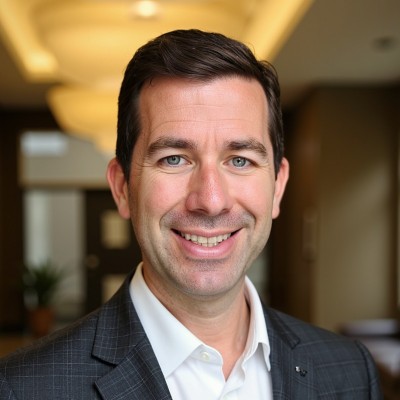
Managing Partner / JD / DCL / MBA
Jude David, JD, DCL, MBA
Jude made investment banking his primary focus after practicing for 12 years as a successful M&A attorney. From lower mid-market family-owned companies to multi-billion dollar corporate behemoths, Jude has advised sellers and buyers on over 200 transactions totaling billions in enterprise value.
Jude has leveraged his M&A experience to start a self-funded company in the building materials sector. Since its inception, the business has grown via acquisitions to over 400 employees across the USA.
Jude and his wife Ashley have six beautiful children and are very active in their community. Jude’s favorite pastime is taking the family to their fishing lodge on the beautiful Gulf Coast.
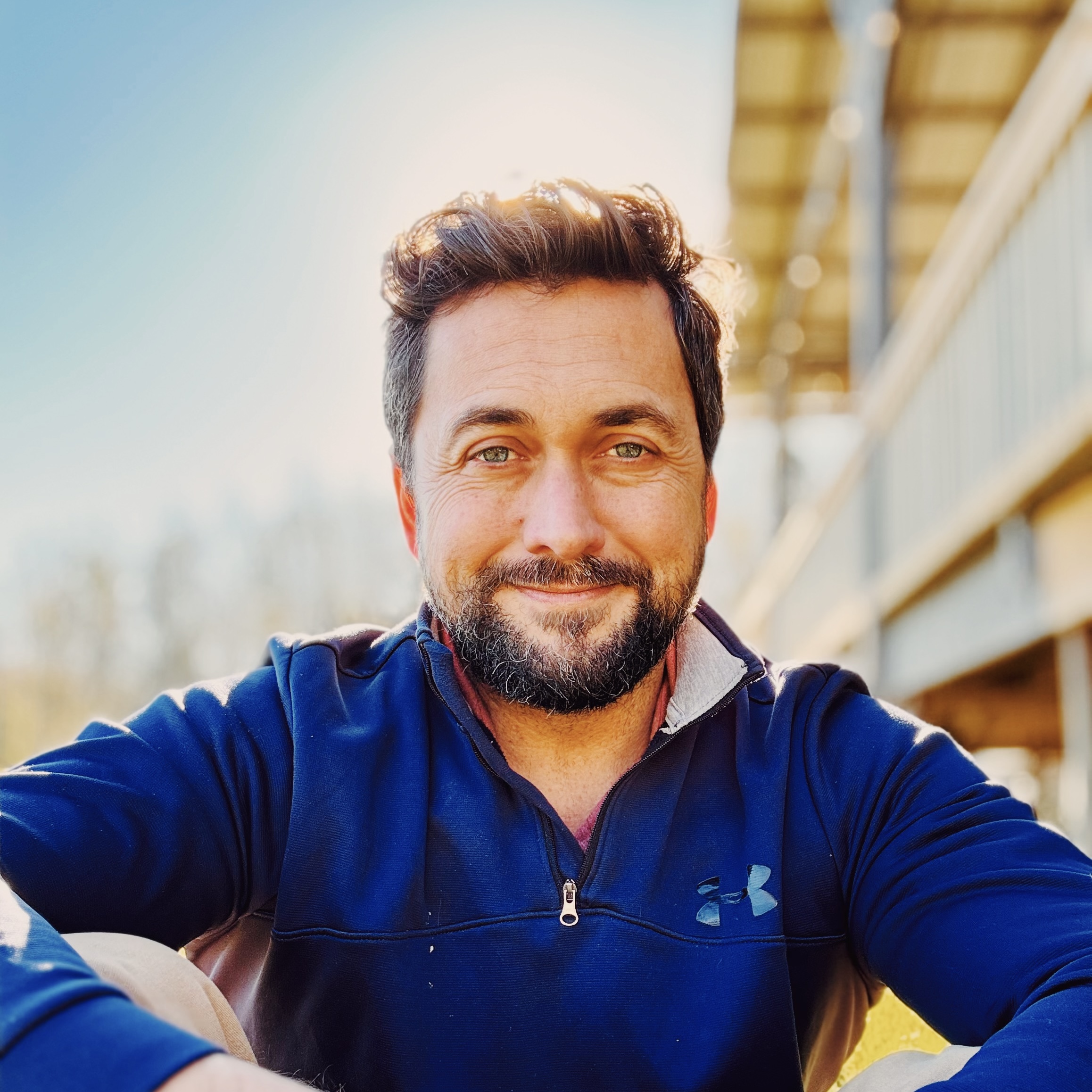
Special Projects Officer
Kevin Granger is a Catholic missionary with Family Missions Company, where he and his wife formerly served as Executive Directors. With a background as an oncology nurse, he now leads special projects in fundraising and media, helping bring the mission of the Church to life globally.
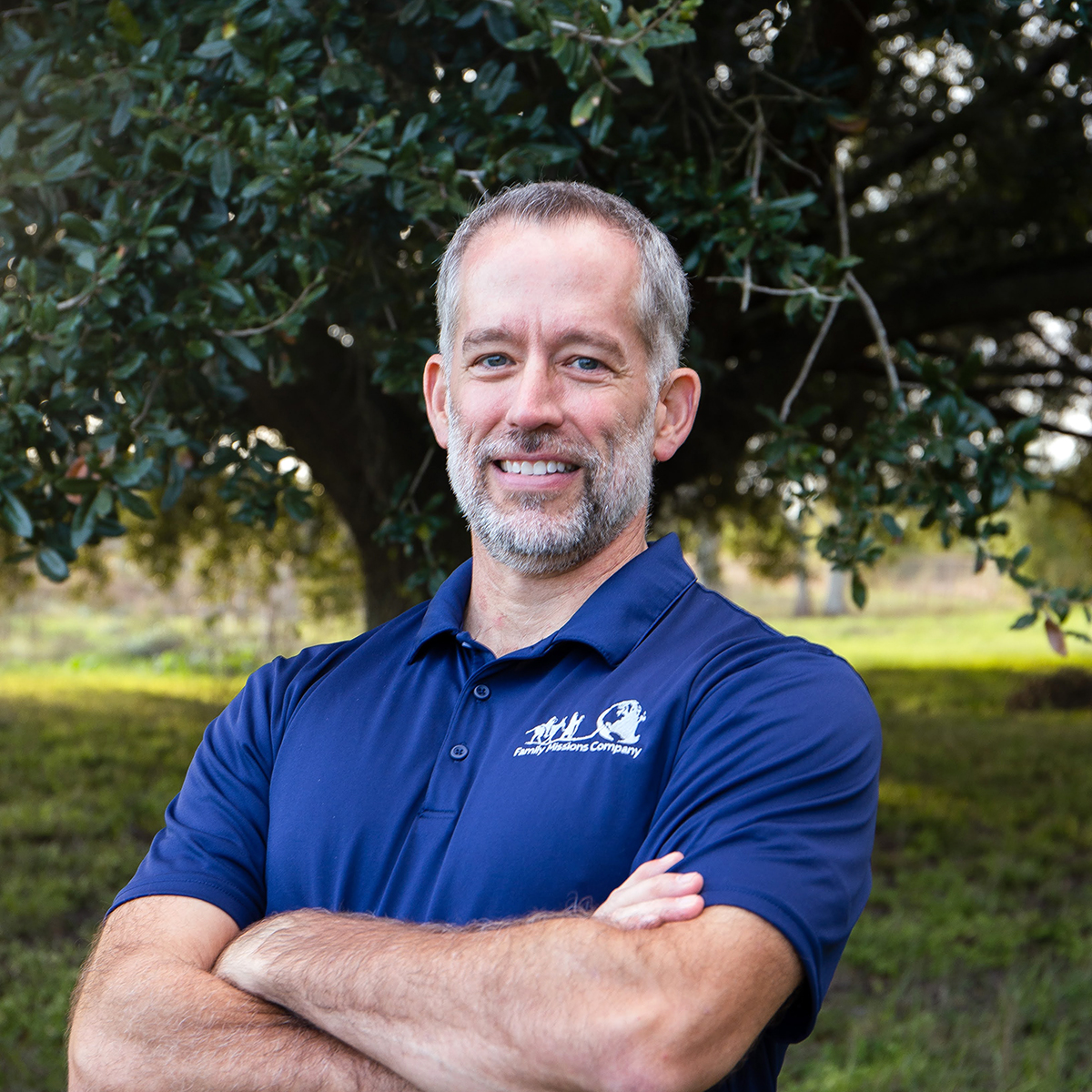
Director of Mission Advancement
Saul Keeton is a beloved son of the Father, husband of 26 years to Jan, father of 3 girls and 3 boys, and the Director of Mission Advancement for Family Missions Company, the largest and oldest lay-run Catholic nonprofit that prepares everyday lay Catholics to serve long-term in the foreign mission field. Colloquially, Saul is FMC's chief gathering officer. He is responsible for gathering the material resources needed to fulfill FMC's mission and the human resources -- future missionaries -- needed to carry the Gospel of Jesus Christ to the ends of the Earth.